The Hidden Role of Dermaplaning in Achieving Smooth, Flawless Skin
December 12, 2025

Healthy, glowing skin is one of the most common goals patients bring to a medical spa consultation. If you’re wondering which treatment—Hydrafacial or microdermabrasion—gives you a longer-lasting glow, this guide will help you compare their results. Many people want smoother texture, clearer pores, more even tone, and a refreshed appearance—but without invasive procedures or extended downtime. Among non-invasive facial treatments, Hydrafacial and microdermabrasion are two of the most requested options, yet patients often struggle to understand how they truly differ.
At first glance, both treatments aim to improve the skin’s appearance by removing dead skin cells, supporting skin renewal, and revealing brighter skin underneath. However, the way each treatment works, the depth of exfoliation involved, and how the skin responds over time can vary significantly depending on skin type, sensitivity, and underlying concerns.
This comprehensive guide is designed for adults exploring medical spa facial treatments who want a clear, professional comparison of Hydrafacial vs microdermabrasion, with an emphasis on safety, customization, and realistic expectations. Understanding these differences can help you choose a treatment that aligns with your skin goals and supports long-term skin health, not just a short-term glow. Choosing the right facial treatment can make a significant difference in how long your skin maintains its healthy, radiant glow.
The skin naturally sheds dead cells as part of its renewal cycle, but this process slows with age, sun exposure, and environmental stress. When dead skin cells accumulate on the surface, they can create a dull appearance, uneven texture, and clogged pores that interfere with the skin’s ability to function optimally.
Professional skin exfoliation treatments are designed to assist this natural process in a controlled, medically appropriate way. Unlike over-the-counter scrubs, professional treatments are adjusted for pressure, depth, and frequency to avoid excessive irritation or barrier damage.
Consistent exfoliation performed under medical supervision may help support overall skin health by improving product absorption, enhancing skin clarity, and promoting a smoother, more even complexion. The key is choosing a treatment that aligns with your skin’s tolerance and long-term needs.
A Hydrafacial is a non-invasive facial treatment that combines several skincare steps into one structured session. Hydrafacial is explicitly defined as a multi-step treatment that combines cleansing, exfoliation, extraction, hydration, and antioxidant protection in one session. Rather than focusing solely on exfoliation, Hydrafacial is designed as a multi-step treatment that cleanses, exfoliates, extracts impurities, and delivers hydration in a controlled sequence.
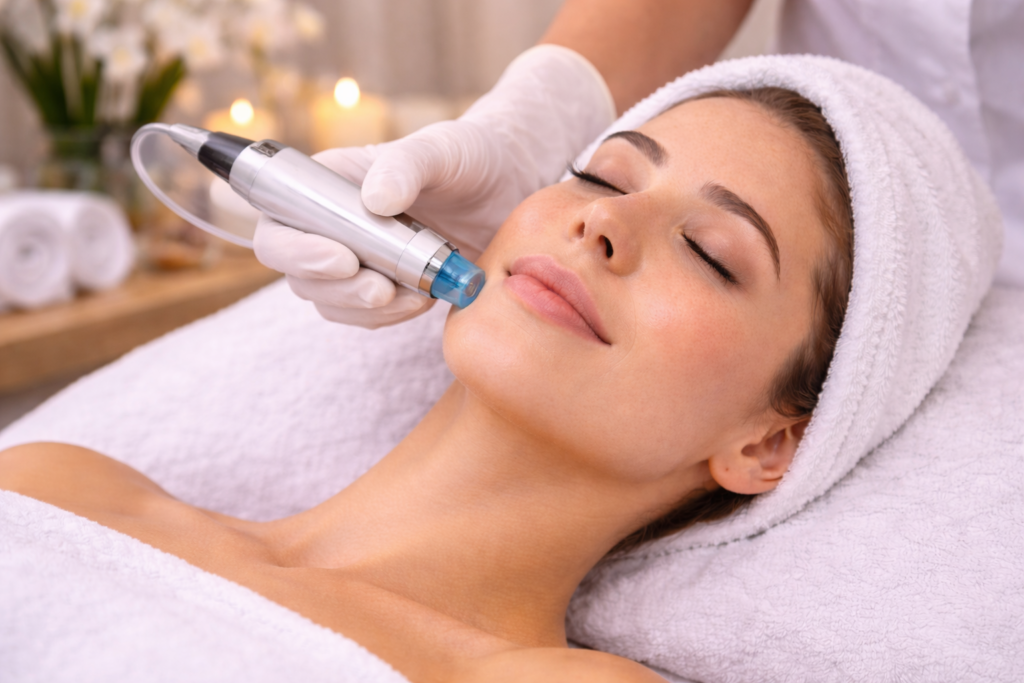
This treatment uses a specialized device with interchangeable tips that allow providers to customize intensity based on skin type, sensitivity, and specific concerns. One of the defining features of Hydrafacial is its ability to deliver hydrating and nourishing serums immediately after exfoliation, when the skin is more receptive.
Because it integrates exfoliation with hydration and protection, Hydrafacial is commonly chosen by patients seeking a refreshed appearance without aggressive abrasion or prolonged recovery time.
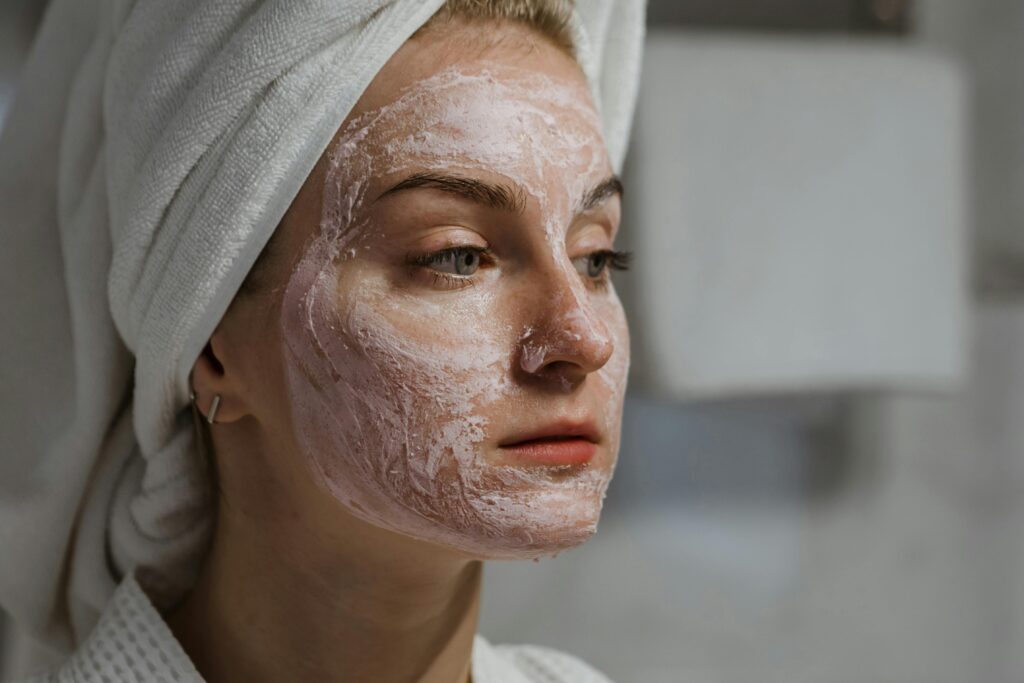
Hydrafacial uses a controlled, step-by-step process that addresses surface buildup and pore congestion at the same time. Rather than aggressively scrubbing the skin, the treatment softens and lifts dead skin cells while a vacuum-based system helps clear impurities from within the pores. This method supports deep cleansing while minimizing unnecessary friction on the skin’s surface.
Once exfoliation and pore clearing are complete, the treatment transitions into hydration. Targeted hydrating serums are delivered to the skin when it is most receptive, allowing moisture-supporting ingredients to be absorbed more evenly. Ingredients commonly used in this phase, such as hyaluronic acid, are selected to help reinforce hydration and improve the skin’s comfort and suppleness.
By pairing exfoliation with immediate hydration, Hydrafacial focuses not only on skin clarity but also on maintaining a hydrated skin barrier. Many patients feel this balanced approach contributes to results that appear smoother and more refreshed for longer periods, especially when sessions are repeated as part of an ongoing, professionally guided skincare routine.
Patients with sensitive skin types often worry about redness, irritation, or flare-ups after facial treatments. Hydrafacial is frequently selected for sensitive skin because it offers gentle exfoliation paired with soothing hydration.
Rather than relying on aggressive physical abrasion, Hydrafacial allows providers to control suction strength and serum selection. This customization helps reduce the likelihood of excessive irritation while still supporting skin clarity and smoothness.
That said, even gentle treatments require professional assessment. Individuals with active skin conditions, recent procedures, or heightened sensitivity benefit from a thorough consultation before treatment.
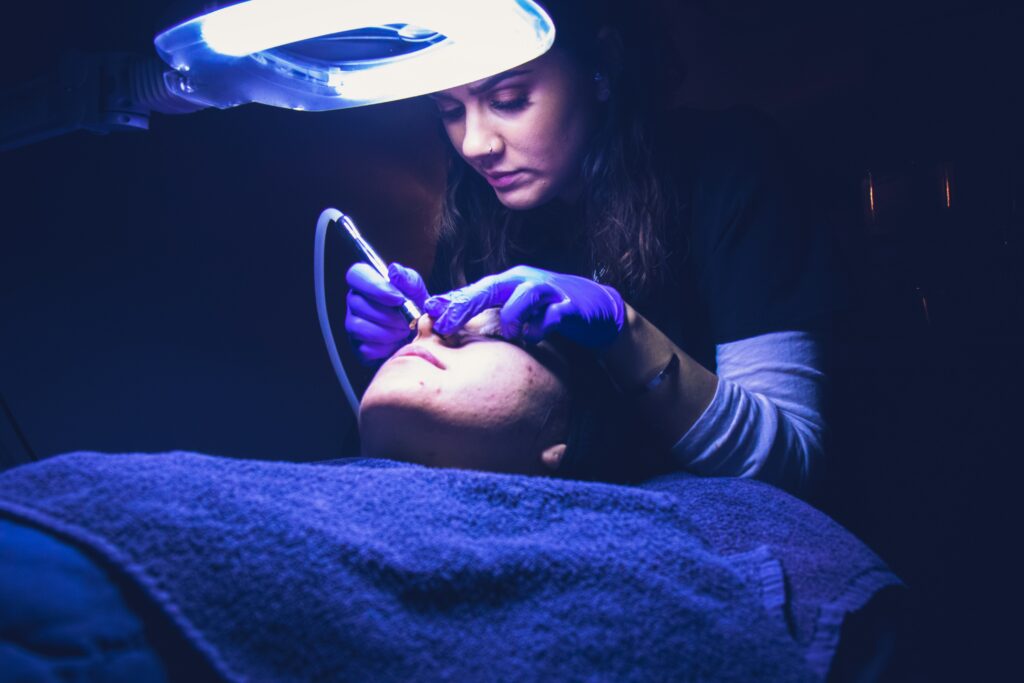
Microdermabrasion is a long-established skincare treatment that focuses primarily on mechanical exfoliation. Microdermabrasion primarily focuses on exfoliation by physically abrading the skin’s surface to remove dead skin cells and stimulate new cell growth. It works by physically removing the outermost layer of dead skin cells using either fine crystals or a diamond-tipped wand.
This process helps reveal brighter skin underneath and may improve rough texture, uneven tone, and surface dullness. Microdermabrasion does not involve chemicals or infused serums, making it appealing to patients seeking a straightforward exfoliation option.
Because it focuses on surface renewal, microdermabrasion is often used to refresh the skin’s appearance rather than address deeper concerns such as hydration or congestion.
During microdermabrasion, controlled abrasion removes the outermost layer of dead skin cells. The accompanying suction helps clear debris and stimulate circulation, which may support improving skin texture over time.
This form of physical exfoliation can help smooth rough areas and reduce the appearance of superficial irregularities. However, because it removes surface cells without adding hydration, some patients experience temporary dryness or sensitivity afterward. Proper spacing between treatments allows the skin to recover and regenerate, supporting healthier-looking skin with repeated sessions.
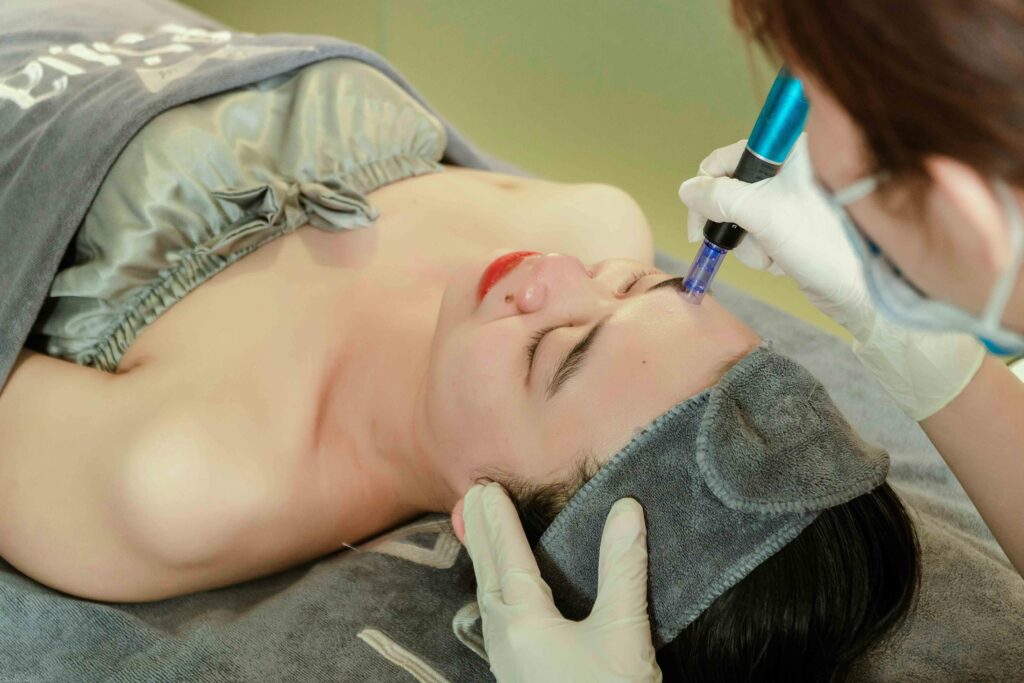
The primary difference between these treatments lies in how exfoliation is achieved and what follows afterward. Hydrafacial combines exfoliation with hydration and serum delivery, while microdermabrasion focuses solely on removing dead skin cells.
Hydrafacial is often chosen for patients seeking deep hydration, pore cleansing, and glow. Microdermabrasion is frequently selected for patients focused on texture refinement and surface renewal.
These distinctions influence not only immediate results but also how long improvements may appear to last between treatments.
A “long-lasting glow” often depends on hydration levels, barrier function, and consistency of care. Hydrafacial’s infusion of hydrating serums may help maintain a radiant appearance for longer periods, particularly in dehydrated skin.
Hydrafacial’s radiant effects typically last 1 to 4 weeks, while microdermabrasion results primarily last about 1 week. The visible glow from microdermabrasion often lasts only up to 1 week, although its long-term benefits can last 2 to 4 weeks due to collagen production. (Sources: 1. HydraFacial’s radiant effects typically last 1 to 4 weeks, while microdermabrasion results primarily last about 1 week., 2. The visible glow from microdermabrasion often lasts only up to 1 week, although its long-term benefits can last 2 to 4 weeks due to collagen production.)
Microdermabrasion results may appear more subtle and may require more frequent sessions to maintain brightness. Without hydration support, surface improvements can fade as the skin naturally sheds and rebuilds. Long-term glow is best supported by professional treatment combined with appropriate home skincare and sun protection.
For patients with acne-prone skin, clogged pores and excess oil are often primary concerns. Hydrafacial’s ability to assist with unclogging pores through gentle suction can support clearer-looking skin when appropriately selected.
Microdermabrasion may help improve the rough texture associated with acne scarring, but it does not directly address pore congestion. For active breakouts, mechanical exfoliation may require careful consideration to avoid irritation. Professional evaluation helps determine whether exfoliation, hydration, or alternative treatments are more appropriate for acne-prone skin.
Dry and combination skin types often benefit from treatments that balance exfoliation with moisture retention. Hydrafacial is frequently chosen because it supports deep hydration while removing dead skin cells.
Microdermabrasion may still be appropriate for combination skin when dryness is mild, but post-treatment hydration becomes especially important. Without adequate moisture, exfoliation can accentuate dryness or sensitivity. Individual skin assessment ensures treatment selection aligns with comfort and skin health goals.
Neither Hydrafacial nor microdermabrasion is designed to dramatically reverse aging. However, both treatments may support youthful-looking skin by improving texture, hydration, and overall tone.
Hydrafacial’s hydrating components may help the skin appear smoother and more supple, while microdermabrasion’s stimulation of circulation may support gradual surface renewal. Any impact on collagen production is indirect and gradual, reinforcing the importance of realistic expectations and consistent care.
Results from both treatments are temporary and influenced by lifestyle, sun exposure, and skincare habits. Many patients choose to schedule Hydrafacial or microdermabrasion treatments every few weeks as part of a maintenance plan.
Spacing treatments appropriately allows the skin to recover and respond positively. Over-treating can increase sensitivity without improving results. Consistency, rather than intensity, is often the key to long-term skin health.
Both treatments are generally well-tolerated when performed appropriately. Temporary redness, warmth, or sensitivity may occur, especially after exfoliation.
Medical supervision ensures treatments are customized, contraindications are identified, and risks are minimized. Patients should disclose medical history, medications, and recent procedures during consultation. Professional oversight supports safer outcomes and informed decision-making.
A personalized consultation allows providers to assess skin tone, texture, sensitivity, and specific concerns before recommending a treatment. No single facial treatment works the same for every patient.
Customization helps align expectations with realistic outcomes and ensures treatments support both short-term appearance and long-term skin integrity.
Hydrafacial is often selected for sensitive skin due to its gentle exfoliation and hydration. Individual suitability depends on skin condition and should be assessed during consultation.
Microdermabrasion may help improve the appearance of mild acne scars over time by refining surface texture. Results vary based on scar depth and skin response.
Some patients alternate treatments as part of a broader skincare plan. This approach should always be guided by a licensed professional.
Hydrafacial and microdermabrasion each offer distinct benefits. Hydrafacial often supports hydration, clarity, and glow, while microdermabrasion focuses on surface exfoliation and texture refinement.
The best choice depends on your skin type, goals, and comfort level. When guided by licensed professionals, both treatments can support healthier-looking skin over time.
Choosing the right facial treatment starts with expert guidance. At BluePoint Medical Spa, treatments are performed or overseen by licensed providers who prioritize safety, customization, and patient education.
If you’re ready to explore which facial treatment aligns with your skin goals, schedule a consultation with BluePoint Medical Spa and take the next step toward confident, informed skincare.