Patients usually begin researching collagen-based aesthetic treatments when they notice gradual changes that feel difficult to correct with topical care alone. Fine lines, uneven skin texture, early laxity, dullness, and lingering acne scars often reflect bigger structural changes rather than a simple surface problem. In many cases, these visible shifts are connected to declining collagen, cumulative sun exposure, and the natural effects of time on skin elasticity and firmness. Dermatology sources describe laser skin resurfacing and related rejuvenation treatments as options that improve the appearance of skin by treating surface damage while also promoting collagen activity beneath the skin.
At BluePoint Medical Spa, the value of laser treatments should be understood through a medical-aesthetic lens, not a marketing one. The purpose is not to suggest that one procedure “reverses” aging or produces the same result for every patient. The purpose is to use controlled laser energy to target selected layers of tissue in ways that support collagen production, improve visible irregularities, and guide a more refined healing response. That combination is what makes laser skin treatments relevant for both visible correction and deeper renewal.
Collagen Loss and the Structural Changes Behind Aging Skin
Collagen is one of the key proteins that give skin its support, density, and resilience. As collagen and related structural components such as elastin fibers decline, the skin gradually becomes less firm and less elastic. This is one reason aging skin may begin to show sagging skin, loose skin, etched lines, and a rougher, less uniform surface. The issue is not only what appears on the skin’s surface, but also what is happening beneath it.
This deeper structural shift is why collagen-focused treatments remain such an important part of skin rejuvenation. A procedure that only addresses the most superficial layer may improve brightness temporarily, but it may not meaningfully influence the tissue support that affects firmness and texture over time. When a treatment is designed to encourage collagen remodeling and collagen renewal, the goal becomes broader: improve how skin looks while also improving the framework that supports it.
How Laser Energy Reaches Beneath the Outer Layer of Skin
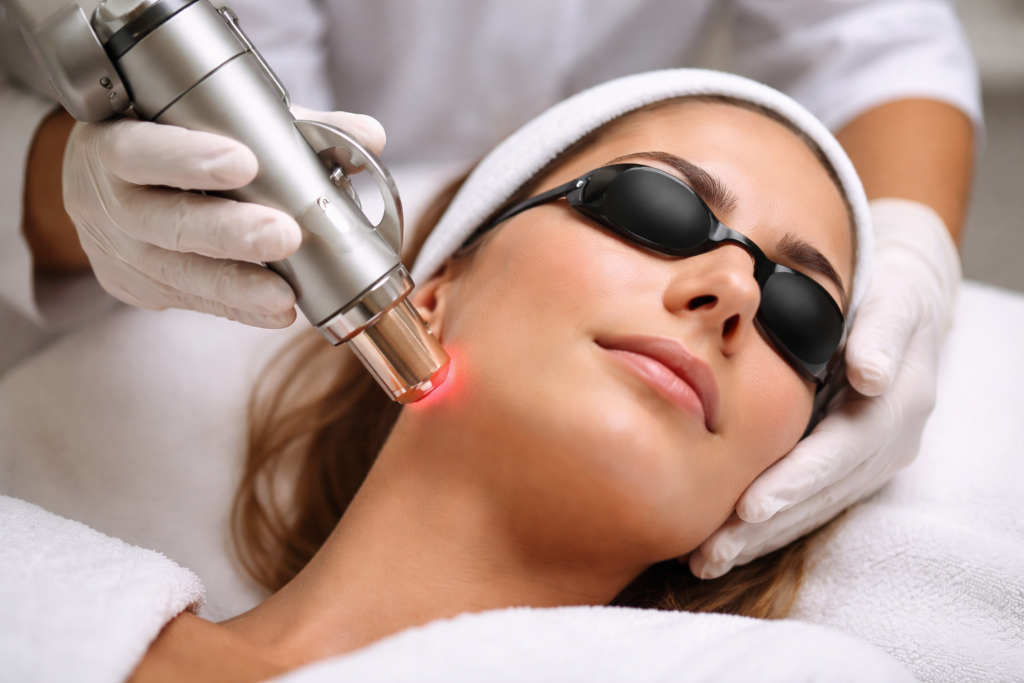
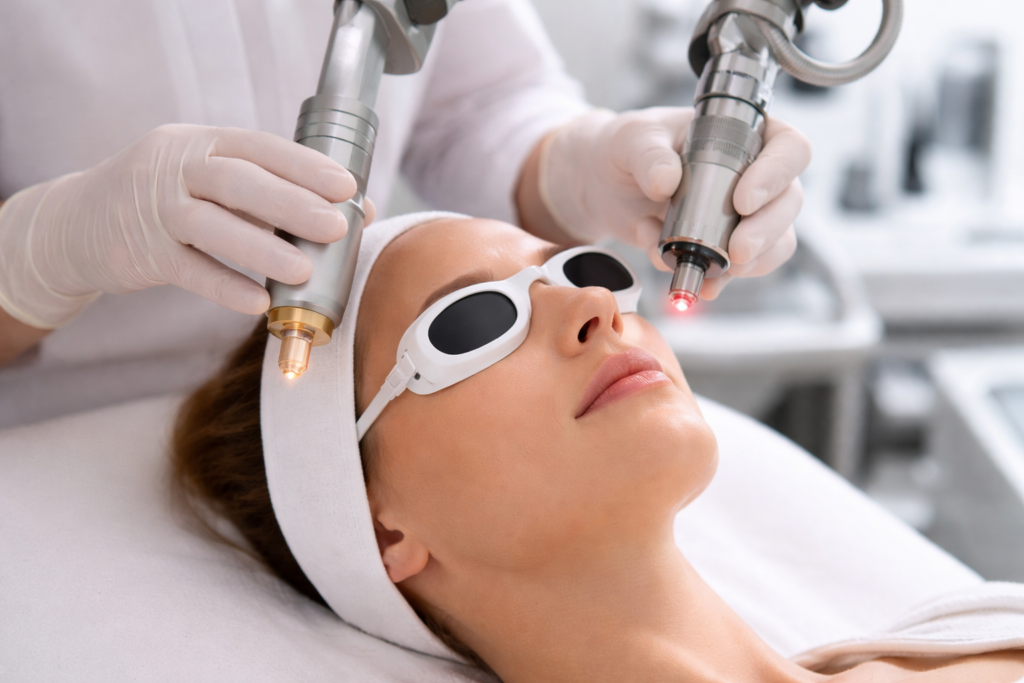
Modern laser technology works by delivering focused energy to selected tissue targets. Depending on the type of laser, that energy may remove damaged tissue in the outer layer, heat deeper tissue without removing the surface, or treat microscopic zones while leaving portions of surrounding skin intact. This precision is the reason laser procedures are used across different cosmetic goals, from resurfacing and scar treatment to vascular treatment and textural refinement.
What matters most for patients is that the energy is not random. It is selected to trigger a controlled response in the treated area. As the skin recovers, that response may include turnover of damaged cells, gradual smoothing of the surface, and new support activity deeper in the tissue. In practical terms, this is how laser treatments stimulate visible and structural change at the same time.
Collagen Stimulation as a Core Mechanism of Laser Rejuvenation
A major reason patients choose laser resurfacing is that the treatment is not limited to removing visible damage. ASDS explains that laser resurfacing also heats underlying layers to promote collagen production, which supports healing in a smoother, more even way. That mechanism is central to why laser procedures are used for texture, lines, and selected scar concerns instead of being viewed as a simple exfoliation treatment.
This matters because patients often want to know whether they are treating the cause of the concern or only the appearance of it. In collagen-focused aesthetic care, the answer is often both. The visible improvement comes from what happens at the surface, but the more gradual improvement in firmness, texture, and refinement often reflects deeper collagen growth and tissue remodeling as the skin heals.
Fractional Laser Treatment and Controlled Skin Renewal
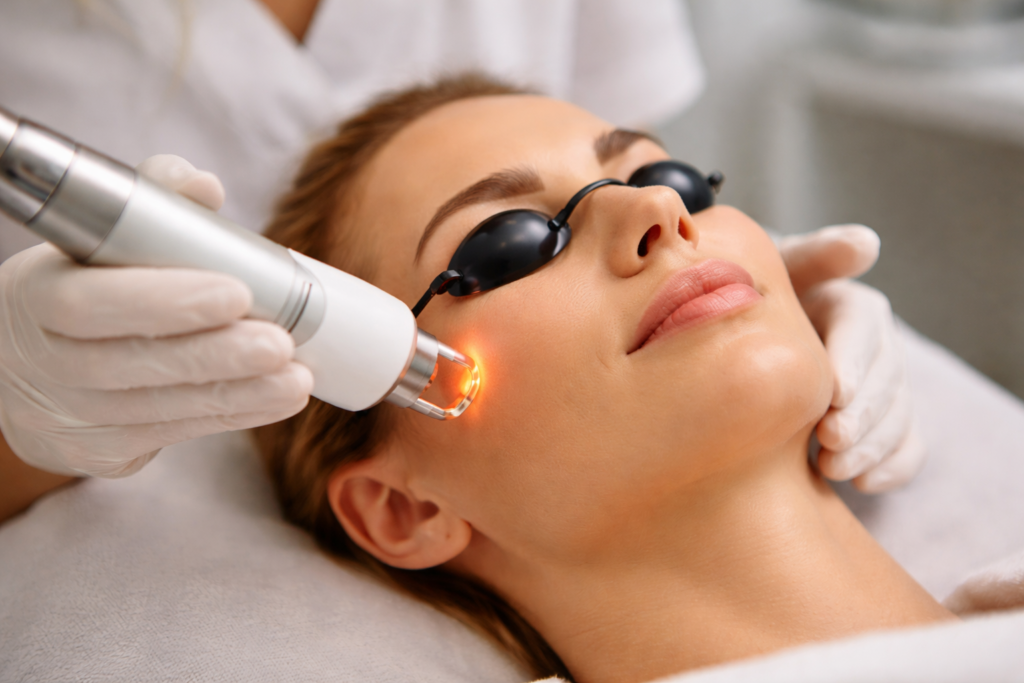
Fractional laser treatment is widely discussed because it treats the skin in microscopic zones rather than removing or heating the entire surface evenly. ASDS describes fractional resurfacing as creating deep, narrow columns in the lower layers of skin, which stimulates a natural healing process and growth of healthy new tissue. By leaving some untreated tissue between those zones, fractional lasers may offer a balance between collagen stimulation and recovery.
For many patients, that balance is an important practical advantage. A treatment that supports collagen stimulation with more selective tissue impact may be appealing when the goals include enhancing skin texture, softening early lines, and addressing mild to moderate scarring without the same recovery profile associated with stronger ablative laser resurfacing. Even so, “less downtime” does not mean “no recovery,” and expectations still need to be individualized.
Ablative and Non-Ablative Approaches in Laser Skin Resurfacing Treatments
There is a meaningful difference between ablative laser procedures and non-ablative lasers. Ablative resurfacing removes portions of the outer tissue and is often selected for more significant photodamage, scarring, and deeper wrinkles. Non-ablative rejuvenation, by contrast, works beneath the surface without removing the top layer in the same way, and ASDS notes that these procedures often require little or no downtime.
Neither category is automatically “better.” The right choice depends on the concern being treated, the patient’s skin type, tolerance for recovery, and whether the priority is stronger resurfacing or a more conservative collagen-focused approach. This is why a thoughtful consultation matters more than device-name shopping. The best recommendation should reflect the biology of the concern, not just the popularity of a treatment.
Erbium Lasers, Carbon Dioxide Lasers, and Device Selection
Erbium lasers and carbon dioxide lasers are often discussed together because both are established resurfacing options. ASDS notes that resurfacing is used for acne scars, age spots, wrinkles, sagging skin, and sun-damaged skin, but device choice should be based on what is being treated and how much resurfacing is appropriate. A patient with superficial-to-moderate texture irregularity may need a different approach than someone with more advanced wrinkling or scar-related change.
This is also why language like “best laser” is rarely useful in a medical setting. An effective result depends on the relationship between the device, the area being treated, and the patient’s response to healing. Device selection should serve the treatment plan, not drive it.
Collagen Remodeling for Acne Scars, Fine Lines, and Uneven Texture
When acne scars leave the skin uneven, the concern is often both visual and structural. Laser resurfacing is commonly used in this setting because it addresses the damaged surface while also promoting collagen activity underneath, helping the treated skin heal with a smoother appearance. This is one of the clearest examples of how resurfacing can influence both immediate texture concerns and longer-term remodeling.
The same logic applies to early lines and roughness caused by sun damage. Patients may notice that their skin no longer reflects light evenly, feels less smooth, or shows more visible creasing around expressive areas. In those cases, laser skin resurfacing treatments may be considered not only to treat wrinkles visually, but also to support a healthier tissue response that improves overall skin texture and skin tone over time.
Skin Type, Sun Protection, and Safety Considerations
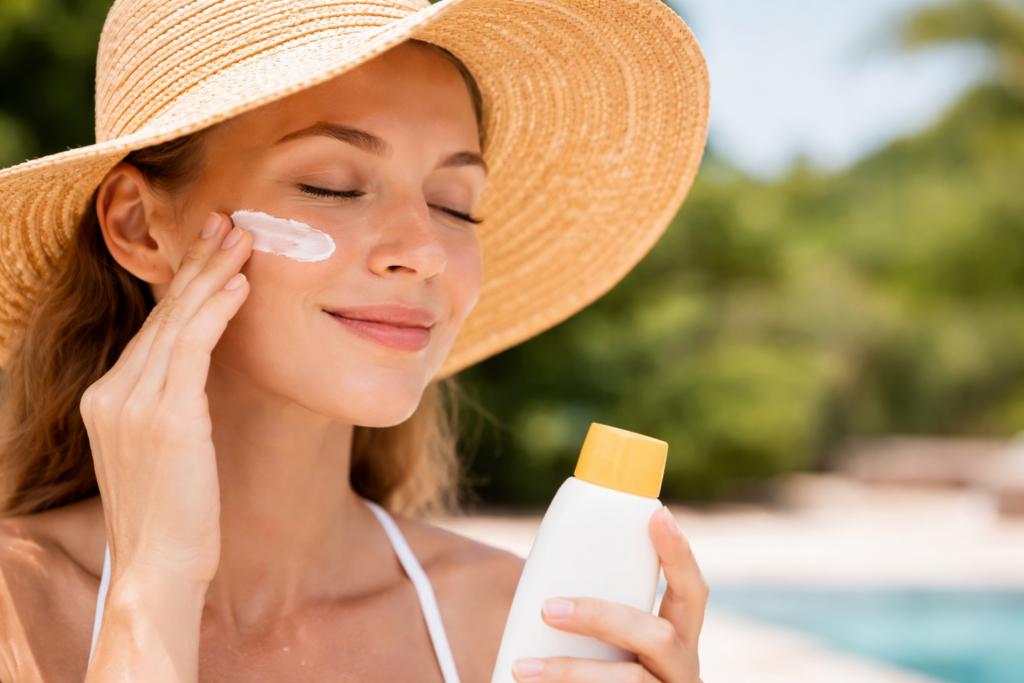
Not every patient should approach laser care in the same way. The American Academy of Dermatology emphasizes that sun protection is crucial before and after treatment, and warns that treatment on tanned or sunburned skin can increase the risk of burns or discoloration. That guidance is especially important for patients with darker skin tones, where pigment shifts may be a more significant consideration depending on the device and treatment depth.
Patients should also understand that proper preparation is part of the result. Avoiding recent tanning, sharing a full medical history, and following instructions about product use or recent procedures all affect safety and recovery. Laser rejuvenation is not only about the session itself. It is also about how well the skin is prepared to respond to it.
Recovery, Minimal Downtime, and the Healing Process
Recovery after laser treatments varies widely. Cleveland Clinic notes that non-ablative treatments often involve minimal downtime, with many patients experiencing only a flushed appearance and returning to daily activities quickly, while deeper resurfacing may involve redness lasting for weeks. That difference is important because “minimal downtime” is not a universal promise; it depends on the depth of treatment and the biologic response of the skin.
From a patient perspective, understanding recovery is part of making an informed decision. Temporary redness, warmth, dryness, or mild swelling may all be part of the normal healing process. What matters is that the recovery timeline matches the treatment goal, the patient’s schedule, and the level of change they are realistically seeking.
FAQ
How do laser treatments stimulate collagen beneath the skin?
They use controlled heat or light energy to trigger a repair response in targeted tissue. That response may promote collagen activity and gradual remodeling as the skin heals.
Are fractional lasers used for collagen stimulation?
Yes. Fractional lasers create tiny treatment zones in the skin, which stimulate healing and collagen-related remodeling while leaving some surrounding tissue untreated.
Do all laser skin resurfacing treatments have a long recovery?
No. Recovery depends on whether the treatment is ablative or non-ablative and how deeply it treats the skin. Some non-ablative options involve relatively little downtime, while deeper resurfacing may require a longer visible recovery period.
Is sun protection important before and after laser resurfacing?
Yes. Sun protection is a major part of safety and recovery because recent tanning or sunburn can raise the risk of burns, discoloration, and healing complications.
Conclusion
The reason why laser treatments stimulate collagen beneath the skin remains such an important topic is that collagen is central to how skin looks, feels, and ages. When collagen support declines, texture, firmness, and resilience often decline with it. By using controlled energy to trigger repair and remodeling, laser skin resurfacing and other laser therapy options aim to improve visible concerns while also strengthening the underlying framework that supports more youthful skin and healthy skin over time.
For patients considering laser skin rejuvenation in Las Vegas, the most important next step is not choosing a trending device. It is choosing an experienced evaluation that accounts for your skin concerns, lifestyle, sun history, and recovery preferences. Contact BluePoint for next steps and schedule a consultation to discuss a treatment plan designed around your goals, your skin, and a medically appropriate path to renewal.