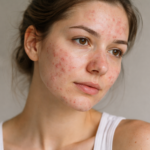
Acne scars can remain long after active breakouts fade, affecting not only the skin’s texture but also confidence and overall skin health. For many patients, topical treatments and at-home remedies offer limited improvement once scar tissue has formed. This is where acne scar laser treatments have become a commonly explored option within modern medical spa care.
At BluePoint Medical Spa, laser technologies are used as part of a personalized, medically supervised approach to addressing acne scars. Understanding what may happen during the first 90 days of a laser treatment journey helps patients set realistic expectations, prepare for recovery, and make informed decisions about their skin health.
This guide explains how laser acne scar treatments work, what changes may occur over time, and why outcomes vary depending on individual skin factors, scar type, and treatment plan.
Acne Scar Laser Treatments: What Results You Can Expect in the First 90 Days and Understanding Why They Persist Over Time
Acne scars develop when inflammation disrupts the skin’s natural healing process. Instead of regenerating smooth tissue, the body produces fibrous scar tissue or loses collagen in specific areas. Over time, this leads to uneven skin texture that does not typically resolve without professional intervention. Acne scar removal is often the primary goal of these professional treatments, aiming to restore smoother, clearer skin.
Different scar patterns respond differently to treatment. Scar depth, severity, and skin type all influence how the skin reacts to laser therapy and how much improvement may be observed within the first few months. Deep scars and moderate scarring require different approaches, with deep scars often needing more aggressive or combination effective treatments, while moderate scarring may respond well to less intensive laser therapies.
How Acne Scars Form: The Science Behind Lasting Marks
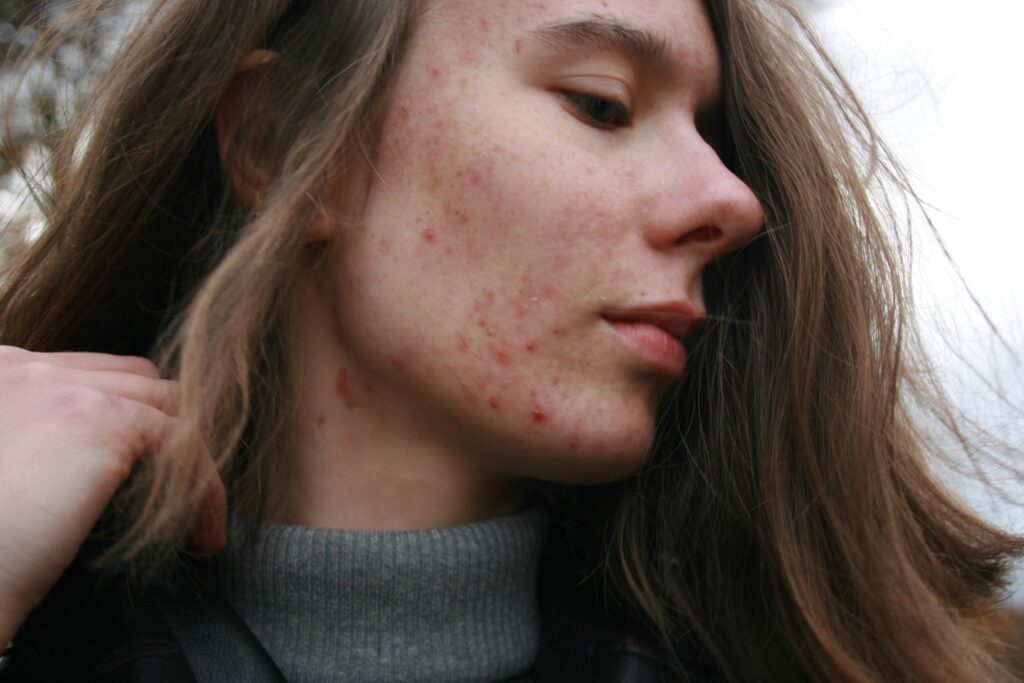
Acne scars are the result of a complex interplay between inflammation, tissue damage, and the skin’s natural healing process. When acne lesions—such as pimples, cysts, or nodules—form, they can trigger significant inflammation within the skin. This inflammation sometimes damages the surrounding tissue, disrupting the balance of collagen production and breakdown. If the skin loses too much collagen during healing, it can lead to depressed scars, while excess collagen may result in raised, firmer scars.
There are several types of acne scars, each with unique characteristics. Atrophic scars, the most common, appear as shallow or deep depressions in the skin and are often seen in individuals with lighter skin tones. Hypertrophic scars are raised and can feel firm or itchy, while post-inflammatory hyperpigmentation (PIH) causes darkened patches that are especially common in those with darker skin tones. The likelihood of developing a particular scar type depends on factors such as skin type, genetic predisposition, and the severity of the original acne.
Understanding how acne scars form is essential for developing an effective acne scar treatment plan. For example, laser treatment can be tailored to stimulate collagen production and improve skin texture, but the approach must be adjusted based on scar type, skin tone, and scar severity. Individuals with darker skin tones may require specialized laser settings to minimize the risk of post-inflammatory hyperpigmentation and achieve optimal results.
Types of Acne Scars Commonly Treated With Laser Technology
Not all acne scars are the same. Identifying the scar type is an essential step in determining whether laser therapy may be appropriate.
- Ice pick scars are narrow and deep, extending into the deeper layers of skin. These are considered deep scars and often require more aggressive or combination treatment approaches rather than laser therapy alone.
- Boxcar scars appear as wider depressions with defined edges. Laser resurfacing may help soften their appearance by encouraging collagen remodeling.
- Rolling scars create a wave-like texture across the skin. Fractional laser treatments are often used to stimulate collagen production beneath these scars.
Moderate scarring often responds well to fractional laser treatments, providing noticeable improvement within the first 90 days. In contrast, deep scars may need a more intensive approach, such as combining different laser modalities or additional therapies, to achieve significant results.
How Acne Scar Laser Treatments Work Beneath the Skin
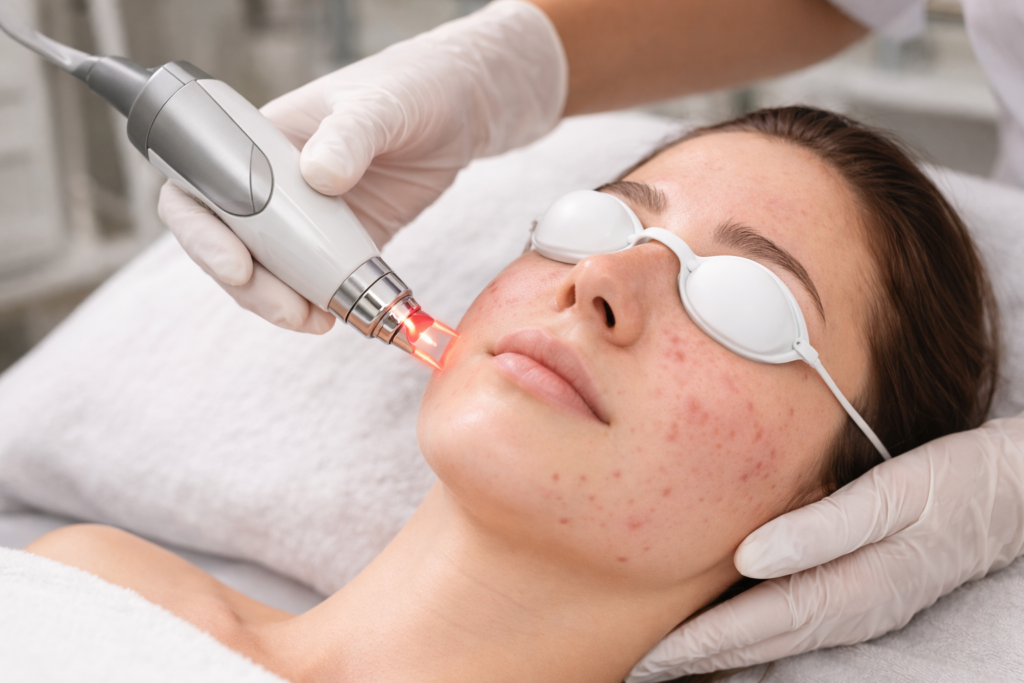
Laser acne scar removal treatments use focused energy to target damaged skin and scar tissue. Depending on the technology used, lasers may create controlled micro-injuries or gently heat deeper layers of skin.
This process may:
- Stimulate new collagen production
- Support collagen remodeling
- Encourage the skin’s natural healing response over time
- Lead to skin texture improvement as collagen stimulation helps smooth the skin and reduce scars
Laser therapy does not remove scars instantly. Instead, it initiates a gradual biological process that unfolds over several weeks and months, with initial improvements often visible within a few weeks as the skin heals and collagen production increases.
Fractional Laser Treatments vs Ablative Laser Options
Fractional laser treatments target small columns of skin while leaving surrounding tissue intact. This approach may support faster recovery and is commonly chosen for moderate acne scars or patients seeking minimal downtime. Non-ablative lasers target the inner layers of skin without damaging the surface and require multiple sessions.
Ablative laser treatments remove thin layers of damaged skin. Ablative lasers, like the CO2 laser, remove the outer layers of skin and are known for their dramatic before-and-after results. These treatments are typically reserved for severe acne scarring and involve longer recovery periods.
At BluePoint Medical Spa, treatment selection is based on skin concerns, scar severity, skin tone, and lifestyle factors, not a one-size-fits-all approach. Multiple treatments are often necessary to achieve optimal results, especially for more severe or deep scars.
The Importance of a Personalized Treatment Plan
Laser acne scar treatment is typically approached as a series of carefully timed sessions, rather than a one-time procedure. Most patients require 3 to 5 laser treatment sessions for significant acne scar improvement, but some may need up to 8 sessions for optimal results, especially for severe scarring. The exact number of sessions needed for acne scar laser treatment varies based on scar severity, skin type, and chosen laser technology. Sessions are typically spaced 4 to 6 weeks apart to allow proper healing and collagen remodeling. Deeper scars often require more sessions than shallower scars because it takes longer to remodel the underlying tissue. Skin responds to laser energy gradually, and spacing treatments allows the body to complete phases of healing and collagen remodeling before additional stimulation is introduced. This paced approach helps support steady progress while reducing unnecessary irritation.
A personalized plan takes into account multiple individual factors, including the nature of the scars, how the skin has healed in the past, and lifestyle elements that influence recovery. Providers also consider prior procedures, daily sun exposure, and long-term skin health priorities when designing a treatment strategy. Establishing clear expectations early helps patients recognize that results from acne scar treatments develop over time and can vary from person to person depending on these factors.
Preparing for Acne Scar Laser Treatment
In addition to avoiding sun exposure, patients may be advised to pause the use of retinoids, exfoliating acids, or other active skincare ingredients for a period before treatment. These products can increase skin sensitivity and may heighten irritation if used too close to a laser session. Following pre-treatment instructions closely helps support a more predictable healing response. A topical numbing cream is often applied before the procedure to minimize discomfort during laser treatment.
Preparation also includes planning for the days following treatment. Patients may be encouraged to schedule sessions when they can limit intense physical activity, heat exposure, or social commitments if redness or sensitivity occurs. Thoughtful preparation allows the skin to focus on healing without unnecessary external stressors.
What to Expect on Treatment Day
Before the procedure begins, the treatment area is thoroughly cleansed, and protective measures—such as eye shields—are used when appropriate. Providers review the planned settings and confirm patient comfort before activating the laser. This step ensures the treatment is performed thoughtfully and with attention to individual tolerance levels.
After the session, soothing topical products may be applied to support the skin barrier and minimize irritation. Patients receive clear post-treatment guidance before leaving, including instructions on cleansing, moisturizing, sun protection, and when to resume regular skincare. These immediate steps help set the foundation for proper healing in the days ahead.
Immediate Post-Treatment Skin Reactions
Following laser acne scar treatment, it is common to notice:
- Mild swelling
- Redness
- Sensitivity
These effects are expected and typically temporary. The skin begins its healing process immediately. Some patients may notice immediate improvement in skin texture and tone after the first treatment, but full results develop gradually. Patients often notice initial improvements after their first or second session, but complete results take time as collagen remodeling continues for 3 to 6 months after the last treatment.
The First Week: Early Healing and Skin Response
During this early healing phase, redness and mild swelling may fluctuate from day to day as the skin responds to treatment. Some patients notice increased sensitivity to skincare products or environmental factors such as heat or wind. These reactions are generally temporary and reflect the skin’s natural repair process rather than a sign of complication.
Providers often recommend simplifying skincare routines during the first week, focusing on hydration, barrier support, and sun protection. Avoiding harsh ingredients and unnecessary manipulation of the treated skin may help reduce irritation and support more even healing as the outer layers renew.

Weeks Two to Four: Subtle Changes Begin to Appear
As the surface skin stabilizes, most patients notice initial improvement in skin texture within a few weeks (typically 2-4 weeks) after their first laser treatment session. Improved skin tone may also become noticeable during this period, with many experiencing brighter and healthier-looking skin. Texture changes may become more noticeable under certain lighting or when applying makeup. Some areas may appear smoother sooner than others, particularly where scars are more superficial. This uneven progression is common and does not indicate treatment failure.
During this period, patients are typically cleared to gradually reintroduce selected skincare products under provider guidance. Maintaining sun protection remains important, as healing skin may still be more reactive to UV exposure even as visible redness fades.
What Changes Are Common Around 60 Days
By the 60-day point, some patients notice that treated areas reflect light more evenly, which can make scars appear softer and less defined in daily settings. Improvements are often more noticeable in moderate acne scars or areas where collagen loss was less severe. Deeper scars may continue to evolve more gradually beyond this stage.
At this point in the healing timeline, providers may reassess progress and determine whether additional sessions could be beneficial. This follow-up allows treatment plans to be adjusted based on how the skin has responded, and it’s important to note that the way each patient’s skin heals influences the rate and extent of improvement. This reinforces that acne scar laser treatment is a stepwise process rather than a one-time event.
By the end of 90 days, patients typically see substantial progress and a more refined complexion after laser treatment.
What to Expect Around the 90-Day Mark
Around 90 days, collagen remodeling from the initial treatment typically reaches a more stable phase. The first three months after laser treatment involve initial healing, followed by progressive improvement in skin texture and tone as new collagen is produced, and by the end of the third month, structural changes in the skin become more visible. While subtle changes may continue beyond this point, many patients view this timeframe as a meaningful checkpoint for evaluating early outcomes and deciding whether further treatment aligns with their goals.
It is also common for providers to discuss long-term maintenance strategies at this stage, including skincare routines and sun protection habits that support ongoing skin health. Maintenance treatments, such as periodic touch-up laser sessions or follow-up appointments, may be recommended to preserve and enhance the results achieved from the initial treatment. These conversations help patients understand how lifestyle factors influence the longevity of results following laser acne scar treatment.
FAQ
How many laser treatments are typically needed for acne scars?
Most patients require multiple sessions to support gradual improvement. The exact number depends on scar type, severity, and skin response.
Is downtime required after acne scar laser treatment?
Downtime varies based on laser type. Fractional treatments often involve minimal downtime, while ablative treatments require longer recovery.
Can laser acne scar treatment completely remove scars?
Laser therapy aims to improve scar appearance and skin texture. Complete scar removal is uncommon, and results vary.
Conclusion
Acne scar laser treatments may support smoother skin texture, improved scar appearance, and enhanced skin health over time. While results vary, understanding the 90-day timeline helps patients approach treatment with clarity and confidence.
At BluePoint Medical Spa, every acne scar treatment is guided by personalized evaluation, licensed medical oversight, and realistic goal-setting. If you are exploring options for treating acne scars, a professional consultation is the most important first step.
Schedule a consultation with BluePoint Medical Spa today to discuss your skin concerns and learn whether laser acne scar treatment may be appropriate for you.