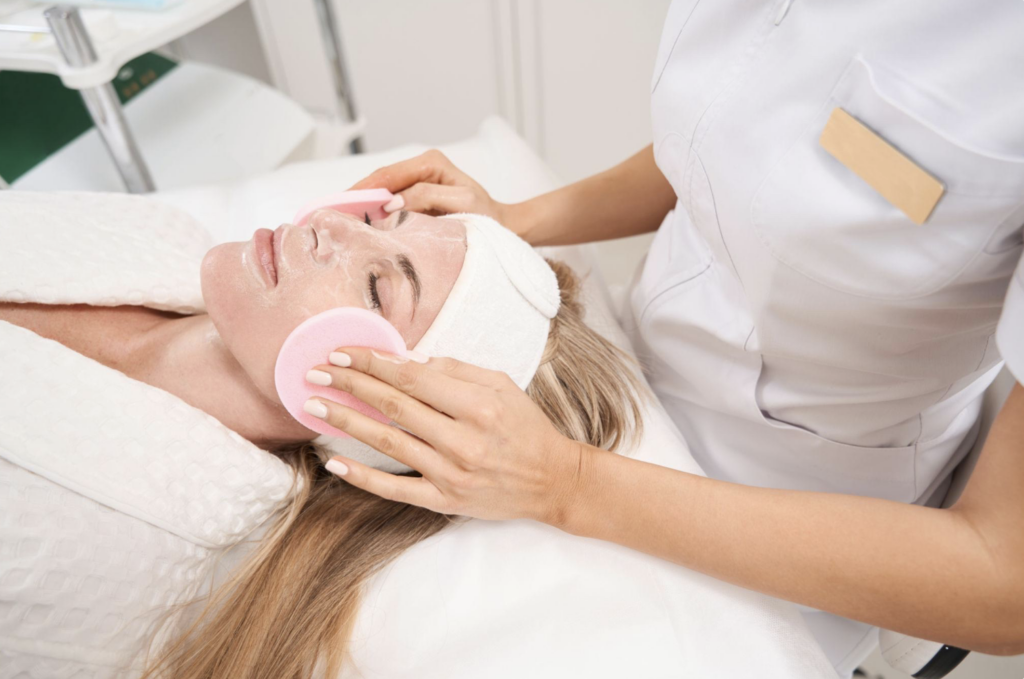
Patients searching for gentle facial options often chosen by patients with reactive or sensitive skin are usually not looking for the most aggressive service on the menu. They are often trying to protect sensitive skin, reduce flare-ups, and find a facial for sensitive skin that feels supportive rather than overwhelming. At BluePoint Medical Spa, facial services are positioned as personalized treatments tailored to different concerns and skin type needs, which makes that individualized approach especially relevant for sensitive skin clients.
For many people, sensitivity is not just dryness or temporary redness. Cleveland Clinic explains that reactive skin may respond more easily to products, weather, and other environmental factors, often because the outer barrier is not functioning as strongly as it should. When that barrier is stressed, even well-meaning products may irritate sensitive skin and leave the complexion feeling uncomfortable.
Understanding Sensitive Skin Means Looking at the Barrier First
A useful starting point for understanding sensitive skin is the role of the skin’s natural barrier. This outer layer helps retain moisture and limit entry of irritants, so when the skin’s barrier is weakened, patients may notice stinging, tightness, dryness, or more visible redness. That barrier weakness is one reason delicate skin often needs fewer actives and more barrier support.
This is why treating sensitive skin is usually less about “doing more” and more about choosing fewer, calmer interventions. When the skin is already reacting, the goal is often to lower stimulation rather than intensify it. In a facial setting, that means the right plan may focus on gentle cleansing, barrier support, and carefully selected hydration instead of strong exfoliation.
Reactive Skin Often Responds Poorly to Harsh Ingredients
Patients with highly sensitive skin or easily irritated skin often do worse when exposed to harsh chemicals, abrasive scrubs, or strongly fragranced formulas. Cleveland Clinic recommends mild cleansing and frequent moisturizing with irritation-free products for people whose skin reacts easily to products and external triggers. That guidance aligns closely with a sensitive skin focus in professional facial care.
In practical terms, this is why many providers avoid excessive exfoliation, stronger essential oils, and more stimulating techniques in skincare treatments for sensitive skin types. The goal is not to strip the face down to the point of irritation. It is to respect the skin’s natural defenses while still creating a cleaner, more comfortable surface.
Patient Concerns Usually Center on Redness, Tightness, and Irritated Skin
Many patients do not describe their issue with clinical language. They talk about irritated skin, random burning after products, flushing, or a face that never seems to tolerate traditional facials. Those are important clues because sensitivity may reflect a compromised skin barrier, ongoing irritation, or even allergic reactions that should be reviewed before treatment.
Some also worry about roughness, uneven tone, or visible dryness, but they still want healthy skin and a fresher appearance. In those cases, the priority becomes finding a facial treatment that supports skin health, calms redness, and improves comfort first, while any work on skin texture or skin tone is approached more gradually.

Environmental Stressors Frequently Make Sensitivity Worse
Cleveland Clinic notes that skincare products, household products, and environmental stressors can all contribute to sensitivity symptoms. Sun, wind, dryness, and repeated ingredient overload may all play a role in causing irritation, especially when the barrier is already vulnerable.
That is why patients with sensitive complexions are often advised to limit sun exposure and daily trigger accumulation as part of their broader care plan. Even the most thoughtful facial may be less useful if the skin is repeatedly being stressed by direct sun exposure, harsh cleansers, or too many activities at home.
Gentle Facial Options Usually Favor Cleansing, Hydration, and Barrier Repair
At BluePoint, facials are described as customized to the patient rather than one-size-fits-all. That makes sense for sensitivity because the most appropriate options often revolve around a hydrating facial, a calming facial, or another low-irritation service that prioritizes barrier repair, comfort, and hydration instead of more aggressive resurfacing.
These approaches are often chosen because they support optimal skin health without pushing the skin too hard. Instead of aggressively removing dead skin cells, they may rely on mild cleansing, hydration, and short-contact treatment steps that leave the skin well hydrated and less reactive afterward.
Hydrating Facials Often Appeal to Delicate Complexions
A hydrating facial may be a good fit when the main goals are comfort, softness, and deep hydration. Hydration matters because moisture loss can worsen discomfort, and humectants such as hyaluronic acid are widely used to support water retention and help the skin feel more supple.
For patients with delicate complexions, this kind of facial is often less intimidating than aggressive exfoliation. It may leave the skin feeling refreshed, improve short-term radiance, and support a more balanced skin appearance without creating as much friction or stimulation as stronger services.
Calming Facials Tend to Emphasize Soothing Ingredients
A calming facial often makes use of soothing ingredients and low-irritation steps intended to soothe irritation and reduce redness. In sensitive skin care, ingredients with soothing properties are often preferred over acids or scrubs that may destabilize the barrier further.
That is where ingredients such as aloe vera may come into the conversation. Aloe is often used in soothing skincare because of its calming feel, but even gentle products should still be chosen carefully in patients with known reactivity. Sensitive skin still benefits from caution, even when the label sounds mild.
Gentle Exfoliation Has to Be More Selective in Sensitive Skin Facials
Not every patient with sensitive skin should avoid exfoliation entirely, but exfoliation has to be measured. The goal is not to aggressively remove dead skin cells at all costs. It is careful, gentle exfoliation of the skin’s surface only when the skin can tolerate it and when that step supports comfort rather than inflammation.
When overdone, exfoliation may disrupt the skin’s natural barrier, increase sting, and make redness more visible. For that reason, many treatments for sensitive skin reduce the intensity of polishing or skip it altogether until the barrier is calmer and the patient’s triggers are better understood.
Deep Cleansing Should Still Feel Gentle
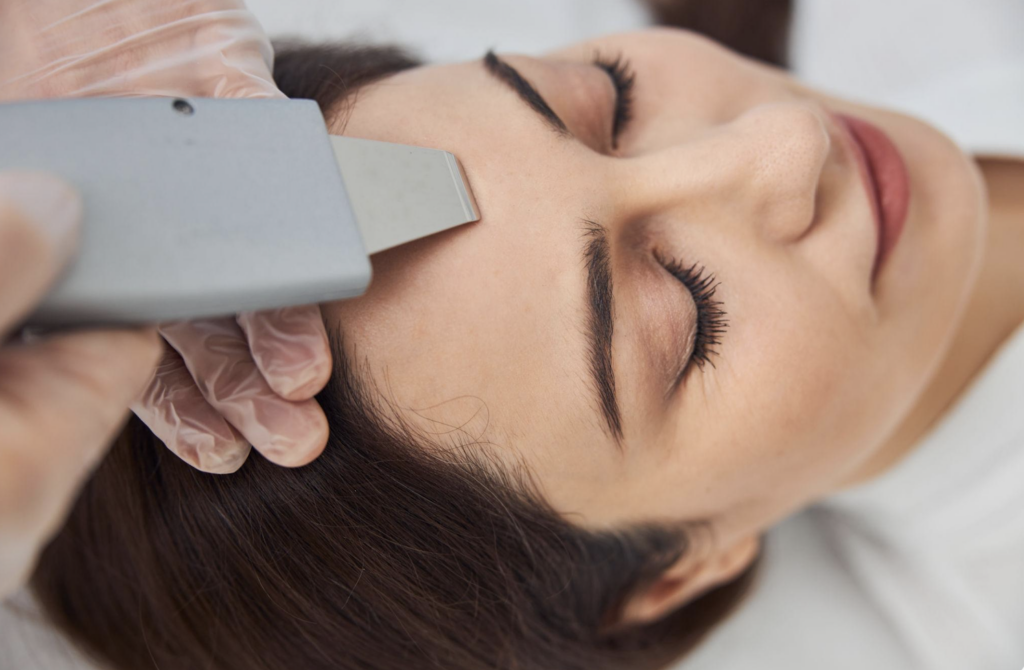
Patients often want deep cleansing, but for sensitive skin, that should not mean scrubbing or stripping. A better goal is gentle cleansing with a gentle cleanser that removes residue, oil, and buildup without damaging the barrier or washing away too many protective natural oils.
This matters because over-cleansing may increase dryness and reactivity. A well-designed facial should leave the skin cleaner and calmer—not tight, shiny, or overly sensitized. That is one of the clearest markers of whether a right facial treatment has truly matched the patient’s needs.
Light-Based Add-Ons May Be Considered When the Goal Is to Calm Inflammation
Some practices also consider light therapy or LED light therapy when the goal is to calm inflammation or support a lower-irritation facial plan. BluePoint offers laser and light-based services within its broader aesthetic menu, but those options should still be matched carefully to the patient’s history, comfort level, and sensitivity pattern.
In a sensitive-skin context, the value of these additions is not aggressive correction. It is a more measured attempt to support comfort, visible calmness, or a refreshed finish when that makes sense clinically. Patients should still understand that not every device belongs in every skincare product plan simply because it sounds advanced.
Gentle Massage Techniques May Support Comfort Without Overstimulating the Skin
Facial technique matters as much as product choice. Gentle massage techniques may support relaxation and product absorption, but pressure and friction should remain light in patients who flush easily or whose skin becomes reactive with rubbing. For this population, softer hands often matter more than longer treatment time.
When performed carefully, this type of approach may contribute to a healthier look, a more radiant complexion, and skin that feels cared for rather than stressed. That softer treatment style often fits better with a sensitive skin offering centered on comfort, moisture retention, and visible calm.
Benefits Should Be Framed Around Comfort, Balance, and Overall Skin Health
The benefits of gentler care are usually subtle but meaningful. Patients may notice more even comfort, less tightness, reduced reactivity, and a complexion that looks more rested. Over time, better barrier support may also improve tolerance to future care and contribute to overall skin health and more stable skin elasticity.
Some patients also report a fresher look, more radiant skin, and mild improvement in how the face reflects light, especially when hydration is restored. In some cases, a healthier barrier also creates a better environment for routine renewal and may indirectly support collagen production, although sensitive-skin facials should not be presented as a guaranteed structural intervention.

FAQ
What Kind of Facial Is Usually Best for Sensitive Skin?
Many patients do best with a hydrating or calming facial that focuses on cleansing, moisture support, and low-irritation ingredients. The best choice depends on your triggers, barrier health, and how reactive your skin has been recently.
Can Exfoliation Still Be Safe for Reactive Skin?
Sometimes, but it usually needs to be much gentler and more selective. Over-exfoliation can worsen sensitivity by disrupting the skin barrier, so providers often scale it back or skip it when the skin is actively irritated.
Why Does My Skin React to So Many Products?
Sensitive skin often reflects a weaker barrier, which allows irritants to affect deeper layers more easily. Environmental triggers, fragrance, harsh ingredients, and overuse of actives can all contribute.
Should I Avoid Sun Exposure After a Gentle Facial?
Yes, especially if your skin is already reactive or if the facial included any exfoliation. Daily sunscreen and limiting direct sun exposure are part of protecting a sensitive skin barrier.
Conclusion
When skin reacts easily, the most effective facial plan is often the one that protects comfort, supports the barrier, and avoids unnecessary stress. Patients with reactive complexions usually benefit more from thoughtful hydration, calming ingredients, and carefully selected techniques than from aggressive exfoliation or highly stimulating treatments. In that setting, the goal is not to push the skin—it is to create conditions that support a calmer, more balanced, and healthier-looking complexion over time.
That is why personalized care matters so much for sensitive skin, reactive skin, and other concerns linked to a weakened barrier. A facial should reflect the patient’s current skin condition, product tolerance, history of irritation, and overall skin health, not just a general trend or a popular service name. Because these treatments are elective, individual results vary, and some options may carry risks or contraindications, a consultation with a licensed provider is required before moving forward.
For patients looking for a more comfortable path to hydration, visible calmness, and a refreshed appearance, the next step should be guided, not guesswork. Schedule a consultation with BluePoint Medical Spa to discuss the most appropriate facial approach for your skin, your sensitivities, and your long-term skincare goals.