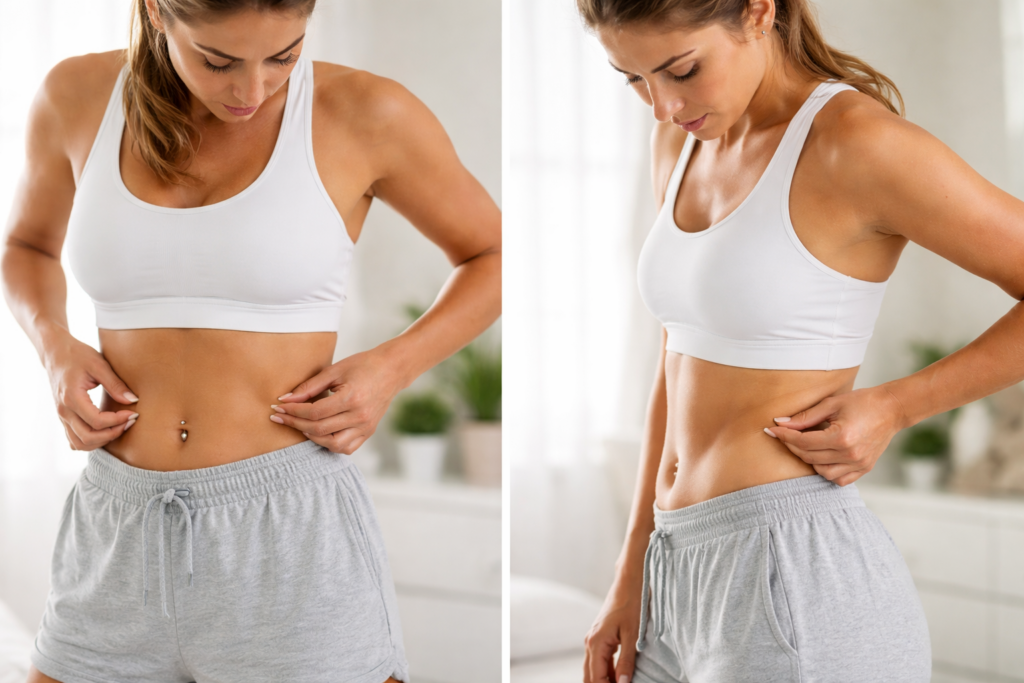
This blog post addresses a frustration many people experience during a weight loss journey: they may lose weight, improve their diet and exercise routine, and still notice stubborn fat in certain areas like the lower abdomen, hips, love handles, upper arms, or thighs. That disconnect can feel discouraging because the scale may move while the mirror seems slower to respond. At BluePoint Medical Spa, body-contouring services are presented for exactly this type of concern—patients near a healthy weight who want to address targeted areas that have not changed despite consistent effort and strong, healthy habits.
The reason this happens is not simply a lack of discipline. The body stores fat differently depending on genetics, age, sex hormones, stress biology, and metabolic patterns. Medical sources also distinguish between visceral fat, which surrounds vital organs, and subcutaneous fat, which sits under the skin and contributes more directly to visible body shape changes in places like the belly, flanks, and thighs. Most people are really asking about that visible, pinchable, often resistant fat when they wonder why some areas of fat don’t respond to diet or exercise.

Why Stubborn Fat Persists Despite Calorie Burn
Many patients assume that if they burn calories, every part of the body should shrink evenly. In reality, fat loss is rarely that symmetrical. Some regions are more metabolically active than others, and some fat cells are more likely to store fat and hold onto it even when total weight is dropping. This is one reason stubborn fat deposits are often called exercise-resistant fat in everyday conversation, even though overall fat loss can still happen elsewhere.
This also explains why endless sit-ups, extra cardio, or aggressive exercise routines do not automatically flatten the abdomen. Mayo Clinic notes that you can strengthen abdominal muscles, but exercises that target the midsection do not selectively remove belly fat on their own. In other words, you may build muscle underneath while still seeing a slower change in the overlying fat layer. That difference matters because patients often confuse muscle improvement with immediate fat reduction.
How Hormones, Stress, and Metabolism Affect Fat Loss
Yes, they often matter more than people realize. Hormones, sleep quality, age-related changes, and stress can influence where the body stores fat, how easily a person uses stored energy, and how quickly visible changes appear. Women, in particular, may notice that body-fat distribution shifts with age, reproductive stages, and hormonal transitions, which can make the midsection or hips feel more resistant than they were years ago.
At the same time, modern routines can work against progress. A person may complete a workout and still struggle if their schedule is built around too many processed foods, inconsistent nutrition, chronic stress exposure, poor sleep, or simply consuming more calories than they realize. Fat loss is not only about willpower; it is also about how the metabolism responds over time. That is why a realistic, holistic approach is often more effective than chasing quick fixes inspired by New Year’s resolutions or other short-lived goals.
How Body Shape and Contours Influence Fat Distribution
Some concerns are not just about body fat. They are also about the body’s natural contours, skin quality, and how certain structures hold fullness. A patient may be at a healthy weight, follow an organized exercise program, and still feel that specific problem areas do not match the rest of their frame. That is especially common in the lower abdomen, flanks, arms, or thighs, where contour can remain disproportionate even after meaningful lifestyle improvement. BluePoint Medical Spa’s current body-sculpting service page speaks directly to patients who want to reduce fat that has not responded to diet and exercise in the abdomen, flanks, and arms.
There is also an important distinction between health risk and cosmetic frustration. Visceral fat is more strongly linked to medical risk because it surrounds vital organs, while subcutaneous fat is often what patients notice in visible targeted areas. That means a person can be improving their health and still feel dissatisfied with a few visible contours. Recognizing that difference helps patients make calmer, more informed decisions instead of assuming their best efforts have failed.

When Non-Invasive Treatments Make Sense
For patients who already maintain strong routines and remain close to their weight loss goal, non-invasive options such as body sculpting may become part of the conversation. These treatments are not presented as replacements for diet, exercise, or medical care. Instead, they are usually discussed for localized fat in people who are not seeking a major surgical transformation, but rather contour refinement in certain areas that have been slow to change. BluePoint Medical Spa specifically frames body sculpting as a low-downtime option for people who want to reduce stubborn fat, improve muscle definition, and support their results with a healthy lifestyle.
This is where comparison matters. A minimally invasive procedure or a noninvasive contouring treatment is very different from plastic surgery performed under general anesthesia. Likewise, these services are not meant for patients with large amounts of excess tissue or those still actively gaining weight. The best candidates are usually closer to a stable baseline, because that makes visible contour change easier to evaluate and more consistent with long-lasting results expectations.
Can Body Sculpting Replace Diet and Exercise?
No, and that point should stay clear. Body sculpting does not replace a healthy diet, regular physical activity, or the work required to lose overall body fat. Patients who come in hoping to treat widespread fullness while continuing habits that add more calories than they use are less likely to feel satisfied. In practical terms, the body can still experience weight gain after contouring if daily routines do not support stability. BluePoint’s public education similarly emphasizes that patients should be committed to supporting their results with lifestyle habits, not relying on treatment alone.
What these treatments may offer is precision. When a patient is doing many things right but still sees resistance in specific zones, focused contouring may help reduce fat in those limited areas in a way that aligns more closely with aesthetic goals. That is why patients return to this topic so often: they are not asking for magic; they are asking why the body does not always change uniformly. The honest answer is that some tissues are simply slower, more genetically patterned, and more influenced by age, hormones, and stress than others.

FAQ
Why do I still have belly fat even though I exercise?
Belly fat is influenced by more than exercise alone. Sleep, stress, hormones, diet quality, and where your body prefers to store fat all affect how quickly that area changes.
Can sit-ups get rid of lower-abdomen fat?
Not by themselves. Sit-ups can strengthen abdominal muscles, but they do not selectively remove fat from the lower abdomen.
Is stubborn fat always unhealthy?
Not always. Visible subcutaneous fat may be more of a contour concern, while visceral fat is the type more closely associated with risk around internal organs.
When should I think about body sculpting?
Usually, when you are near a stable, healthy weight, have already built consistent habits, and still feel frustrated by a few localized areas that do not seem to respond.
Conclusion
The most helpful takeaway is that resistant fat is common, and it does not automatically mean you are doing something wrong. Some pockets respond slowly because of where the body stores fat, how those tissues behave, and whether the issue is truly fat, muscle tone, skin laxity, or a mix of all three. Patients often feel better once they understand that most patients will never be able to spot-reduce every contour through one perfect workout or by deciding to eat less for a few weeks. That is exactly why superficial promises tied to year’s resolutions are usually less helpful than a realistic long-term plan.
For BluePoint Medical Spa patients, the most responsible path is an individualized consultation that reviews anatomy, goals, and whether non-surgical contouring fits the concern. Some people may simply need more time, more structure in their food and activity routine, or a different expectation of how the body-shrinking process looks over time. Others may be appropriate candidates for localized body sculpting after their health and habit foundation is already in place. Schedule a consultation with BluePoint Medical Spa to discuss your goals, your resistant areas, and the most appropriate next step.