

The area beneath the eye is one of the most structurally complex regions of the face and one of the first to show signs of aging. For patients exploring under-eye filler in Las Vegas options, the sheer volume of conflicting information online can make it difficult to understand what the procedure actually involves, whether they are a good candidate, and what a realistic outcome looks like.
This post walks through the anatomy behind tear trough hollowing, the filler technique used to address it, candidacy criteria, contraindications, and what the recovery period typically involves. All injectable treatments at Blue Point Medical Spa are performed by or under the supervision of licensed aesthetic providers.
Causes of Tear Trough Hollowing and Under-Eye Volume Loss
The tear trough is the anatomical groove that runs from the inner corner of the eye diagonally toward the cheek. In youth, this transition is smooth, fat compartments beneath the skin sit evenly distributed and the overlying skin retains adequate elasticity to bridge the contour change. With age, two things happen simultaneously.
First, the periorbital fat pads, the cushioning compartments around the eye socket, shift position and lose volume. Second, the supporting ligaments and soft tissue that anchor those fat pads to the underlying bone gradually weaken, allowing the midface to descend and exposing the hollow more prominently. The result is a shadowed trough that makes patients look tired regardless of how much sleep they have had.
Genetics, sun exposure, and significant weight fluctuation can all accelerate this process. In Las Vegas, where UV index is high for the majority of the year and the desert climate accelerates skin dehydration, patients often notice tear trough progression earlier than they might expect. A consistent desert climate skincare routine can slow surface-level deterioration, but topical products cannot address structural volume loss.
How Hyaluronic Acid Tear Trough Filler Works
Hyaluronic acid filler, a gel made from a substance that occurs naturally in skin and connective tissue, is the standard choice for tear trough correction. HA fillers are favored for this area because they are reversible: a provider can dissolve the product with hyaluronidase, an enzyme that breaks down hyaluronic acid, if correction is needed.
Injection technique in the tear trough differs meaningfully from filler placement in the lips or nasolabial folds. The skin here is exceptionally thin, often one to two millimeters, and sits directly over the orbicularis oculi, the circular muscle that controls eyelid movement. Products are typically placed in the deep plane, close to the bone, rather than superficially in the dermis. Superficial placement in this region carries a higher risk of the Tyndall effect, a blue-grey discoloration visible through thin skin when certain HA formulations scatter light.
For this reason, not all HA fillers are appropriate for the tear trough. Providers at Blue Point Medical Spa use products formulated for low tissue hydrophilicity, meaning they attract less surrounding water, and lower cross-linking density, which reduces the risk of late-onset swelling or migration in this high-movement zone.
Cannula injection, using a blunt-tipped, flexible instrument rather than a sharp needle, is frequently preferred for tear trough work because it reduces the risk of vascular injury in an area with dense microvascular supply. Whether a needle or cannula is used depends on individual anatomy and the provider’s clinical judgment.
Candidates for Under-Eye and Tear Trough Filler
Ideal candidacy depends on the underlying cause of the hollow. Tear trough filler works best when the primary issue is volume loss, a genuine structural deficit in the soft tissue beneath the eye. Patients in this category typically have a well-defined groove running from the inner corner of the eye toward the cheek, skin that is not severely lax or crepey in the undereye area, moderate to good skin thickness, thin, papery skin limits how much filler the area can accommodate without visible show-through, no significant lower-lid fat herniation, puffiness caused by fat that has shifted forward, which filler cannot correct and may worsen, and realistic expectations for improvement, not perfection.
Age is not a standalone criterion. Some patients in their late twenties present with tear trough hollows due to genetic anatomy, a deep orbital rim, and minimal native periorbital fat and may benefit from filler earlier than they expect. Others in their fifties have mild hollowing and respond well. A thorough in-person consultation, including an evaluation of lower-lid position and skin quality, is the only way to confirm suitability.
Patients considering dermal fillers for volume loss and aging more broadly may find that addressing midface volume loss and tear trough hollowing together produces more harmonious results than treating the undereye in isolation.
Tear Trough Filler Contraindications and Alternative Treatments
Not every patient presenting with under-eye concerns is a candidate for tear trough filler. Understanding the contraindications is as important as understanding the technique.
Lower-Lid Fat Herniation
When the hollow beneath the eye is accompanied by prominent lower-lid bags, created by orbital fat that has prolapsed forward through a weakened orbital septum, filler can make the area look heavier rather than smoother. In these cases, surgical blepharoplasty, lower-eyelid surgery to reposition or remove herniated fat, is typically the more appropriate intervention. A qualified provider will identify this distinction during consultation.
Significant Lower-Lid Laxity
Patients with loose, lax lower-lid skin may see the filler create a visible roll rather than a smooth contour. For these patients, combining filler with a skin-tightening treatment or pursuing a surgical option may produce more predictable results.
Active Skin Conditions
Patients with active infections, inflammation, or open wounds in the periorbital area are not candidates for injection until the condition resolves. Cold sores, for instance, should be fully healed before any facial injectable procedure.
Medical Conditions and Medications
Blood thinners, anticoagulant medications, and some supplements, such as fish oil, vitamin E, and aspirin, increase bruising risk. Patients with autoimmune conditions or those who are pregnant or breastfeeding should discuss contraindications with their provider before proceeding. This is not an exhaustive list; the intake consultation exists specifically to surface individual risk factors.

What to Expect During Tear Trough Filler Treatment
The Tear Trough Filler Procedure
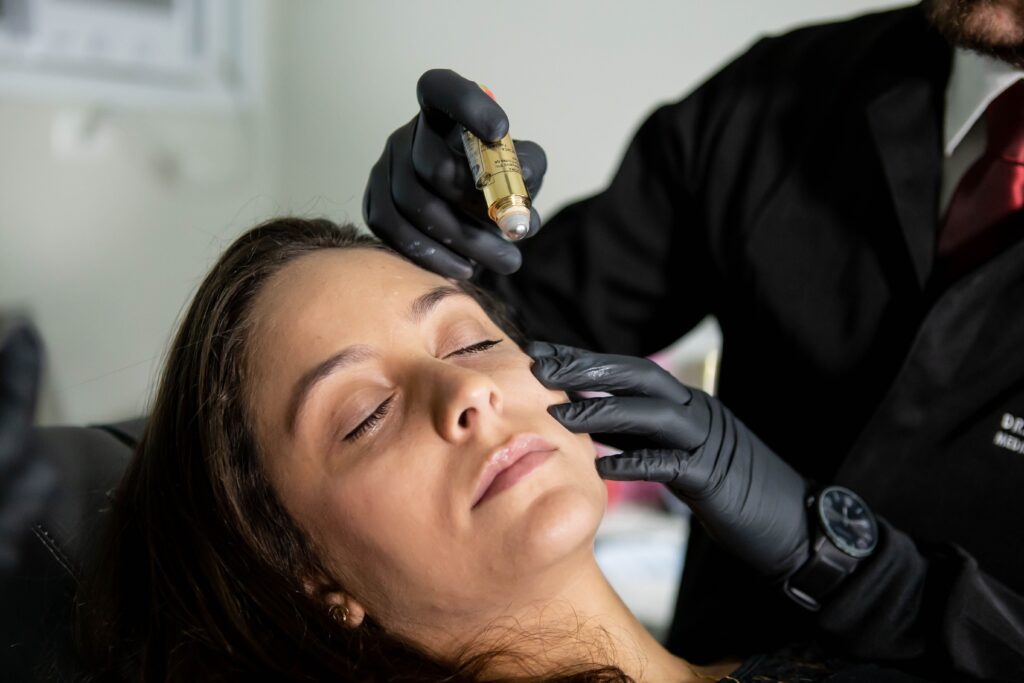
Tear trough filler appointments at Blue Point Medical Spa typically take 30–60 minutes, including intake review, topical numbing, usually applied 15–30 minutes before injection, the injection itself, and immediate post-treatment assessment. Most HA fillers also contain lidocaine, a local anesthetic, which further reduces discomfort during placement.
Patients may feel mild pressure during the injection. Significant pain is not expected; if it occurs, providers adjust technique in real time.
Recovery and Immediate Side Effects
The periorbital region bruises more readily than most other injection sites. Bruising and swelling are common in the first 48–72 hours. Swelling in this area can look more pronounced than the final result suggests; providers advise patients not to assess their outcome during this period.
Firmness at the injection site is normal as the product integrates with surrounding tissue. It typically softens over one to two weeks. Sleeping with the head slightly elevated for the first night can reduce initial swelling. Strenuous exercise, alcohol, and significant heat exposure saunas, steam rooms, are generally avoided for 24–48 hours post-treatment.
Las Vegas summers add one specific consideration: patients having tear trough filler during summer months should plan sun avoidance carefully in the days following treatment, since heat and UV exposure can exacerbate inflammation. Reviewing a comprehensive summer skincare and sun protection plan before scheduling filler is worthwhile for any patient who spends meaningful time outdoors.
Duration of Under-Eye Filler Results
Hyaluronic acid filler in the tear trough typically lasts 12–18 months, though this varies based on the product used, the volume placed, individual metabolism, and the degree of movement in the area. The orbicularis oculi muscle moves with every blink, thousands of times daily, which can accelerate filler breakdown compared to less mobile areas. Patients are usually advised to schedule a follow-up assessment at six to twelve months to evaluate whether a touch-up volume is appropriate.
Individual results vary based on anatomy, skin condition, lifestyle, and treatment plan.
Combining Tear Trough Filler With Other Facial Treatments
Tear trough correction is rarely the only facial concern patients bring to a consultation. The undereye hollow often appears in the context of broader midface descent, fine lines around the eyes, or skin-texture changes that no single treatment addresses alone.
For patients who have never had any injectable treatment, understanding the difference between Botox and fillers is a useful starting point. Botox, a neuromodulator, meaning it temporarily relaxes muscle activity, addresses dynamic wrinkles, the kind caused by repetitive movement, such as crow’s feet and the fine lines that radiate from the outer eye corners. Filler addresses structural volume loss. Many patients benefit from both, placed strategically, for a result that looks balanced rather than treated.
Patients who are newer to injectables may also find it helpful to read about the range of dermal filler options and how providers select among them based on the treatment area, desired result, and individual anatomy.

FAQ
How long does swelling last after tear trough filler?
Bruising and swelling are common during the first 48–72 hours after treatment. The area may appear more swollen than the final result during this period, and firmness at the injection site can take one to two weeks to soften as the product integrates with the surrounding tissue.
Can under-eye filler correct lower-lid bags?
Tear trough filler is designed primarily to address structural volume loss and hollowing. It may not be appropriate for prominent lower-lid bags caused by fat herniation and can make that type of puffiness appear heavier. A consultation is necessary to distinguish between hollowing and herniated fat.
How long does under-eye filler usually last?
Hyaluronic acid filler in the tear trough typically lasts 12–18 months. Duration varies based on the specific product, the amount placed, individual metabolism, anatomy, and movement in the treated area.
Conclusion
Tear trough filler can address under-eye hollowing caused by structural volume loss, but the area requires careful assessment and precise technique. Skin thickness, lower-lid position, fat distribution, midface volume, and the presence of lower-lid bags all influence whether filler is an appropriate treatment.
Because the skin beneath the eyes is exceptionally thin and the area contains a dense vascular network, product selection and placement are especially important. A personalized consultation allows a licensed provider to evaluate the anatomy, explain realistic results, identify contraindications, and determine whether filler or another approach is more suitable.
Tear trough treatment requires a precise clinical assessment before any product is recommended. The undereye area has a low margin for error. Skilled technique and appropriate product selection make the difference between a natural-looking result and one that requires correction.
If you are considering under-eye filler in Las Vegas, schedule a consultation with Blue Point Medical Spa. Licensed aesthetic providers evaluate your periorbital anatomy, skin quality, and goals to determine whether tear trough filler is the appropriate approach and, if so, recommend a treatment plan designed for your specific structure.
Individual results vary based on anatomy, skin condition, lifestyle, and treatment plan. All injectable treatments are performed by or under the supervision of licensed aesthetic providers. This post is for informational purposes only and does not constitute medical advice.