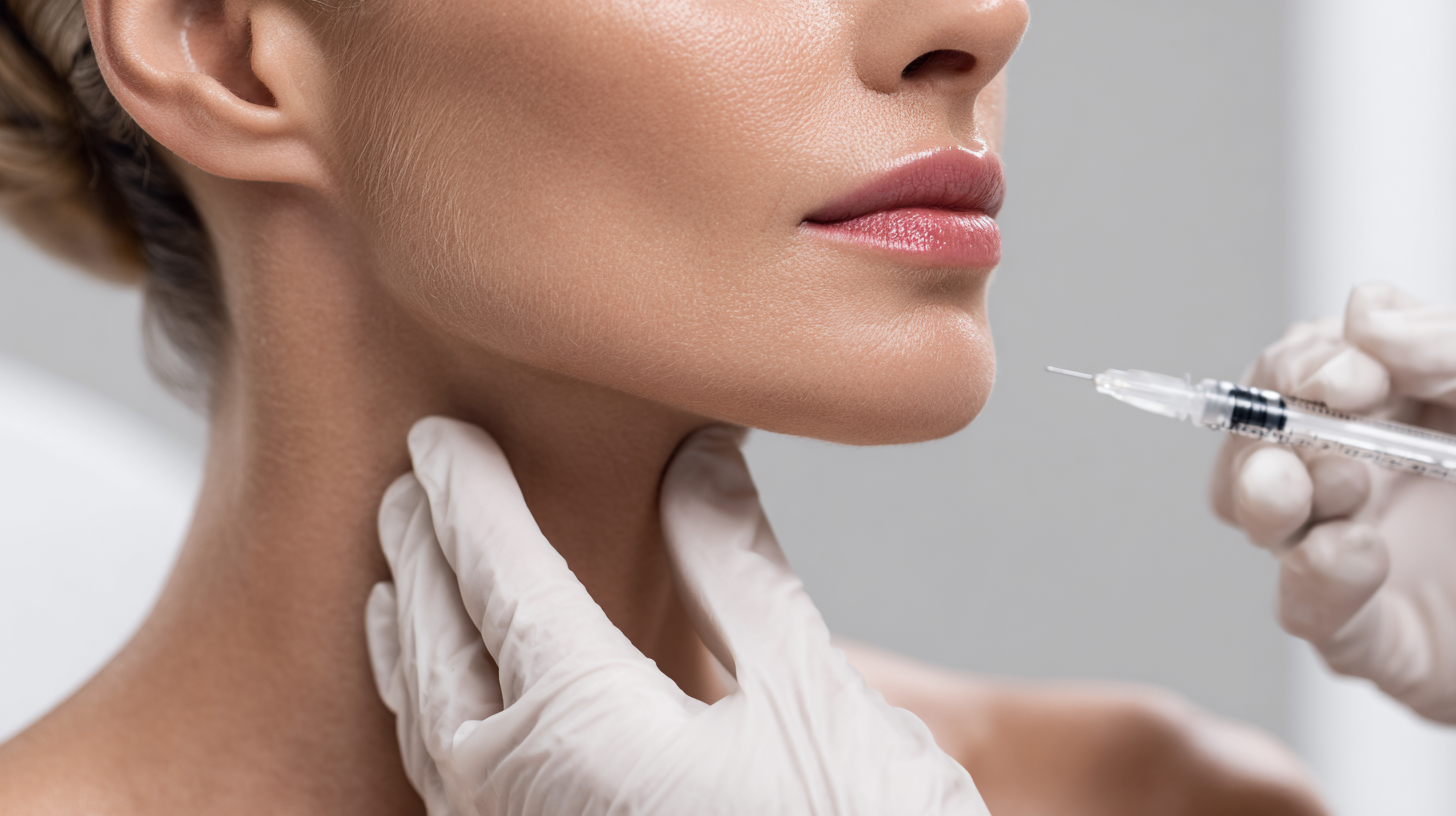

Search results for Sculptra vs. Radiesse biostimulator fillers tend to lump both products into the same category and stop there, as if “biostimulator” describes one single mechanism. It doesn’t. Sculptra and Radiesse both encourage the body to build its own collagen, but they get there through different materials, different timelines, and different immediate effects. That difference matters when a patient and provider are deciding which one fits a specific set of goals.
Blue Point Medical Spa’s only prior Sculptra content dates back to 2016, and the practice hasn’t published anything on Radiesse before now. Both products have evolved in how providers use them since then, so this post starts fresh: what each one is made of, how each one actually works in the skin, and where the real decision points are.
Most dermal fillers, hyaluronic acid products like Juvederm and Restylane among them, work by physically occupying space under the skin. The gel goes in, the volume shows up, and the effect fades as the body gradually breaks the gel down. Readers who want the fuller landscape of filler categories can start with an overview of dermal filler types before narrowing in on biostimulators specifically.
Biostimulator fillers work differently. Instead of relying mainly on the material itself for volume, they’re designed to trigger the body’s own fibroblasts, the cells responsible for producing collagen, into building new structural tissue. Sculptra and Radiesse are the two biostimulators most commonly discussed together, but as the next two sections show, they don’t share a mechanism. One leans almost entirely on that biological response. The other combines it with material that also does the work of filling space.
How Sculptra Builds Collagen Over Time
Sculptra is made from poly-L-lactic acid, or PLLA, a synthetic, biodegradable polymer that has been used in medicine for decades in resorbable sutures. For injectable use, PLLA microparticles are suspended in sterile water and injected into the deep dermis or the layer beneath it.
The water carrier does create a small amount of volume immediately after injection, but that effect is temporary. It typically resolves within a few days as the body absorbs the water, which means the visible change a patient notices right after treatment is not the lasting result.
What happens next is the actual mechanism. The PLLA microparticles prompt a controlled, low-grade inflammatory response, and as the body processes those microparticles, fibroblasts activate and begin producing new collagen. That collagen builds gradually, and visible improvement generally starts to appear several weeks after treatment, not immediately.
Because the process depends on the body’s own collagen production rather than injected volume, Sculptra is typically delivered across multiple treatment sessions spaced several weeks apart rather than in a single visit. Providers commonly use it for broader areas of facial volume loss, such as the temples and cheeks, and it is not typically used in the lips or forehead.
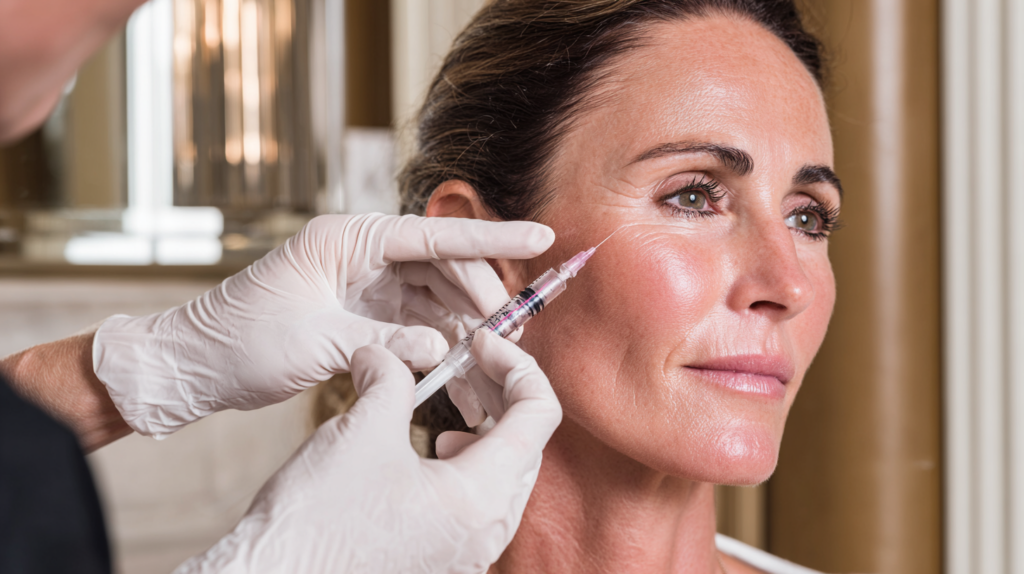
How Radiesse Provides Immediate Volume and Collagen Stimulation
Radiesse takes a different approach. It’s made from calcium hydroxylapatite, or CaHA, a mineral compound formed into microspheres and suspended in a gel carrier made of carboxymethylcellulose. Roughly 30 percent of the formula is CaHA microspheres, with the gel making up the remaining volume.
That composition is what creates Radiesse’s dual action. Unlike Sculptra’s water carrier, the CaHA and gel combination provides genuine, physical volume at the time of injection, similar to how a hyaluronic acid filler behaves in the moment.
Over the following months, the gel is gradually absorbed, and the CaHA microspheres that remain act as a scaffold that continues to stimulate the body’s own fibroblasts, supporting the production of new collagen, elastin, and surrounding tissue.
In other words, Radiesse doesn’t ask a patient to choose between an immediate result and a collagen-building one. It’s designed to provide both from the same treatment.
Radiesse is commonly used in the cheeks and along the jawline for facial contouring, and it holds a distinction Sculptra doesn’t: it’s the only dermal filler with FDA approval specifically for correcting volume loss in the back of the hands.
Sculptra vs. Radiesse: Mechanism, Timeline, and Duration
The clearest way to understand the differences between Sculptra and Radiesse is to compare how each product creates volume, stimulates collagen, and develops results over time.
Immediate volume: Radiesse provides real, physical volume at the time of injection. Sculptra’s initial volume is water-based and temporary, resolving within days.
Collagen-building mechanism: Both products stimulate fibroblast activity, but Sculptra relies on this process almost entirely for its visible result. Radiesse layers collagen stimulation on top of volume that’s already there.
Typical timeline to visible change: Sculptra generally takes several weeks to show its effect and often requires multiple sessions. Radiesse shows some effect at the appointment, with additional collagen-related improvement developing afterward.
Commonly reported duration: Providers and clinical sources often describe both products’ benefits as lasting beyond a year, sometimes longer, though the range varies by treatment area and by patient. Patients interested in how longevity varies by product and location may find it useful to review a guide to dermal filler timelines.
Typical treatment areas: Sculptra is more often used for broader facial volume loss, including the temples and cheeks. Radiesse is more often used for cheek and jawline contouring, as well as hand volume loss.
Individual results vary based on anatomy, metabolism, skin condition, and the treatment plan a provider develops for each patient, so none of these timelines or durations should be read as a promise for any specific outcome.
Choosing Between Sculptra and Radiesse
Neither product is a universal answer, and the right choice depends on what a patient wants out of treatment and what a licensed provider observes during an evaluation.
Sculptra tends to make sense for patients who are managing broader, more gradual volume loss across the face and who are comfortable with a multi-session plan that builds results over time rather than delivering an immediate change.
Radiesse tends to make sense for patients who want to see something at the appointment while also receiving a longer-term collagen benefit, or who are specifically addressing volume loss in the hands.
Patients focused on supporting collagen more broadly, not just through injectables, may also want to explore an overview of collagen and skin aging. A board-certified provider can help determine which approach, or combination of approaches, fits a specific set of goals after an in-person evaluation of facial anatomy and skin condition.

FAQ
Can Sculptra and Radiesse Be Used Together in the Same Treatment Plan?
Some providers do combine biostimulators with other products as part of a broader plan, depending on the areas being treated and the patient’s goals. Whether that makes sense for a specific patient is something a provider determines during a consultation, not something to plan out independently beforehand.
Will Sculptra or Radiesse Make My Face Look Overdone?
Both products are designed to work gradually and to support the skin’s own structure rather than create sudden, dramatic change. A thorough consultation and a conservative, staged approach are part of how providers manage that risk. Results are meant to look like the patient’s own skin doing more, not like an obvious add-on.
How Is a Biostimulator Different From a Hyaluronic Acid Filler?
Hyaluronic acid fillers like Juvederm and Restylane rely mainly on the injected gel itself for volume, and they’re reversible with an enzyme called hyaluronidase if a correction is needed.
Biostimulators like Sculptra and Radiesse are designed to trigger the body’s own collagen production, and Radiesse adds physical volume on top of that biological effect. Neither Sculptra nor Radiesse is reversible the way hyaluronic acid fillers are, which is one more reason a provider consultation matters before choosing between them.
Conclusion
Choosing between Sculptra and Radiesse isn’t something to settle based on a blog post alone. The right option depends on facial anatomy, the pattern and location of volume loss, treatment goals, skin condition, and whether a patient prefers gradual improvement or more immediate volume.
Sculptra may be more appropriate for patients seeking broad, progressive collagen support across the face, while Radiesse may be considered for patients who want immediate contouring combined with longer-term collagen stimulation. In some cases, another injectable or a combination treatment may be more suitable.
Individual results vary, and no treatment plan should be built around a guaranteed timeline or outcome. A licensed, board-certified provider can evaluate facial structure, discuss expectations, and recommend the safest and most appropriate approach.
The injectables team at Blue Point Medical Spa reviews both options during a consultation and can help determine which biostimulator, if either, fits your goals.
Schedule a consultation with Blue Point Medical Spa to discuss Sculptra, Radiesse, and the full range of filler options available for your facial rejuvenation goals.