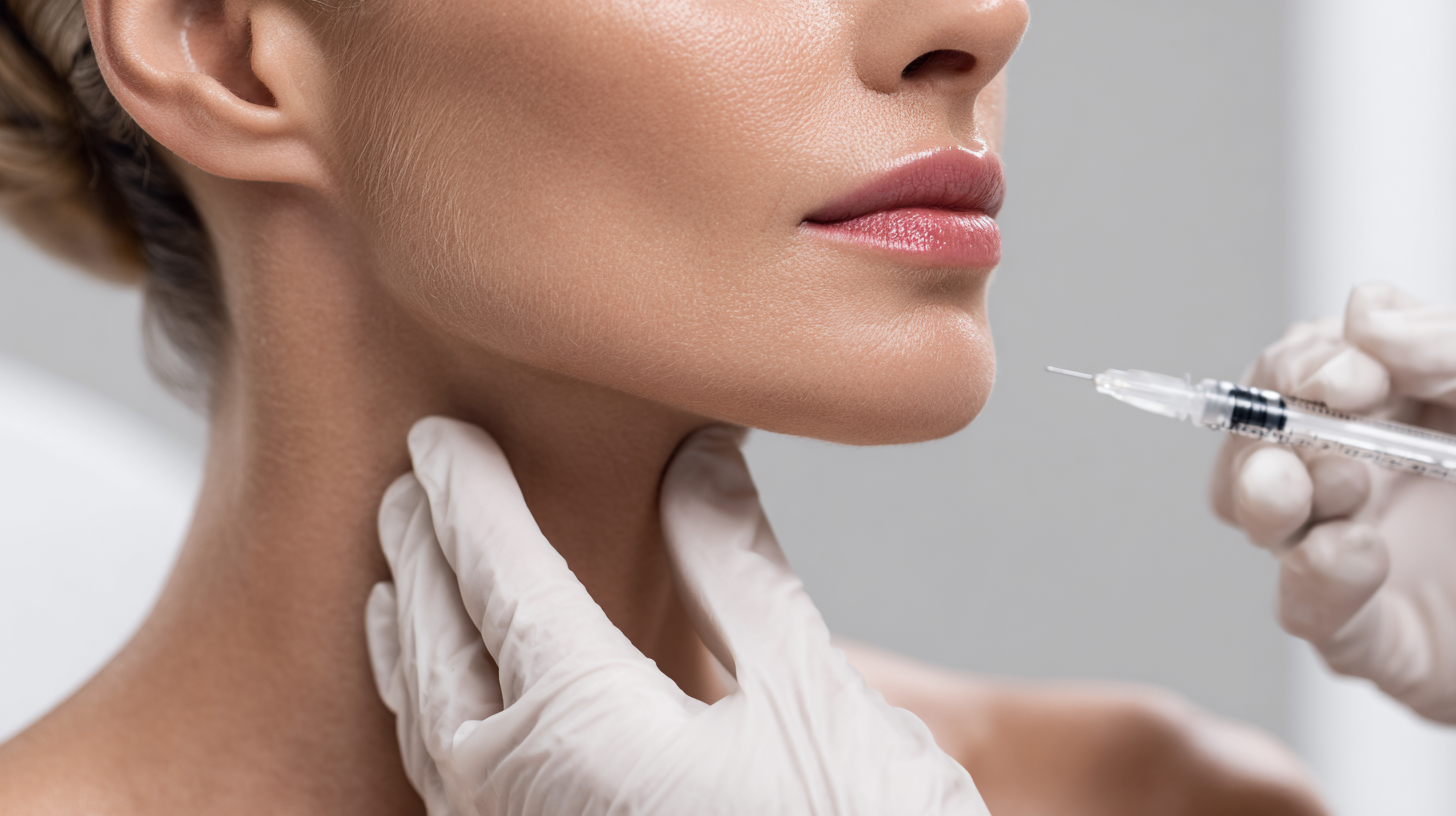

Losing a significant amount of weight changes more than the number on the scale. It also changes how skin behaves, and not always in the way people expect. Many patients who lose weight through diet and exercise, bariatric surgery, or GLP-1 medications like semaglutide notice loose or crepey skin in the abdomen, arms, thighs, or under the chin once the fat volume that used to fill that skin is gone.
This is a different problem from ordinary age-related skin laxity, and it deserves a direct answer rather than a sales pitch. Some patients are good candidates for nonsurgical skin tightening treatments like radiofrequency, or RF, and Ultherapy. Others have more excess skin than any energy-based device can meaningfully address, and a surgical consultation is the more realistic path. This post walks through how to tell the difference.
How Significant Weight Loss Affects Skin Elasticity
Ordinary skin laxity develops gradually as collagen, the structural protein that gives skin its firmness, and elastin, the protein that lets skin snap back into shape, decline slowly over the years.
Post-weight-loss laxity involves that same age-related decline, but adds something else. The skin was stretched to accommodate a larger fat volume for months or years, and when that volume disappears, especially quickly, the skin doesn’t always have time to contract back down.
Elastin fibers are part of the reason. Once stretched and damaged, elastin doesn’t regenerate well on its own. The dermis, the skin’s middle layer where collagen and elastin live, which once supported a larger frame, is left with more surface area than the smaller frame underneath it needs. That excess has to go somewhere, and it appears as loose, hanging, or crepey skin.
Several factors tend to predict how much laxity a person may experience.
Total amount of weight lost: Larger total weight loss generally means more skin must adjust to a smaller underlying frame.
Length of time at the higher weight: Skin that was stretched for years has had more time to lose elastic recoil than skin stretched for a shorter period.
Age: Younger skin generally has more elastin reserve and may retract better than skin that was already experiencing age-related decline before the weight loss started.
Sun exposure history and genetics: Both affect how much collagen and elastin quality remained before the weight change.
Patients who want additional background on these changes may benefit from reviewing how collagen and elastin break down over time, independently of weight loss.

Realistic Results From Nonsurgical Skin Tightening
Radiofrequency and Ultherapy both work by delivering controlled energy to deeper skin tissue, which triggers existing collagen to contract and prompts fibroblasts, the cells that produce collagen, to generate new collagen over the following months.
A full comparison of RF and ultrasound skin tightening, along with an explanation of how RF remodels skin at the tissue level, can help patients understand the mechanisms behind these treatments. For post-weight-loss patients, however, the most important issue is candidacy.
Clinical research on RF and ultrasound-based tightening shows real, measurable improvement for mild to moderate skin laxity. Studies of RF microneedling for weight-loss-related skin concerns have reported meaningful tightening at the six-month mark, and combination RF and ultrasound protocols have shown clinically noticeable improvement in many treated patients.
Those findings describe averages from clinical research, not a promise about any individual outcome. Individual results vary, and a consultation is the only reliable way to estimate what a specific patient may experience.
Two factors matter before pursuing nonsurgical tightening after weight loss.
Weight stability: Providers generally recommend waiting until weight has remained stable for roughly three to six months before assessing candidacy for RF, Ultherapy, or another skin tightening treatment. Skin may continue to retract naturally during that period, and treating too early can give a misleading picture of how much laxity will remain.
Degree of laxity: RF and Ultherapy tighten existing tissue. They do not remove excess skin, which creates a real limit for patients with more significant laxity.
Limits of Nonsurgical Skin Tightening After Weight Loss
Many patients don’t hear this until after they’ve already tried a treatment and felt disappointed by the result: nonsurgical skin tightening has a ceiling, and significant post-weight-loss skin laxity often sits above it.
If the skin visibly hangs in folds, doesn’t retract when a person changes position, causes chafing or irritation where it rubs against itself, or interferes with clothing and movement, that is a different category of concern from the textural laxity RF and Ultherapy are designed to treat.
Heat and energy-based devices can improve tissue quality, firmness, and mild looseness. They cannot remove excess skin. When there is more skin than the underlying frame needs, tightening the tissue that remains does not make the extra skin disappear.
This is a common experience after major weight loss, whether it comes from bariatric surgery, sustained diet and exercise changes, or GLP-1 medications. Skin that was stretched for an extended period doesn’t always retain the elastic capacity to fully retract, regardless of how much collagen remodeling a nonsurgical device can trigger.
That mechanical limitation does not mean the patient failed to respond to treatment. It means the concern may require a different type of procedure.
Signs a Surgical Consultation May Be More Appropriate
For patients with substantial excess skin, a consultation with a board-certified plastic surgeon, rather than a nonsurgical treatment, is generally the more realistic recommendation.
Surgical procedures like panniculectomy, the removal of excess lower abdominal skin, brachioplasty, or an arm lift, and body lift procedures physically remove excess tissue rather than attempting to tighten it in place.
These are surgical procedures performed by plastic surgeons, not services offered at Blue Point Medical Spa, and a medical spa consultation is not a substitute for a surgical evaluation.
Several signs may indicate that a surgical referral is the more appropriate conversation.
Persistent skin folds: Skin folds that do not improve with position changes or after weight has remained stable may reflect true excess rather than mild laxity.
Recurring skin irritation: Rashes, chafing, infections, or skin breakdown where tissue overlaps may require more than an aesthetic tightening treatment.
Physical limitations: Excess skin that restricts movement, exercise, clothing choices, or daily activities may be better addressed through surgical evaluation.
Visible excess as the primary concern: If the patient’s main goal is removing hanging skin rather than improving texture or firmness, nonsurgical treatment is unlikely to create the desired degree of change.
Nonsurgical treatment can still have a role for some surgical patients. A person may pursue surgical excision for areas with true excess, then use RF or Ultherapy afterward, or in areas that were not included in the surgical plan, to support skin quality and firmness.
The two approaches address different problems and may complement each other rather than compete.

Blue Point Medical Spa’s Approach to Post-Weight-Loss Skin
A licensed provider should offer an honest assessment rather than recommend a treatment simply because it is available. That evaluation looks at the degree of laxity, where it is located, how long the patient’s weight has been stable, and what the patient hopes to achieve.
A provider may recommend RF or Ultherapy for mild to moderate laxity, a combination approach alongside body sculpting when residual fat pockets remain part of the concern, or a referral to a plastic surgeon when the amount of excess skin exceeds what nonsurgical treatment can realistically improve.
Patients considering ultrasound-based treatment may also benefit from learning what an Ultherapy treatment session involves before deciding whether it fits their goals.
Abdominal laxity and arm laxity do not behave in the same way, and a plan that works for one area may not be appropriate for another. The skin under the chin, inner thighs, upper arms, and abdomen can also differ in thickness, movement, and degree of stretching.
A general guideline can only go so far. An in-person skin and body evaluation carries more weight than any recommendation made without examining the treatment area.

FAQ
How long should my weight be stable before skin tightening treatment?
Providers generally recommend waiting until weight has been stable for approximately three to six months before evaluating candidacy for RF, Ultherapy, or another nonsurgical treatment. This allows time for natural skin retraction and provides a clearer view of the laxity that is likely to remain.
Can radiofrequency or Ultherapy remove hanging skin?
No. Radiofrequency and Ultherapy can improve firmness and mild to moderate laxity by stimulating collagen remodeling, but they do not remove excess tissue. Skin that hangs in substantial folds or interferes with daily activities may require an evaluation by a plastic surgeon.
Can skin tightening be combined with body sculpting?
In some cases, yes. Body sculpting may help address localized fat pockets, while RF or ultrasound-based treatment focuses on skin quality and firmness. These treatments address different concerns, so a provider must first determine whether residual fat, skin laxity, true excess skin, or a combination of factors is present.
Conclusion
Post-weight-loss skin laxity is common, and it is not something patients should feel discouraged about. Losing weight may reveal changes in skin elasticity that were difficult to predict before the weight came off.
Some patients find that RF or Ultherapy meaningfully improves skin quality and firmness once their weight has stabilized. Others have more excess skin than a nonsurgical device can address, and the more useful next step is a referral to a plastic surgeon rather than a series of treatments unlikely to deliver the change they are looking for.
The right recommendation depends on whether the primary concern is mild laxity, crepey texture, residual fat, or true excess skin. It also depends on the treatment area, age, skin quality, weight history, and the patient’s expectations.
Individual results vary, and no nonsurgical treatment can guarantee a specific outcome or timeline.
Schedule a consultation with Blue Point Medical Spa for a straightforward assessment of your post-weight-loss skin and a personalized discussion of which options- nonsurgical treatment, combination care, or surgical referral- make the most sense for your goals.