An acne-safe skincare routine is not one miracle product. It’s a small set of ingredients used in the right order, at the right times, so they treat breakouts without fighting each other or wrecking your skin barrier in the process. Getting the sequencing right matters as much as picking the right ingredients in the first place.
This guide walks through what the core acne ingredients actually do, which combinations need spacing out, and what to do differently around an in-office treatment. None of it replaces a personalized plan from a provider, but it gives you a solid framework to build a routine around, whether you’re managing breakouts at home or supporting results from a clinical program like Acne Bootcamp.
Core acne ingredients and their role in skincare
Most acne routines, at-home or prescription-strength, draw from the same short list of active ingredients. Understanding what each one does makes it much easier to figure out how to combine them.
- Retinoids clear pores and treat blackheads, whiteheads, and pimples. Over time, they also help fade the dark spots acne leaves behind. The tradeoff is irritation: dryness, peeling, and burning are common, especially in the first few weeks.
- Benzoyl peroxide reduces the acne-causing bacteria on the skin (C. acnes). It works best paired with something that addresses a different cause of breakouts, like a retinoid clearing pores, since the two ingredients tackle the problem from different angles.
- Salicylic acid is a beta-hydroxy acid that exfoliates and opens clogged pores. It’s especially effective on whiteheads and pimples.
- Azelaic acid keeps pores clear and has antibacterial and anti-inflammatory effects. It also treats the dark marks acne leaves behind and tends to be gentler than the other options here.
Combining these activities is a legitimate, commonly used clinical strategy, not something inherently risky. Dermatologists prescribe fixed-dose combination products (a retinoid plus benzoyl peroxide, for example) precisely because different acne drivers respond to different mechanisms, the same logic behind clinical acne treatments that pair multiple approaches. The part that requires care is how you combine ingredients at home.
Safe acne ingredient combinations and proper spacing
Retinoid and benzoyl peroxide
This is one of the most common prescription pairings, but both ingredients can be irritating on their own, and combining them raises that risk. A frequent approach: benzoyl peroxide in the morning, retinoid at night, starting every other day rather than daily, paired with a gentle, non-comedogenic moisturizer. If redness or peeling escalates, scale back and check in with a provider.
Retinoid and salicylic acid
Layering these at full strength in the same routine generally isn’t recommended, since the combined dryness and redness risk adds up quickly. A rinse-off salicylic acid cleanser carries less risk than a leave-on salicylic acid product used alongside a retinoid. Separating them by time of day, or alternating which nights you use each one, is a common way to introduce both without overwhelming your skin.
Retinoid and azelaic acid
This pairing is considered one of the more compatible combinations, particularly when separated by time of day (azelaic acid in the morning, retinoid at night). Watch for dryness even here, and scale back if it appears.
Azelaic acid and other acids
Combining azelaic acid and other acids (glycolic, salicylic, lactic) without spacing them out raises the risk of over-exfoliation, barrier disruption, and dryness. The same logic applies to vitamin C serums layered with acid exfoliants: many skincare educators recommend keeping vitamin C in the morning and acid actives at night rather than combining them in the same step, since layering them can affect how well each one works and how much irritation you experience.
The general principle across all of these: introduce one active at a time, give your skin days to weeks to show how it responds, and treat a plain moisturizer plus broad-spectrum sunscreen as the non-negotiable foundation underneath everything else.
Sun protection during acne treatment
Retinoids and benzoyl peroxide both increase sun sensitivity. Retinoids thin and exfoliate the outer layer of skin, which reduces its natural sun protection. Benzoyl peroxide can increase how easily skin burns. In a high-UV climate like Las Vegas, that combination makes daily broad-spectrum SPF 30+ essential, not optional, including on overcast days and during mostly indoor days, since UV exposure through windows still counts.
A simple habit that helps: apply retinoids at night, and if you’re using benzoyl peroxide separately in your morning routine, follow it with sunscreen before you leave the house.
Acne skincare before and after professional treatments
If your routine includes chemical peels, laser treatments, or extractions, the ingredients above need to be paused around the appointment. This matters just as much for peels aimed at post-acne dark marks as it does for peels used on active breakouts.
Before a peel or laser session, many providers recommend pausing retinoids, glycolic acid, salicylic acid, and other exfoliating activities for a period beforehand, commonly around 48 hours, though the exact window depends on the specific treatment. Avoiding sun exposure and keeping skin well moisturized in the days leading up to treatment also helps.
After treatment, the same activities typically stay paused for a period while the skin barrier recovers, along with fragranced products. A gentle, fragrance-free moisturizer and daily broad-spectrum SPF 30+ become the routine during that window. Avoid picking at any peeling skin, skip hot tubs and pools for about a week if you’ve had a peel, since compromised skin carries a higher infection risk, and hold off stacking additional facials, waxing, or laser sessions on the treated area.
Timing varies enough by treatment depth and type that your provider’s specific aftercare instructions should always override general guidance like this. Think of the ranges above as what to expect, not a fixed countdown.
Building a sustainable acne-safe skincare routine
A routine that actually holds up day to day comes down to four steps: cleanse gently with your fingertips rather than a washcloth or brush, treat with one active introduced at a time, moisturize with a non-comedogenic formula even if your skin is oily, and protect with sunscreen every morning.
A few habits work against that routine without people realizing it. Washing more than twice a day, or reaching for astringents and harsh scrubs, strips skin and can paradoxically worsen breakouts. Skipping moisturizer to “dry out” acne does the same thing. Switching products frequently, before giving one enough time to work, adds irritation on top of irritation.
Most acne treatments need six to eight weeks before you can judge whether they’re working, so patience is part of the routine, not a failure of it. And picking or squeezing at lesions pushes their contents deeper, which tends to increase inflammation, scarring risk, and pain rather than solve anything faster.
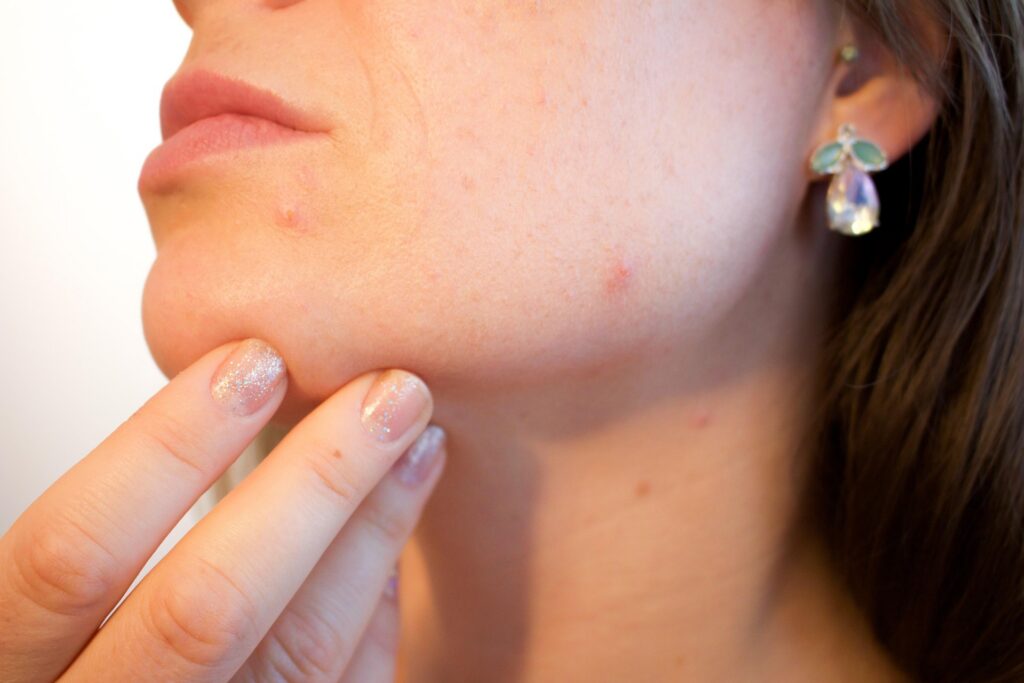
Professional acne treatment and skin analysis
Some signs point toward professional support rather than another product swap: breakouts that persist after six to eight weeks of consistent use, cystic lesions that don’t respond to typical over-the-counter options, or dark marks that linger long after the acne itself has cleared.
That’s where a provider-led skin analysis and a structured program like Acne Bootcamp build on the at-home foundation covered here rather than replace it. A board-certified provider can identify which combination of in-office treatments and at-home activities fits your specific skin, since individual results vary and what works well for one person’s acne may not be the right starting point for another’s. If you’ve been managing breakouts on your own and want a complete treatment plan, a consultation is a reasonable next step, not a sign your routine failed.
FAQ
Which acne ingredients should not be used together?
Retinoids and leave-on salicylic acid products can cause significant dryness and irritation when layered at full strength in the same routine. Azelaic acid combined with glycolic, salicylic, or lactic acid may also increase the risk of over-exfoliation. Separating ingredients by time of day or alternating the days they are used can help reduce irritation.
How long should an acne skincare routine take to show results?
Most acne treatments need six to eight weeks of consistent use before you can accurately judge whether they are working. Switching products too quickly can add irritation and make it harder to identify which ingredients are helping or causing a reaction.
Should acne products be stopped before a chemical peel or laser treatment?
Many providers recommend temporarily pausing retinoids, glycolic acid, salicylic acid, and other exfoliating ingredients before a chemical peel or laser treatment. The exact timing depends on the treatment type and depth, so the provider’s specific preparation and aftercare instructions should always take priority.
Conclusion
An effective acne routine depends on more than choosing the right active ingredients. The order in which they are used, the time allowed between applications, and the condition of the skin barrier all influence how well the routine works and how much irritation occurs. Introducing one active at a time, moisturizing consistently, and using daily sun protection can help support results without overwhelming the skin.
When breakouts continue despite consistent home care, or when cystic lesions and post-acne marks remain, a professional evaluation can help identify which combination of products and in-office treatments is appropriate for your skin. A personalized plan can build on your current routine while accounting for your skin type, treatment history, and individual goals.
If you have been managing acne on your own and want guidance on which ingredients, products, or professional treatments may be appropriate, schedule a consultation with Blue Point Medical Spa. A licensed provider can evaluate your skin, review your current routine, and help create a plan designed around your specific concerns.
Individual results vary. This information is educational and does not replace a personalized evaluation from a licensed provider.