Patients often want a direct answer to a simple question: after body sculpting treatments, where does the fat actually go? That concern is reasonable, especially for people investing time, money, and attention into treating stubborn fat that has not responded to the way they hoped to diet and exercise.
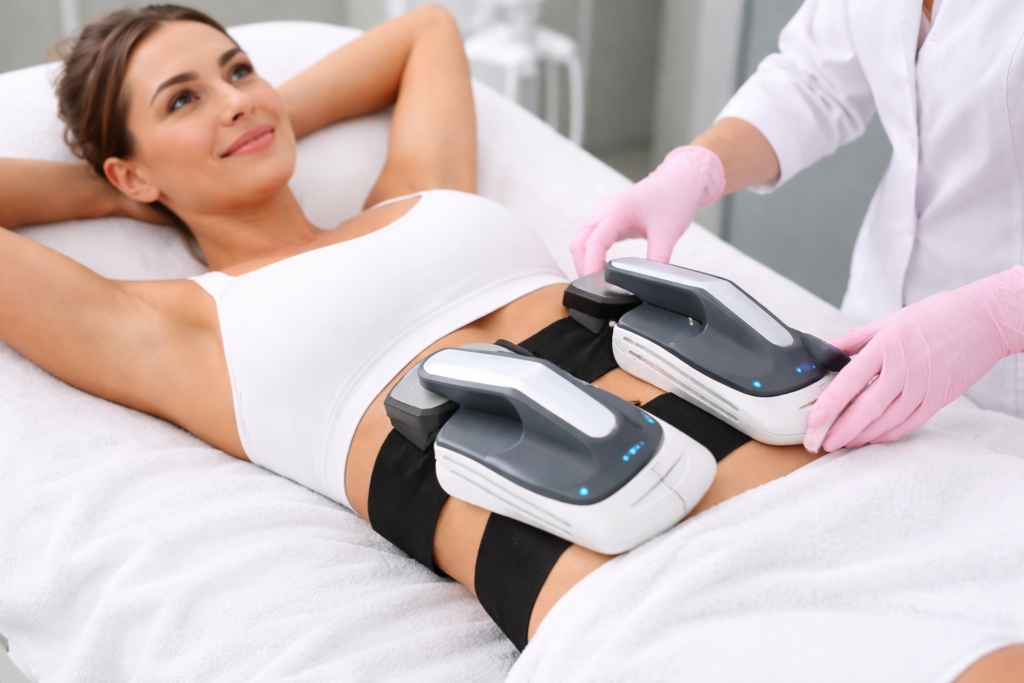
At BluePoint Medical Spa, this conversatiis consistent with a patient-centered aesthetic approach. The spa presents body contouring as a non-surgical service focused on selected areas such as the abdomen, flanks, arms, and thighs, with individualized planning rather than exaggerated promises.
The core science is straightforward. Most non-surgical fat treatments do not melt fat instantly or make it disappear overnight; they injure or stress targeted fat cells, and then the body processes those cellular changes gradually over time.
Why Patients Ask About Fat After Treatment
Many patients are not just asking about appearance. They want to know whether the treated fat cells are moved, shrunk, or permanently changed, and whether those changes affect overall health or long-term contour.
That question becomes even more common when someone has been frustrated by stubborn areas such as the abdomen, outer thighs, or bra fat. These are places where existing fat cells may seem resistant, even when the patient maintains strong,g healthy habits.
What Body Sculpting Targets
Most fat reduction treatments are designed to act on the fat layer beneath the skin, especially localized fat that sits above muscle and below the surface tissue. The goal is targeted fat reduction, not full-body weight loss.
That distinction matters because body contouring is not a general weight loss solution. It is typically more appropriate for patients who are already near their ideal weight and want to reduce fat in one defined treatment area.
Do Fat Cells Shrink or Die?
Depending on the technology, both concepts may be discussed, but many popular treatments are specifically designed so that fat cells die through controlled injury. In cryolipolysis, for example, exposure to cold can trigger fat cell death without harming most surrounding tissue.
This means the emphasis is often on damaging targeted fat cells enough that the body recognizes them as no longer viable. Once that happens, an organized cleanup process begins rather than an instant visible change.
How Cryolipolysis Works
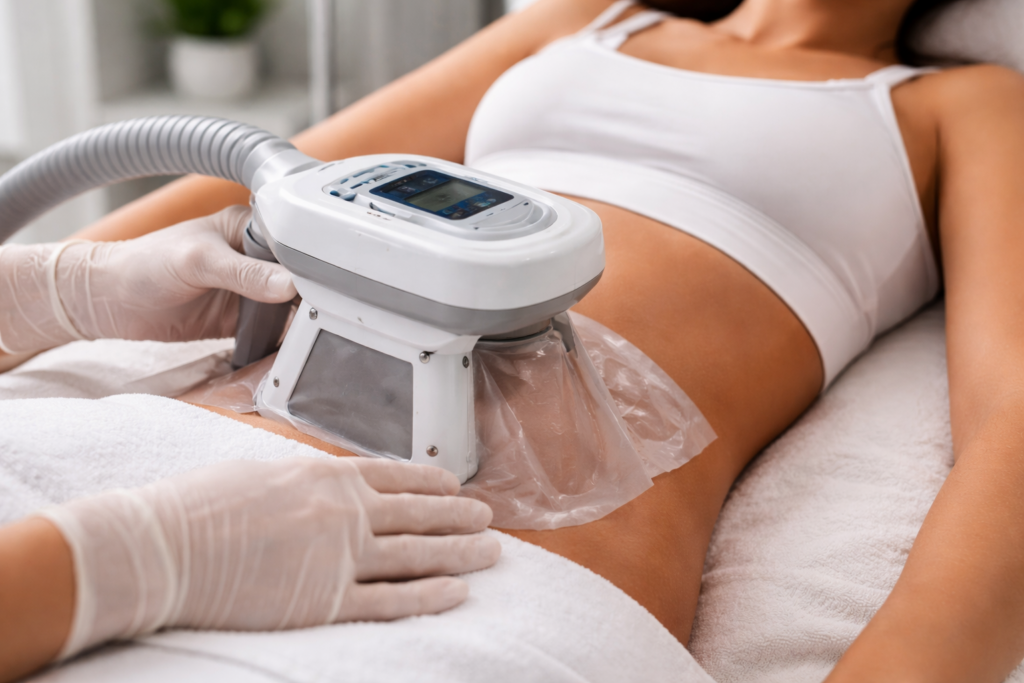
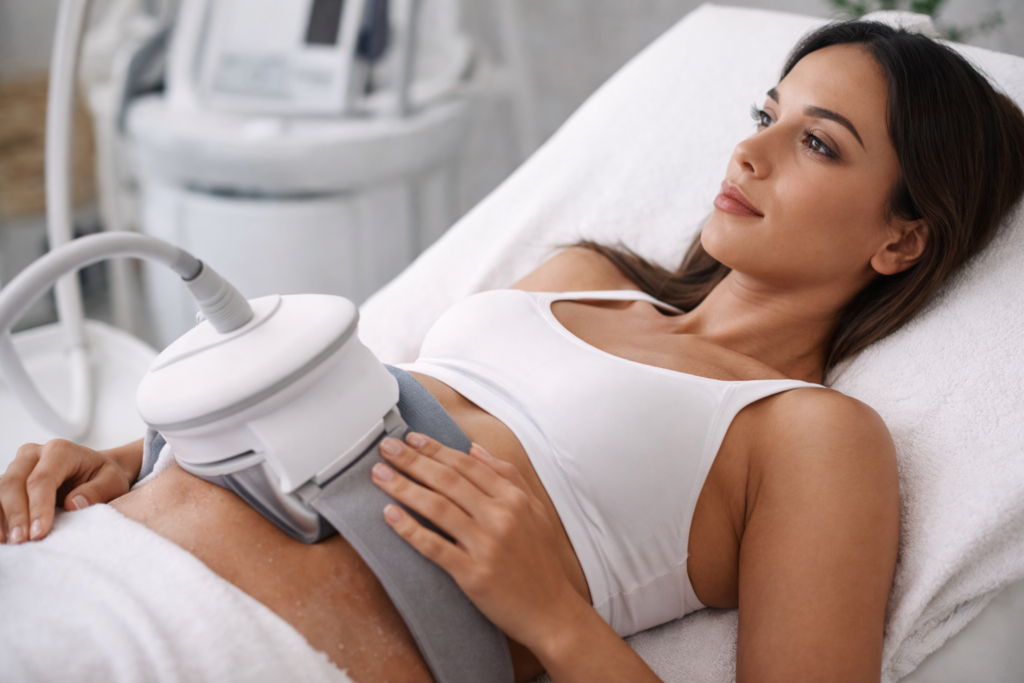
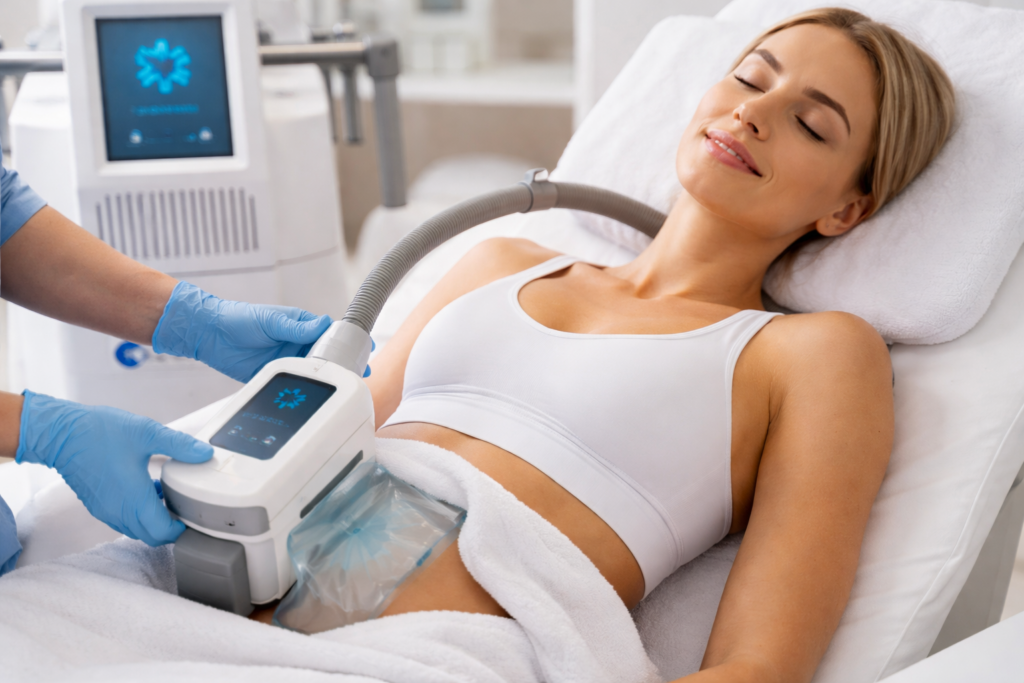
The process called cryolipolysis uses controlled cooling to freeze fat in a selected area. Because adipocytes are more vulnerable to cold than many nearby structures, frozen fat cells may enter apoptosis, a form of programmed cell death.
This is why patients often hear that CoolSculpting treatment or similar cooling-based approaches work gradually. The cooling step is only the beginning; the visible outcome depends on how the body responds afterward.
How the Body Processes Damaged Fat Cells
After treatment, the body mounts a mild inflammatory response in the area. Immune cells move in, begin to break down damaged fat cells, and help clear cellular debris over the following weeks.
In practical terms, dead fat cells and lipid remnants are processed gradually rather than dumped all at once. That is one reason many patients do not notice the final change immediately after a CoolSculpting session or similar appointment.
Role of the Lymphatic System in Fat Removal
Yes, the lymphatic system plays a role in clearing waste and cellular byproducts after fat cells die. This is part of the body’s normal cleanup pathway, working alongside other metabolic and immune functions.
That does not mean the body is suddenly overwhelmed by treatment. Available sources describe this as a gradual process in which the body eliminates disrupted material through normal natural processes over time.
Are Treated Fat Cells Eliminated?
In broad terms, yes. Once destroyed, fat cells are broken down and naturally eliminated over weeks to months as the body processes them in stages.
BluePoint Medical Spa’s recent educational article explains this same concept clearly: after non-surgical sculpting, the body gradually processes treated fat rather than producing immediate, dramatic fat disappearance.
Why Results Take Time
Patients sometimes expect instant contour change, but the timeline is slower because clearance of dead cells is gradual. Published BluePoint guidance notes that visible improvement commonly develops within roughly 3 to 12 weeks, with some change continuing later.
That slower pace is not a sign that treatment failed. It reflects the biological reality that fat elimination depends on inflammation, immune cleanup, and tissue remodeling rather than a same-day cosmetic shift.
What Happens to Remaining Fat Cells
Even if some treated fat cells are removed from the area, remaining fat cells still exist nearby and in untreated areas. Those cells can still enlarge later if a patient experiences weight gain.
This is one of the most important points for setting realistic expectations. Body sculpting may reduce the number of cells in a zone, but it does not make the body incapable of storing snergy in the future.
Can Fat Cells Return After Contouring?
Adults usually maintain a relatively stable number of fat cells, but changes in body weight can still make the contour look fuller because remaining fat cells enlarge. Some sources also note that new fat cells can develop under certain conditions, especially with sustained excess caloric intake over time.
That is why treatment is not permission to stop paying attention to routine wellness. A healthy diet, regular exercise, and long-term healthy lifestyle patterns remain important for preserving contour.
Does Body Sculpting Cause Weight Loss?
Usually not in a meaningful scale-changing way. Body sculpting is meant for shaping and fat loss in selected areas, not for broad weight loss across the whole body.
Patients often look better in a particular area without seeing a major weight change. That difference is one reason non-surgical contouring should not be confused with medical obesity treatment or a primary plan to lose weight.
How Habits Affect Results
Lasting contour depends on what happens after treatment as much as what happens during treatment. BluePoint’s body-sculpting nutrition guidance states that exercise does not reverse removed cells, but stable routines may support lasting results and muscle tone.
A healthy diet, consistent movement, and attention to good health help maintain the visual difference created in the targeted area. Patients who later gain weight may notice fullness return because unaffected cells can still expand.
What If the Issue Is Loose Skin?
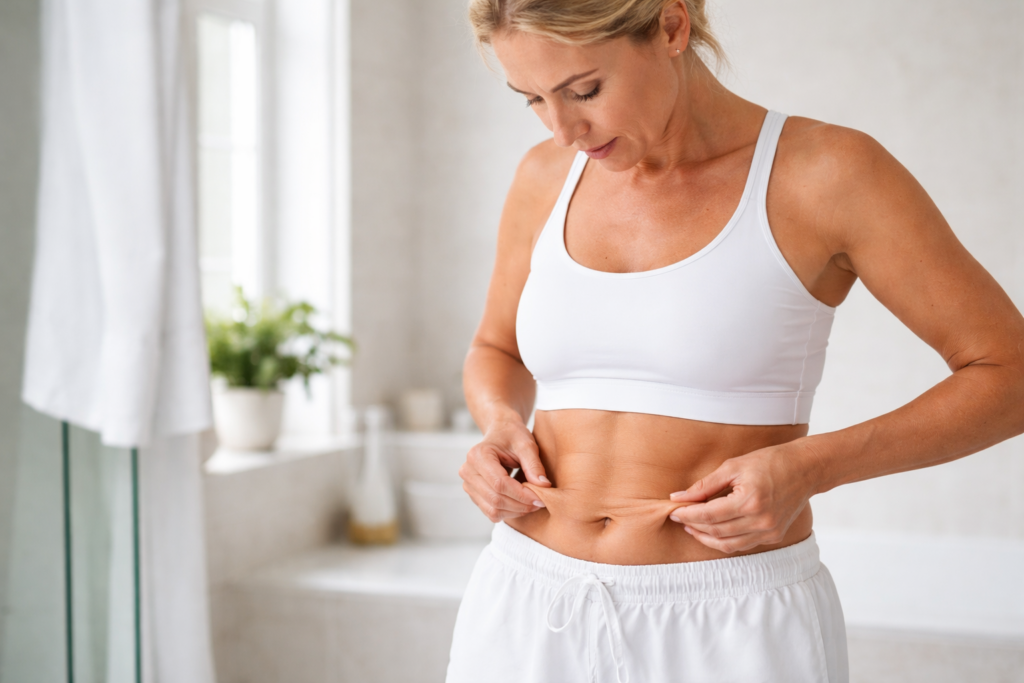
This matters because some patients assume every contour concern is about adipose tissue. In reality, skin, laxity, and tissue support may play just as large a role, especially after significant weight change.
In those cases, a fat-focused treatment may only partially address the concern. Some plans may include technologies intended to support collagen production, while others may require a very different conversation about plastic surgery or surgical fat reduction.
When Surgery Is More Appropriate
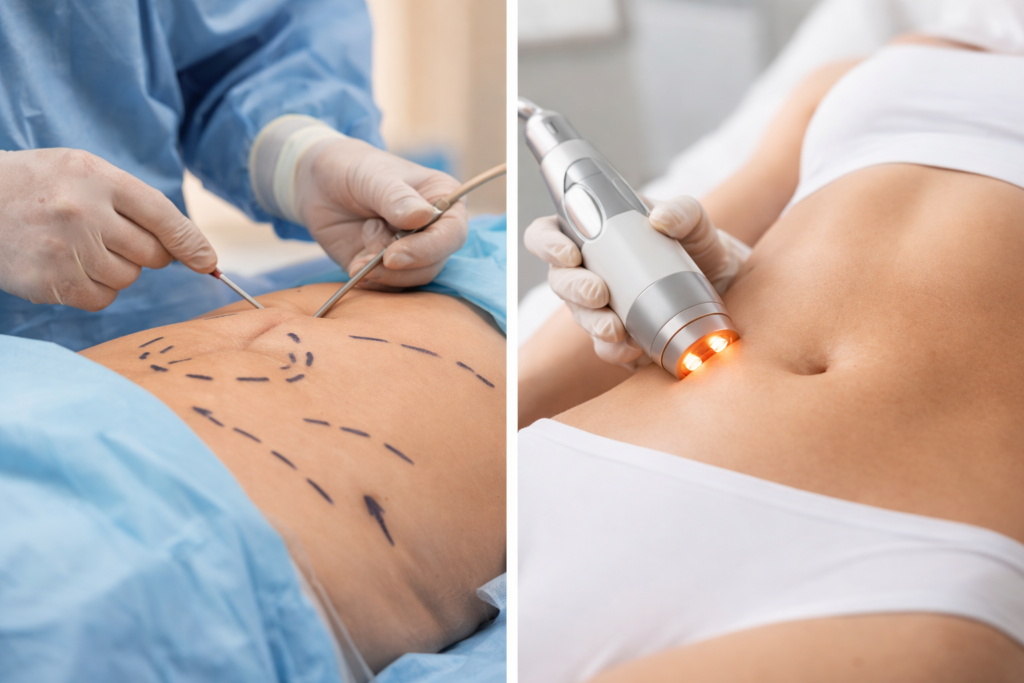
If a patient has major skin redundancy, structural laxity, or more advanced contour concerns, surgical fat reduction, liposuction, or other surgical procedures may be more appropriate than non-surgical treatment. The FDA also distinguishes non-invasive contouring from procedures that actually remove tissue, such as liposuction or tummy-tuck style surgery.
That does not make surgery better for everyone. It simply means different treatment options solve different problems, and honest evaluation is part of safe aesthetic planning.
Who Is a Good Candidate?
A good candidate is often someone near an ideal weight, in good health, and dealing with localized stubborn fat rather than uncontrolled medical or weight-related concerns. BluePoint’s current body-sculpting content presents the service in exactly that context.
Several factors influence candidacy, including the thickness of the pinchable area, whether one or two sessions are reasonable, and whether the patient understands that CoolSculpting works gradually rather than instantly.
FAQs
Do fat cells really die after body sculpting?
In many non-surgical fat treatments, yes. The treatment injures selected fat cells, and the body then breaks down and clears them gradually.
Does the body just move the fat somewhere else?
No. The body does not simply relocate treated fat to another area. Instead, disrupted cells are processed and cleared over time through normal biological pathways.
Can fat come back after treatment?
The treated cells do not simply revive, but remaining fat cells can still enlarge with weight gain. That is why maintenance habits still matter.
Is this the same as losing weight?
No. Body sculpting focuses on localized contour change, while weight loss refers to broader changes in body mass.
Are these treatments FDA-cleared?
Some non-invasive contouring devices are FDA cleared, but the exact clearance depends on the specific device and indication. Claims should always be tied to the actual technology being used, not assumed broadly.
Conclusion
So, what actually happens to fat cells after body sculpting treatments? In non-surgical fat reduction, the treatment injures selected adipocytes, those fat cells die or become nonviable, and the body gradually clears the debris through immune and metabolic pathways that include the lymphatic system.
The most important takeaway for patients is that this is a contouring process, not a universal weight loss solution. The results can look meaningful in the treated area, but they depend on anatomy, follow-through, and the reality that remaining fat cells can still enlarge later.
For patients exploring body contouring in Las Vegas, schedule a consultation with BluePoint Medical Spa to review your goals, candidacy, and the most appropriate next step.