
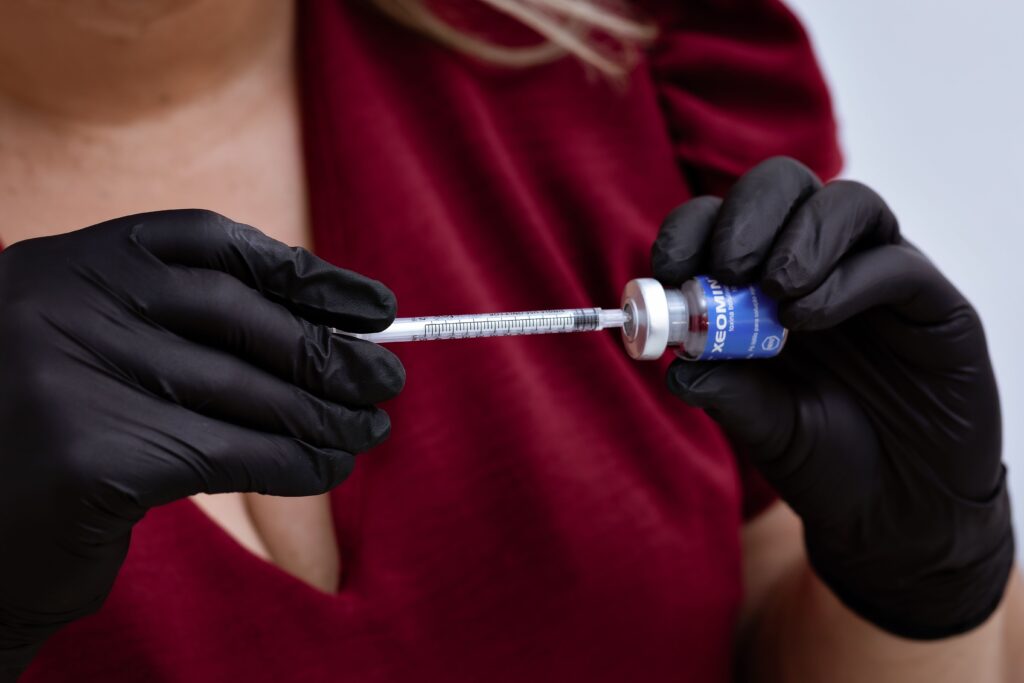
Botox and dermal fillers are both injectable treatments, but they work in very different ways. Patients often hear the two terms together and assume they are interchangeable. In reality, each treatment addresses different concerns, works in different layers of the face, and follows a different maintenance timeline.
The simplest distinction is this: Botox is a neuromodulator that temporarily reduces selected muscle movement, while dermal fillers add or support volume beneath the skin. Botox is commonly used for dynamic wrinkles, such as forehead lines, frown lines, and crow’s feet. Fillers are commonly used for volume loss, deeper folds, lip enhancement, cheek support, and facial contouring.
At Blue Point Medical Spa in Las Vegas, the decision between Botox and fillers begins with a consultation. The provider evaluates facial anatomy, muscle movement, skin quality, volume loss, symmetry, and patient goals before recommending Botox, fillers, or a combination approach.
How Botox Works
Botox is a brand name for botulinum toxin type A, a purified substance used in aesthetic medicine as a neuromodulator. It works by temporarily blocking the release of acetylcholine, a chemical messenger that tells muscles to contract. When Botox is placed into selected facial muscles, those muscles contract less forcefully.
This reduction in movement may soften dynamic wrinkles, which are lines that appear during facial expressions. Common examples include forehead lines from raising the eyebrows, frown lines between the brows, and crow’s feet around the eyes from smiling or squinting.
Botox does not add volume to the face. It does not fill hollows, lift sagging tissue, or restore lost facial structure. Its role is movement-based. When a line is caused mainly by repeated muscle contraction, a neuromodulator treatment may be appropriate.
Results from Botox are temporary. Many patients begin noticing changes within a few days, with the full effect often evaluated around two weeks. The result commonly lasts about three to four months, though individual duration varies based on muscle strength, metabolism, treatment area, and dose.
Patients can learn more about injectables before scheduling, but the final treatment plan should always be based on provider assessment.

How Dermal Fillers Work
Dermal fillers are gel-like injectable products placed beneath the skin to add volume, support structure, smooth selected folds, or refine facial contours. Unlike Botox, fillers do not relax muscles. They work by occupying space in the tissue or supporting collagen-related volume over time, depending on the product type.
The most common filler category is hyaluronic acid filler. Hyaluronic acid, or HA, is a substance naturally found in the body that helps retain moisture. HA fillers are often used in areas such as the lips, cheeks, nasolabial folds, under-eye hollows, chin, and jawline.
Common HA filler families include Juvederm and Restylane. These products vary in thickness, flexibility, firmness, and intended use. A softer filler may be selected for the lips, while a more structured filler may be chosen for cheek or jawline support.
Other filler types include calcium hydroxylapatite, often associated with Radiesse, and poly-L-lactic acid, commonly known as Sculptra. These products may provide structure or support collagen stimulation, but they are not reversible in the same way as HA fillers.
Patients can review Blue Point’s dermal fillers page to better understand available options. Product selection depends on anatomy, treatment area, prior filler history, and the patient’s goals.
Dynamic Wrinkles vs. Static Wrinkles
The difference between dynamic wrinkles and static wrinkles helps determine whether Botox, filler, or another treatment may be appropriate. This distinction is often one of the most important parts of the consultation.
Dynamic wrinkles appear when the face moves. A patient may see forehead lines only when raising the eyebrows or frown lines only when concentrating. Because these wrinkles are caused by muscle movement, Botox may help soften them by reducing the repeated contraction that creates the fold.
Static wrinkles remain visible when the face is relaxed. These lines may result from collagen loss, elastin degradation, sun damage, volume depletion, and repeated folding over time. Static lines may not respond fully to Botox because they are no longer caused by movement alone.
Dermal fillers may be more appropriate when the concern is structural. Examples include nasolabial folds, marionette lines, cheek flattening, under-eye hollows, thinning lips, or a less defined jawline. These concerns often involve lost volume or tissue support rather than muscle activity alone.
Some lines involve both movement and structure. For example, deep frown lines between the brows may begin as dynamic wrinkles but become visible at rest after years of repeated contraction. In that case, Botox may reduce the muscle activity, while another treatment may be needed to improve the etched line.
A consultation helps determine which part of the concern is movement-related, volume-related, skin-quality-related, or a combination.
Treatment Areas Compared
Botox treatment areas are commonly located in the upper face. These include the forehead, glabella, and crow’s feet. These areas are influenced by strong expression patterns that create repeated skin folding.
Botox may also be used in smaller or more specialized areas. These may include bunny lines on the nose, a lip flip, chin dimpling, masseter Botox, and selected neck bands. These uses require careful dosing because small changes in muscle movement can affect expression, symmetry, or function.
Dermal filler treatment areas are often located in the midface and lower face. Common areas include the cheeks, under-eye hollows, nasolabial folds, marionette lines, lips, jawline, chin, and temples. Each area requires a different filler type and placement technique.
For example, lip filler may need a soft, flexible HA product that moves naturally with expression. Cheek filler may require more structure and lifting support. Jawline filler may need a firmer product that can help define the lower face in selected patients.
The services menu at Blue Point Medical Spa includes both Botox and filler options. During consultation, the provider maps each concern to the treatment type that best matches the underlying cause.

Results Timeline and Maintenance
Botox results and dermal filler results develop differently. Botox is not immediate. Many patients begin noticing movement reduction within three to five days, with full results usually assessed around two weeks.
The effects of Botox often last about three to four months. As the body restores nerve signaling, muscle movement gradually returns. Patients who want to maintain smoother expression lines usually schedule maintenance visits based on their response pattern.
Dermal filler results are often visible immediately, but swelling can make the treated area look fuller at first. Final settling may take several days to two weeks, depending on the treatment area, product, and patient response. Sculptra is different because its results develop gradually over several months as collagen-related support builds.
Filler longevity varies widely. Lip fillers may last several months because the lips move frequently. Cheek or jawline fillers may last longer because those areas experience less movement. Biostimulatory fillers such as Sculptra may last longer for selected patients, but results vary.
Patients who receive both Botox and fillers may not need them refreshed at the same time. Botox may be maintained every few months, while fillers may require less frequent touch-ups. A provider can help coordinate these timelines through an individualized maintenance plan.
Safety, Reversibility, and Provider Selection
Both Botox and dermal fillers should be performed by qualified providers with training in facial anatomy, injection technique, dosing, product selection, and complication management. These are elective aesthetic treatments, but they still require medical judgment.
Common temporary effects from Botox may include mild bruising, swelling, tenderness, headache, asymmetry, or temporary weakness. Common temporary effects from filler may include bruising, swelling, tenderness, firmness, or asymmetry. Serious complications are uncommon but possible, especially when treatments are performed by unqualified injectors.
One important difference is reversibility. Hyaluronic acid fillers can often be dissolved with hyaluronidase when appropriate. This can be helpful if the result needs adjustment or if a complication occurs. This option does not apply to non-HA fillers such as Radiesse or Sculptra in the same way.
Botox is not reversible with an enzyme. If a result feels stronger than desired, the effect gradually wears off over time. This is why conservative dosing and careful placement are important, especially for first-time patients.
Patients should choose a medical spa where injections are performed by licensed professionals with appropriate oversight. Patients can learn more about the Blue Point team and clinical guidance from Dr. Danka K. Michaels, M.D., before scheduling.
When Botox and Fillers May Be Used Together
Many patients benefit from understanding that Botox and fillers do not compete with each other. They often address different layers of aging. Botox works on muscle activity, while fillers work on volume support and contour.
A patient with forehead lines and crow’s feet may benefit from Botox, but still have cheek volume loss or thinning lips that Botox cannot address. Another patient may receive cheek filler for structure, but still have frown lines caused by strong muscle movement. In these cases, a combined plan may be discussed.
A combined injectable approach is sometimes called a liquid facelift, though that phrase should be used carefully. Botox and fillers do not replace surgery, and results are temporary. However, when used thoughtfully, they may help create a more balanced and refreshed appearance without incisions.
The provider may perform Botox and filler in the same appointment for selected patients, or the plan may be staged across separate visits. Timing depends on treatment areas, budget, swelling risk, patient comfort, and the provider’s clinical judgment.
Cost and Planning Considerations
The cost structure for Botox and dermal fillers is different. Botox is often priced by unit, and the total cost depends on the number of units needed for each treatment area. Fillers are often priced by syringe, and the number of syringes depends on area, product type, and treatment goals.
A lower price is not always a better value. Proper product sourcing, provider training, medical oversight, and realistic planning matter. Patients should be cautious of deals that seem unusually low or that pressure them into treatment before a consultation.
Because Botox and fillers have different durations, planning should consider both short-term results and long-term maintenance. A patient may budget for Botox several times per year, while filler may be refreshed less often. The provider can explain expected costs during consultation.
Patients can review the Blue Point price list and ask about available payment plans during the visit. Clear pricing helps patients make informed decisions without pressure.
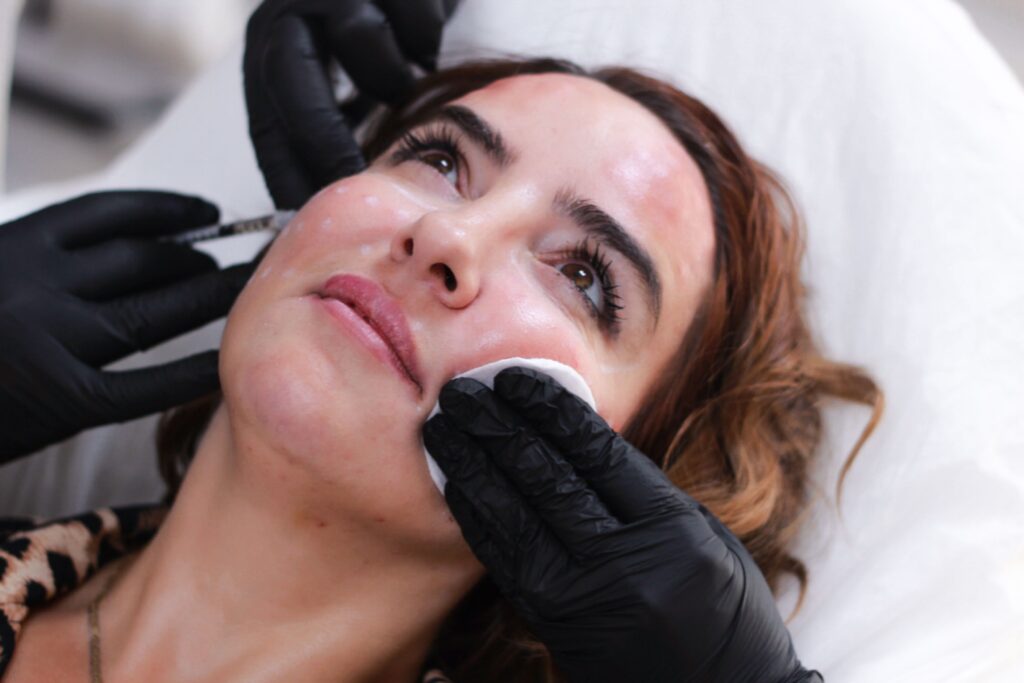
Choosing the Right Injectable Treatment
The right injectable depends on the concern. If the issue appears mainly when the face moves, Botox may be appropriate. If the issue remains visible at rest because of volume loss or structural change, dermal fillers may be considered. If the concern involves skin quality, another treatment may be more suitable.
For forehead lines, frown lines, and crow’s feet, Botox is often discussed first. For cheek volume loss, thinner lips, under-eye hollows, and jawline contour, fillers may be more relevant. For pigmentation, rough texture, acne scars, or sun damage, peels, lasers, skincare, or microneedling may be better suited.
A good provider should not force every concern into one treatment category. Some patients need Botox only. Some need filler only. Some need both. Others may benefit more from skincare or resurfacing before injectables.
Blue Point’s consultation process helps patients understand which treatment aligns with the underlying cause of their concern.
FAQ
Should patients start with Botox before trying fillers?
Some patients prefer starting with Botox because it is temporary and addresses common dynamic wrinkles. Others may need filler first if volume loss is the main concern. There is no universal order. A provider can recommend the most appropriate starting point based on anatomy and goals.
Are Botox and dermal fillers priced the same way?
No. Botox is commonly priced by unit, while dermal fillers are often priced by syringe. The total cost depends on the treatment areas, the amount of product used, and the maintenance schedule. Patients should review pricing during consultation before treatment begins.
Can Botox or fillers be used preventively?
Preventive Botox may be considered for selected patients with early dynamic lines. Small amounts of filler may also be discussed when early volume loss is present. Preventive treatment is not necessary for everyone and should be based on anatomy, skin condition, and realistic goals.
Conclusion
Botox vs. dermal fillers is not about which treatment is better. It is about which treatment fits the concern. Botox may help soften movement-based wrinkles, while fillers may support volume, contour, and selected structural folds. Many patients benefit from one treatment, while others may benefit from a coordinated plan using both.
At Blue Point Medical Spa, patients receive injectable care guided by consultation, education, and professional oversight. If you are deciding between Botox, fillers, or both, schedule a consultation to discuss which option may align with your anatomy, goals, and comfort level.
Individual results vary. A consultation with a licensed provider is required to determine whether Botox, dermal fillers, or another treatment is appropriate. Aesthetic services are elective and may involve risks, side effects, contraindications, bruising, swelling, asymmetry, temporary weakness, lumps, vascular complications, limited response, or other outcomes. Recommendations may vary based on anatomy, medical history, medications, prior treatments, product type, treatment area, and individual goals.