Many patients explore HydraFacial and microdermabrasion: a closer look at two skin-renewing treatments because they want fresher-looking skin without committing to a more aggressive procedure. In a medical spa setting, both options are commonly considered when dull skin, rough texture, clogged pores, and mild surface irregularities begin to affect how skin looks and feels. At BluePoint Medical Spa, exfoliation-focused facials and resurfacing services are part of the current treatment mix, including Diamond Tip Microdermabrasion and other facial options.
Although these treatments are often discussed together, they do not work in the same way. HydraFacial and microdermabrasion both support skin rejuvenation, but one relies more heavily on serum infusion and hydration, while the other is centered on mechanical exfoliation and physical exfoliation of the outermost layer of the skin. That difference matters for patients comparing visible glow, treatment feel, post-treatment care, and whether a service fits a particular skin type or set of specific skin concerns.
Common Skin Concerns Often Lead Patients to Compare These Treatments
Patients usually do not begin with the treatment name. They begin with a concern about uneven skin tone, uneven texture, fine lines, acne scars, congestion, dryness, or a general sense that the skin has lost its healthy glow. In that setting, the comparison between hydrafacial vs microdermabrasion becomes less about which treatment sounds more advanced and more about which one matches the skin’s current condition and long-term goals.
A thoughtful consultation is especially important when a patient has dry or sensitive skin, acne-prone skin, visible sun damage, or a history of post-treatment irritation. A treatment that feels comfortable on one person may be too stimulating for another, and an approach that improves skin’s appearance in one season may need to be adjusted later as climate, products, hormones, or recovery tolerance change. That is why personalized planning matters more than trend-driven skincare decisions.
HydraFacial Centers on Exfoliation, Extraction, and Deep Hydration
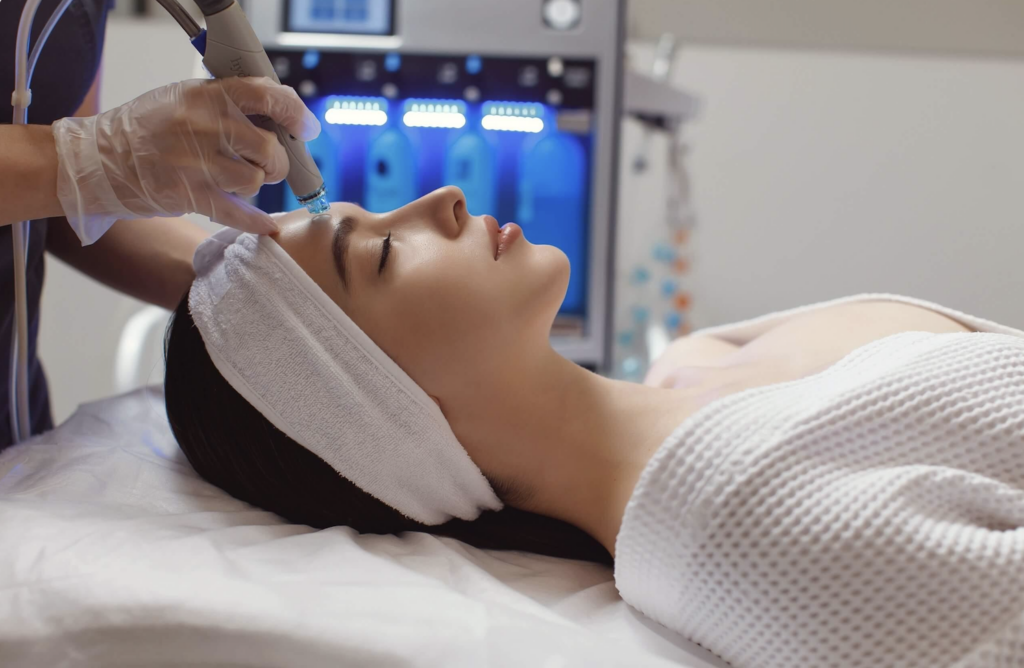
A HydraFacial treatment is a non-invasive facial treatment designed to cleanse, exfoliate, extract, and infuse the skin with targeted solutions in one session. Official treatment materials describe a multistep process that combines exfoliation, extraction, hydration, and optional boosters, while clinical service descriptions from the Cleveland Clinic note that the treatment may include exfoliation, a light peel, extractions, and infusion of antioxidants and hyaluronic acid.
For patients, the practical takeaway is that this is a more comprehensive treatment than simple exfoliation alone. Because the process also delivers nourishing serums and hydrating serums, it is often chosen when the goal includes deep hydration, brighter tone, and skin that feels clean yet still comfortable afterward. This is one reason the treatment is frequently discussed for sensitive skin types or patients who want glowing skin without the feel of harsh abrasion.
HydraFacial Supports Hydrated, Glowing Skin With Targeted Serums
One of the defining features of HydraFacial is that it does not stop after it helps remove dead skin cells and surface debris. The treatment is built to leave the skin hydrated, which can make a visible difference in skin texture, softness, and short-term radiance. When patients describe wanting hydrated skin, a radiant complexion, or a quick reset before an event, this hydration component often becomes a deciding factor.
The serum step also gives providers flexibility when addressing unique skin concerns such as dehydration, visible pores, or dullness. That does not mean every patient will respond the same way, but it does mean the service can be adjusted more deliberately than a treatment focused only on abrasion. In real-world patient care, that customization can be as important as the exfoliation itself.

Microdermabrasion Focuses on Surface-Level Mechanical Exfoliation
Microdermabrasion treatments are generally described as minimally invasive or noninvasive procedures that remove the outer layer or uppermost layer of the skin through controlled exfoliation. Authoritative dermatology and clinical sources describe the treatment as a method of gently resurfacing the skin, often with crystals or a diamond-tipped wand, to improve superficial concerns and create a smoother skin feel over time.
This means a microdermabrasion facial is usually the more straightforward resurfacing option when the primary goal is to address dead skin, roughness, and mild irregularities on the skin’s surface. Patients may consider it when they want help with dead cells, uneven tone, light scarring, minor acne scars, or a rough, congested finish that affects makeup wear and day-to-day confidence.
Diamond-Tip Technology Offers a More Controlled Form of Physical Exfoliation
In modern practice, many offices use a diamond-tipped handpiece rather than loose fine crystals. BluePoint Medical Spa’s current menu specifically lists Diamond Tip Microdermabrasion, which aligns with the broader shift toward more controlled resurfacing methods. That matters because device style can affect treatment feel, precision, and how well the service fits different areas of the face or neck.
A diamond-tipped wand works by abrading away superficial buildup while suction removes loosened debris. In practical terms, this type of deep cleaning may appeal to patients whose skin feels thickened, dull, or uneven, especially when they are seeking improvement in skin underneath the buildup of surface debris. The result is still limited to relatively superficial resurfacing, but that can be appropriate for patients who need gradual polishing rather than a more intensive intervention.
The Medical Spa Context Shapes Which Treatment Fits Best
In an aesthetic practice, the decision is rarely made in isolation. Patients comparing these services may also be considering chemical peels, dermaplaning, acne-focused facials, or other resurfacing options. BluePoint Medical Spa currently offers several exfoliation and facial services, which means treatment selection can be based on concern, tolerance, season, and how much visible downtime a patient is willing to accept.
This context is important because the right skincare treatment is not always the most intensive one. A patient with reactive skin may do better with a gentler hydration-forward approach, while another with thicker, rougher skin may prefer more direct mechanical exfoliation. Good aesthetic care is not about making every face fit the same protocol. It is about matching the treatment plan to the person in front of you.
Key Differences Become Clear When Skin Type and Goals Are Considered Together
The most useful way to frame the key differences is this: HydraFacial gently removes impurities while also infusing the skin with moisture and treatment solutions, whereas microdermabrasion more directly resurfaces through physical exfoliation of the outermost layer. Both may improve skin tone and improve skin texture, but the path they take is different.
For patients with sensitive skin, visible dehydration, or a preference for a treatment that leaves skin feeling refreshed and cushioned, HydraFacial is often easier to understand as a hydration-plus-exfoliation service. For patients with more noticeable rough texture, superficial congestion, or a desire for a classic resurfacing feel, microdermabrasion facial sessions may be a better fit. That does not make one universally better than the other—it makes them useful for different priorities.
Sensitive and Acne-Prone Skin Often Requires More Nuanced Selection
When a patient has dry or sensitive skin, overly aggressive exfoliation can increase irritation, even if the goal is brighter skin. In those cases, a treatment built around gentle suction, hydration, and customizable serums may feel more approachable than one centered on abrasion. This does not mean microdermabrasion treatments are inappropriate for all reactive patients, but it does mean the margin for overtreatment may be narrower.
For acne-prone skin or lingering clogged pores, the decision may depend on whether the skin needs more extraction support, more hydration balance, or more resurfacing of post-breakout roughness. Either way, treatment should be chosen with a skincare professional who can review active breakouts, medication use, barrier health, and overall skincare routine before proceeding.
Benefits and Considerations Should Be Weighed With Realistic Expectations
Both treatments may support healthier skin, overall skin health, and a brighter appearance when used appropriately and repeated at sensible intervals. Regular treatments are often part of the conversation because exfoliation-related changes are usually maintenance-based rather than permanent. For some patients, benefits include smoother skin, a cleaner feel, better short-term glow, and gradual softening of mild textural concerns.
Patients should also understand that these are elective cosmetic services, not medically necessary treatment. Some people experience temporary redness or mild redness, and recovery needs vary depending on sensitivity, recent sun exposure, home products, and the intensity of the session. Concerns such as minor scarring, deeper acne scars, or more significant pigment changes may require a different plan altogether.
A Consultation Helps Match Treatment Choice to Skin Goals
When patients compare HydraFacial and microdermabrasion, the better question is not which facial is more popular. The more useful question is which one aligns with current skin concerns, desired comfort level, and realistic skin goals. A consultation gives room to assess skin sensitivity, oiliness, dehydration, texture, and whether the skin may respond better to hydration-led care, resurfacing-led care, or a different category of treatment entirely.
At BluePoint Medical Spa, patients can review exfoliation and facial options within a broader menu of aesthetic services rather than selecting blindly from online trends. That kind of guided comparison supports more informed decisions, especially for people trying to choose between immediate glow, gradual texture refinement, or an approach that fits into an existing professional-grade skincare treatment plan.

FAQ
How Much Downtime Should I Expect After a HydraFacial?
Many patients return to normal activity the same day. Even so, post-treatment redness, sensitivity, and product tolerance vary, so aftercare should follow provider guidance.
How Long Does It Take to Recover After Microdermabrasion?
Some patients notice mild pinkness or dryness after treatment, especially if the skin barrier is already stressed. Sun protection and gentle skincare are usually part of recovery planning.
Will One Treatment Improve Acne Scars and Uneven Texture?
Superficial roughness and mild textural issues may improve gradually, but deeper scarring often requires a broader treatment plan. A provider can help determine whether resurfacing alone is enough or whether another option is more appropriate.
Is HydraFacial or Microdermabrasion Better for Sensitive Skin?
Patients with reactive or easily irritated skin should not assume that every exfoliating treatment will feel the same. Reviewing your skin history, current products, and recent treatments helps reduce the chance of choosing an approach that is too aggressive.
Conclusion
For many patients, the comparison between hydrafacial vs microdermabrasion comes down to one central difference: whether the skin needs more hydration-supported renewal or more direct resurfacing of surface buildup. Both options may contribute to a healthy glow, vibrant skin, and a more polished appearance when used thoughtfully, but results vary based on skin condition, treatment frequency, and product support between visits.
These services are elective aesthetic treatments, and they should be approached with realistic expectations. Individual results vary, treatments may involve risks or contraindications, and a consultation with a licensed provider is required to determine whether either option is appropriate for your skin. To move forward with a treatment plan grounded in your concerns rather than guesswork, schedule a consultation with BluePoint Medical Spa.