Ultherapy is a non-surgical aesthetic treatment that uses focused ultrasound energy to support firmer-looking skin on the face, neck, and chest. It occupies a specific place in medical aesthetics because it targets deeper tissue layers than many surface-based treatments. Unlike laser treatments, chemical peels, or traditional microneedling, Ultherapy is designed to deliver ultrasound energy beneath the skin’s surface without incisions.
For patients considering Ultherapy, the most important step is understanding what the treatment may and may not accomplish. It is not a replacement for a surgical facelift, and it should not be presented as producing surgical-level lifting. Instead, it may be appropriate for selected patients with mild to moderate skin laxity who want a non-invasive option to support gradual tightening and collagen-related improvement.
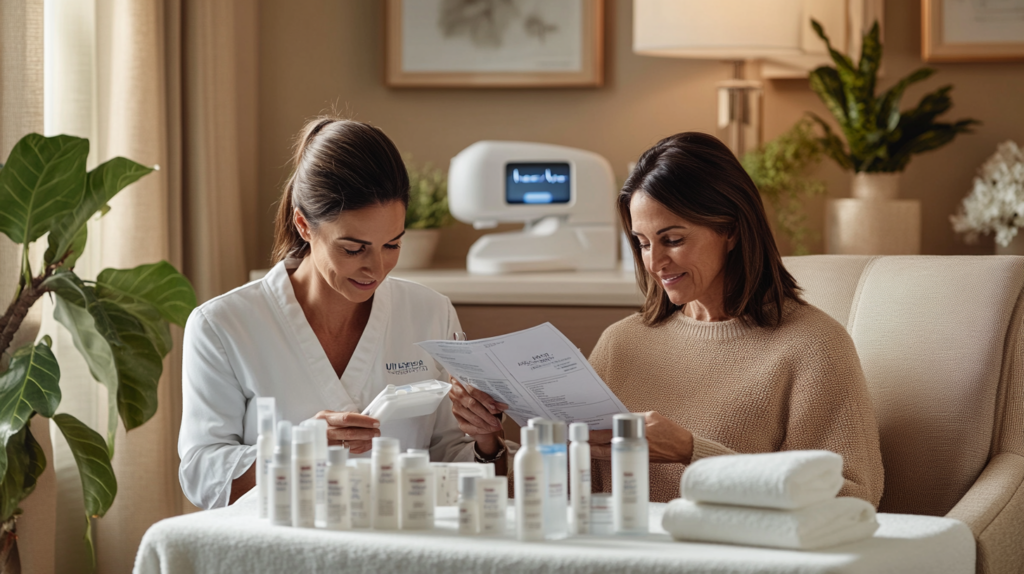
At Blue Point Medical Spa, treatment recommendations begin with consultation, facial assessment, and realistic goal-setting. A provider evaluates skin laxity, facial anatomy, skin thickness, treatment history, and patient expectations before determining whether Ultherapy is an appropriate option.
Focused Ultrasound and Deep Tissue Targeting
Ultherapy uses micro-focused ultrasound with visualization, often referred to as MFU-V, to deliver controlled energy at selected tissue depths. The visualization component allows the provider to see beneath the skin in real time, which helps guide placement and depth during treatment.
The device can deliver focused ultrasound energy to depths commonly associated with the superficial dermis, deep dermis, and the SMAS layer, also known as the superficial musculoaponeurotic system. The SMAS is a fibromuscular layer that helps support facial structure and is one of the layers addressed during surgical facial lifting procedures. Ultherapy does not surgically reposition tissue, but it can target energy to deeper layers involved in facial support.
When ultrasound energy reaches the selected tissue depth, it creates small controlled thermal points. These points may trigger the body’s natural wound-healing response, including fibroblast activity and gradual production of new collagen and elastin. This process is known as neocollagenesis, and it develops over time rather than immediately.
This gradual collagen response is why Ultherapy results do not appear overnight. The treatment depends on the body’s ability to respond to the energy and remodel tissue. Individual results vary based on age, skin quality, laxity level, lifestyle, and overall collagen response.
What Happens During an Ultherapy Treatment
An Ultherapy treatment begins with a consultation. The provider evaluates areas of skin laxity, discusses the patient’s concerns, reviews medical history, and determines whether the treatment aligns with the patient’s anatomy and goals. This step is important because not every patient with sagging or loose skin is an ideal candidate for a non-surgical approach.
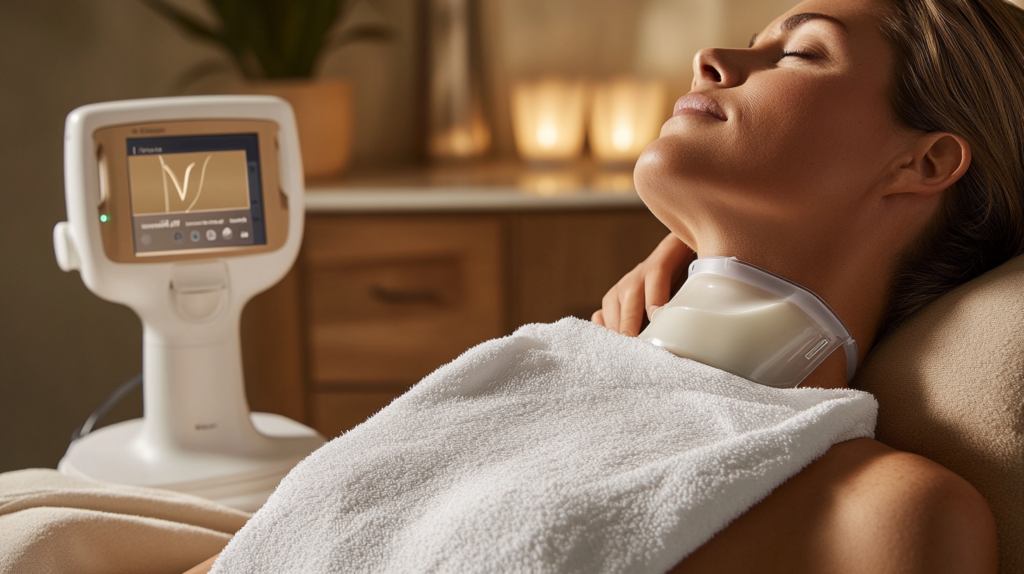
On the day of treatment, the skin is cleansed, and ultrasound gel is applied to the treatment area. The provider places the Ultherapy handpiece against the skin and uses the imaging screen to identify the target tissue layers. Once the correct depth is confirmed, the provider delivers lines of focused ultrasound energy in a planned pattern.
Treatment time depends on the areas being addressed. A full-face Ultherapy session may take around 60 to 90 minutes. Treating the neck alone may take less time, while combined areas such as the face, neck, and décolletage may require a longer appointment.
Patients may feel warmth, tingling, prickling, or brief discomfort as the energy is delivered. Sensation varies by treatment area and individual tolerance. A provider may discuss comfort options such as topical numbing or oral pain-relief strategies when appropriate. The sensation usually occurs during energy delivery and then fades.
One reason patients choose Ultherapy is that it typically does not require traditional downtime. Some patients may experience mild redness, swelling, tingling, tenderness, or sensitivity after treatment. These effects are usually temporary, but recovery experiences vary. Patients should follow all aftercare instructions provided by the Blue Point team.
The Best Candidate Profile for Ultherapy
Ultherapy tends to work best for patients with mild to moderate skin laxity. These patients may notice early softening along the jawline, mild jowling, a heavier-looking brow, slight laxity under the chin, or crepey texture on the chest. The treatment may be especially appealing to patients who want to avoid surgery and are comfortable with gradual, subtle-to-moderate improvement.
Age alone does not determine candidacy. Some patients in their 30s may consider Ultherapy for early laxity, while patients in their 40s, 50s, or 60s may use it as part of a broader maintenance plan. The more important factors are skin thickness, laxity severity, collagen response, and whether the patient’s goals are realistic for a non-invasive treatment.
Patients with more advanced tissue descent, significant loose skin, or deep folds may not achieve the level of improvement they want from Ultherapy alone. In those cases, a provider may discuss other aesthetic options or explain when surgical evaluation may be more appropriate. Honest expectation-setting helps patients avoid disappointment.
Patients with open wounds, active skin infections, certain implanted devices, or specific medical concerns in the treatment area may not be candidates. A qualified provider at Blue Point Medical Spa reviews health history and anatomy before recommending treatment.
Timeline for Ultherapy Results
Ultherapy results develop gradually because the treatment depends on collagen remodeling. Some patients may notice a mild immediate tightening sensation, but the more meaningful response usually develops over the following weeks and months.
The process of neocollagenesis may begin after treatment and continue for several months. Many patients evaluate visible changes around two to three months, with continued improvement possible up to six months after treatment. The pace and degree of change vary from person to person.
Patients should understand that Ultherapy does not create the immediate visible change associated with dermal fillers. Fillers add volume directly. Ultherapy works by stimulating the body’s response in deeper tissue layers, which makes the timeline slower and more gradual.
Results may last around one to two years for some patients, but this varies based on age, skin quality, sun exposure, lifestyle, and natural aging. Some patients choose maintenance sessions annually or every 18 months, while others incorporate Ultherapy into a broader aesthetic treatment plan.

Combining Ultherapy With Other Aesthetic Treatments
Ultherapy addresses deep tissue laxity and collagen-related support, but it does not replace treatments that target volume loss, wrinkles caused by muscle movement, pigmentation, or surface texture. For patients with multiple concerns, a combination approach may create a more balanced plan.
Dermal fillers may be considered when facial volume loss contributes to an aged or tired appearance. For example, a patient may use Ultherapy for jawline or neck laxity and hyaluronic acid filler for mid-face volume support. The treatments work differently and may complement each other when timed appropriately.
Injectables such as Botox, Dysport, or Xeomin address dynamic wrinkles, including forehead lines, frown lines, and crow’s feet. These lines are caused by repeated muscle movement, not laxity alone. Combining neuromodulators with Ultherapy may help address different layers of facial aging.
Laser treatments or microneedling may be discussed when a patient also has texture concerns, uneven tone, acne scars, or sun damage. Timing matters. Providers typically space treatments to allow the skin to recover before introducing another procedure.
A personalized plan developed during a consultation helps ensure that each treatment supports the overall goal rather than creating disconnected changes in different areas.
Ultherapy Compared With Other Tightening Options
Patients often compare Ultherapy with radiofrequency skin tightening, RF microneedling, and laser-based treatments. The main difference is depth and mechanism. Ultherapy uses ultrasound energy and can target deeper support layers, including the SMAS layer, while radiofrequency and laser treatments often focus more on the dermis or surface layers.
Radiofrequency treatments use heat to stimulate collagen remodeling within the dermis. RF microneedling combines mechanical micro-injuries with radiofrequency energy to support skin texture, firmness, and selected tightening concerns. These treatments may be useful for patients who want improvement in texture, pores, scars, or mild laxity.
Laser treatments often focus on pigmentation, surface texture, fine lines, and resurfacing. They may be ideal for concerns such as sun damage, uneven tone, or rough texture, but they do not target the same deeper structural layer as Ultherapy.
This does not mean Ultherapy is better for every patient. It means each treatment has a different role. Patients with laxity may be candidates for Ultherapy. Patients with pigmentation or texture concerns may need lasers, peels, or microneedling. Patients with volume loss may need fillers. The provider helps determine the correct match.
Safety, Comfort, and Recovery Expectations
Ultherapy is non-invasive, but it still requires professional evaluation and skilled application. The provider must understand facial anatomy, tissue depth, energy placement, and patient comfort. The use of visualization helps guide treatment, but training and judgment remain important.
During treatment, patients may feel brief pulses of discomfort, especially when energy reaches deeper tissue layers. Sensation varies widely. Some patients tolerate treatment easily, while others find certain areas more sensitive. The provider can discuss comfort measures before the session.
After treatment, mild redness, swelling, tingling, tenderness, or temporary sensitivity may occur. Some patients may experience bruising or numbness, though this is less common. These effects are usually temporary, but patients should contact the provider if symptoms feel unusual, worsen, or persist longer than expected.
Because Ultherapy does not resurface the skin, patients usually do not need to hide from social activities in the way they might after a deeper peel or ablative laser. However, sun protection, gentle skincare, and following provider instructions remain important for overall skin health.
Skin Tone and Treatment Suitability
One benefit of Ultherapy is that it does not rely on targeting melanin in the skin. Because the energy is ultrasound-based and delivered beneath the surface, it may be considered for a wide range of skin tones when the patient is otherwise a good candidate.
This makes it different from some light-based or laser procedures that require extra caution in darker Fitzpatrick skin types due to pigmentation risk. However, skin tone is only one part of candidacy. Skin thickness, laxity level, medical history, implanted devices, and the treatment area all matter.
Patients with darker skin tones should still have a complete consultation. The provider evaluates whether Ultherapy is the right option or whether another treatment, such as RF microneedling, facials, peels, or skincare, may better match the patient’s goals.
FAQ
How painful is Ultherapy?
Ultherapy may feel like warmth, tingling, prickling, or brief discomfort when energy is delivered to deeper tissue layers. Sensation varies by patient and treatment area. Providers may discuss comfort options before treatment, and the sensation usually fades after each energy pulse.
How many Ultherapy sessions are usually needed?
Many patients receive one Ultherapy session, then allow the body’s collagen response to develop over several months. Some patients may choose maintenance treatment after 12 to 18 months, depending on results, goals, and provider recommendations. The best schedule varies by patient.
Is Ultherapy suitable for darker skin tones?
Ultherapy may be suitable for many skin tones because ultrasound energy does not target melanin in the epidermis. However, candidacy still depends on skin laxity, tissue thickness, health history, treatment area, and goals. A consultation is needed to confirm whether it is appropriate.
Conclusion
Ultherapy may be a helpful option for selected patients with mild to moderate skin laxity who want gradual, non-surgical improvement without traditional downtime. It works by using focused ultrasound energy to stimulate collagen-related changes in deeper support layers, but it does not replace surgery or produce the same level of lifting.
At Blue Point Medical Spa, patients receive recommendations based on consultation, anatomy, treatment goals, and professional oversight. If you are considering Ultherapy for the face, neck, jawline, or chest, book a consultation to discuss whether the treatment may be appropriate for your skin tightening goals.
Individual results vary. A consultation with a licensed provider is required to determine whether Ultherapy is appropriate. Aesthetic services are elective and may involve risks, side effects, contraindications, discomfort, limited response, or temporary tenderness. Recommendations may vary based on skin laxity, anatomy, medical history, treatment area, age, lifestyle, and collagen response.