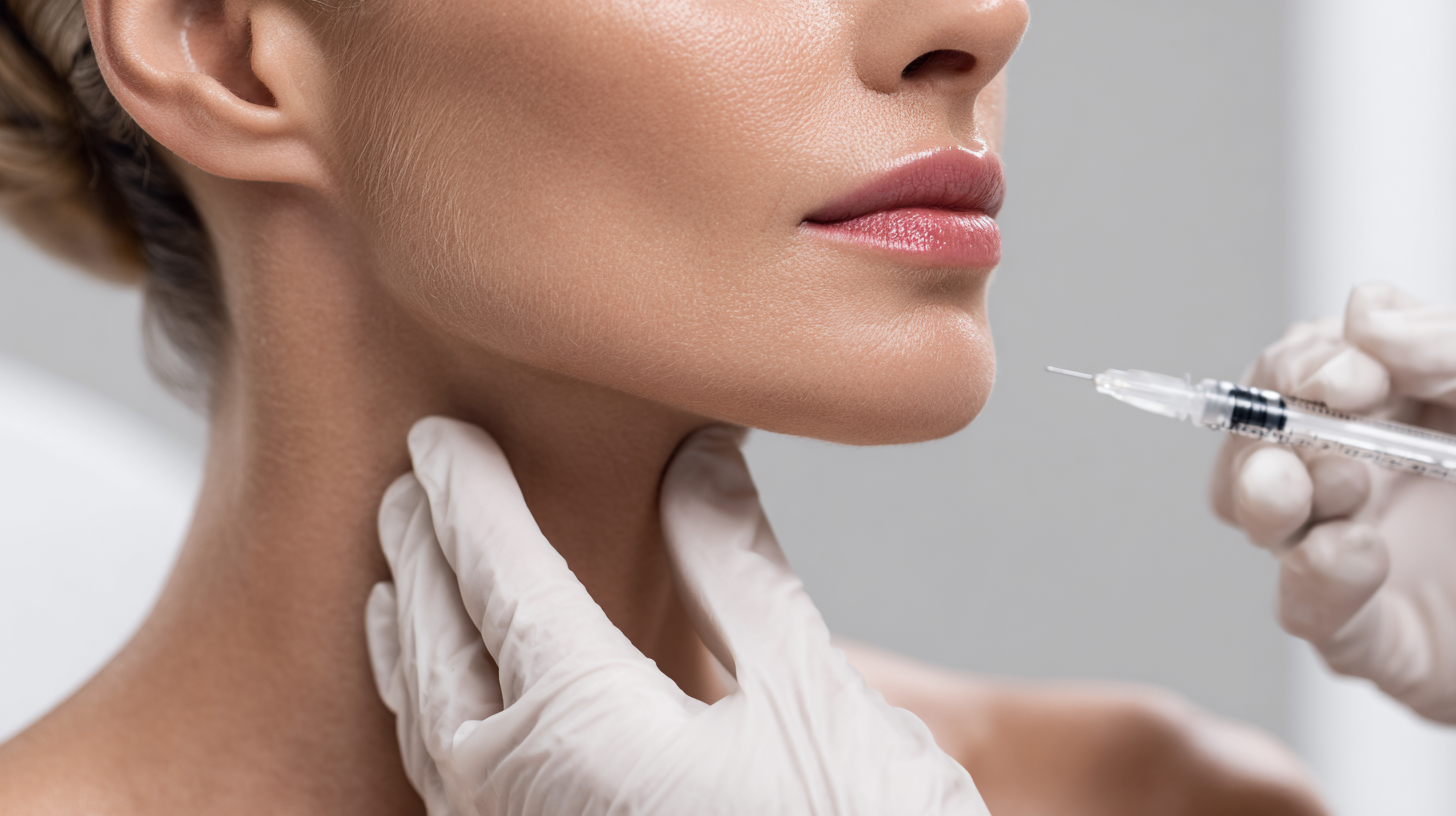
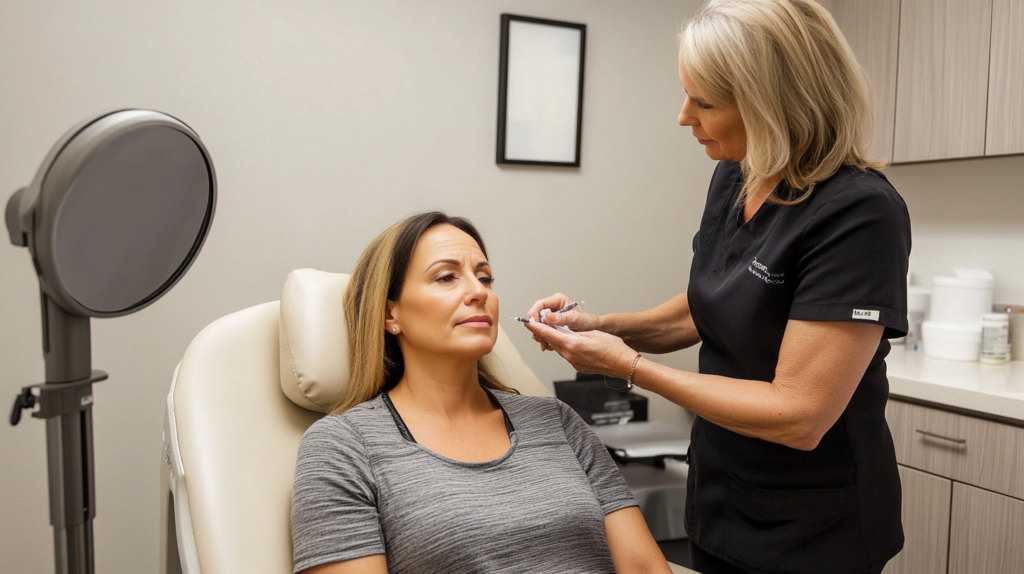
Botox is often discussed as one treatment, but it can be used in several facial areas when the concern is related to muscle movement. Each area of the face has different muscles, different levels of strength, and different risks. This is why Botox should be planned around facial anatomy, not applied the same way to every patient.
Botox may help soften dynamic wrinkles, which are lines created by repeated expressions such as frowning, squinting, smiling, or raising the brows. It does not add volume, tighten loose skin, or replace treatments that address skin texture, sun damage, or collagen loss. For many patients, Botox works best as part of a broader aesthetic plan.
At Blue Point Medical Spa in Las Vegas, Botox treatment areas are selected during a consultation. The provider evaluates muscle movement, skin quality, symmetry, brow position, facial structure, and patient goals before recommending a treatment plan.
Forehead Lines and Brow Movement
The forehead is one of the most common Botox areas. Horizontal forehead lines form when the eyebrows lift and the frontalis muscle contracts. These lines may become more visible over time because of repeated expression, natural aging, collagen loss, and environmental stress.
The frontalis muscle is important because it helps lift the brows. If too much Botox is placed in this area, the brows may feel heavy or appear lower. This is why forehead treatment requires careful dosing, especially for patients who already have mild brow heaviness or hooding.
A provider may place small amounts of Botox across selected points in the forehead to soften movement while maintaining natural expression. The goal is usually not to eliminate all motion, but to reduce deep creasing when the patient raises the brows.
Forehead treatment is often combined with treatment between the brows or around the eyes. This helps create balance across the upper face instead of treating one area while leaving nearby muscles overly active.
Patients can learn more about injectables before booking, but the final approach should always be based on an in-person assessment.

Frown Lines Between the Brows
The area between the eyebrows is called the glabella. This region includes the corrugator muscles and the procerus muscle, which pull the brows inward and downward. When these muscles contract repeatedly, they may create vertical frown lines, often called “11 lines.”
Many patients seek Botox in this area because frown lines can make the face look tense, tired, frustrated, or angry, even when the person feels relaxed. Glabellar lines are among the most common reasons patients choose neuromodulator treatment.
Treatment in the glabella is usually planned according to muscle strength. Some patients have strong corrugator muscles that require a more robust treatment plan. Others need a lighter dose to soften movement while keeping the result natural.
If the frown lines are present only during movement, Botox injections may soften them more noticeably. If the lines remain visible at rest, they may be static wrinkles, meaning Botox may help, but may not fully correct them. In those cases, a provider may discuss complementary treatments such as dermal fillers, laser treatments, or skincare.
The goal is a calmer, more refreshed appearance without removing normal expression.
Crow’s Feet Around the Eyes
Crow’s feet are the lines that appear at the outer corners of the eyes during smiling, laughing, or squinting. They are created by the orbicularis oculi, the circular muscle around the eye. Because the skin in this area is thin, lines may become visible earlier than in thicker areas of the face.
In Las Vegas, bright sun and frequent squinting may make crow’s feet more noticeable. UV exposure can also contribute to collagen breakdown, dryness, and reduced elasticity around the eyes. Patients can learn more about these environmental effects through Blue Point’s guide to skin health and Las Vegas climate factors.
Botox treatment for crow’s feet usually involves small doses placed along the outer eye area. The provider must be careful to soften excessive creasing without interfering with normal eyelid function or a genuine smile.
Many patients like treating this area because it can help the eyes look less tired while preserving warmth and expression. However, results vary based on wrinkle depth, skin quality, sun damage, muscle strength, and product placement.
Crow’s feet treatment may be combined with forehead and glabella treatment for a balanced upper-face result.
Subtle Brow Lift Support
A Botox brow lift is not the same as a surgical brow lift. It is a subtle technique that uses the balance between muscles that lift the brow and muscles that pull it downward. By relaxing selected depressor muscles, the brow may appear slightly more open in appropriate candidates.
This approach may be discussed for patients with mild brow heaviness or a desire for a more awake-looking upper face. The expected change is usually modest. Botox cannot remove significant eyelid hooding, replace surgery, or create a dramatic lift.
The technique requires careful placement. If the frontalis muscle is over-treated, the brow may drop rather than lift. If the downward-pulling muscles are treated strategically, some patients may notice a subtle opening around the eyes.
A provider at Blue Point Medical Spa evaluates brow position, eyelid anatomy, forehead movement, and facial balance before recommending this approach. Not every patient is a good candidate.
For some patients, other treatments may be more appropriate if the concern is skin laxity, eyelid hooding, or volume loss around the eyes.
Bunny Lines and Nasal Movement
Bunny lines are small diagonal lines that appear on the sides of the nose when a patient scrunches the nose. They are caused by contraction of the nasalis muscle. Some patients notice these lines naturally, while others notice them more after treating the forehead or glabella because movement shifts to the nose area.
Small amounts of Botox may be placed into the nasalis muscle to soften bunny lines. This treatment should be conservative because the nose is a small area, and excessive dosing can affect nearby movement.
Another specialized use involves the depressor septi nasi muscle, which may pull the nasal tip downward when smiling. In selected patients, Botox may be discussed to reduce this downward pull. The effect is subtle and depends on anatomy.
Nasal Botox is not appropriate for every concern. It does not reshape the nose, replace rhinoplasty, or treat structural nasal issues. It only affects selected muscle movement.
Because this area is more specialized, it should be performed by a provider with a strong understanding of facial anatomy and appropriate dosing.
Chin Texture and Lower-Face Movement
The mentalis muscle in the chin can create a dimpled or “orange peel” texture when it contracts. Some patients notice this texture when speaking, closing the mouth, or resting the lower face. Small doses of Botox may help relax the mentalis and create a smoother-looking chin surface in selected patients.
Lower-face Botox requires precision because muscles around the mouth affect speech, smile, lip position, and expression. Even small changes can be noticeable. A conservative plan is often used to reduce the risk of unwanted weakness or asymmetry.
Botox may also be discussed for certain mouth-area concerns, including a gummy smile or downward pull at the corners of the mouth. These uses depend heavily on anatomy and should be evaluated during consultation.
If the concern is volume loss, marionette lines, or lower-face sagging, dermal fillers, skin tightening, or other treatments may be more appropriate than Botox alone. The provider should explain which layer of aging is contributing to the concern.
A balanced lower-face plan may combine Botox with fillers or skin treatments, but timing and candidacy matter.
Masseter Botox and Jawline Concerns
The masseter muscle is located along the jaw and is used for chewing and clenching. In some patients, the masseter may become enlarged from frequent clenching or grinding. This can create a wider lower-face appearance or contribute to jaw tension.
Masseter Botox may be discussed for selected patients who have strong masseter activity. The treatment temporarily reduces muscle activity, and over time, reduced use may allow the muscle to become less prominent. Some patients may notice a slimmer-looking jawline silhouette, while others seek treatment for clenching-related tension.
This treatment is different from standard wrinkle treatment. It usually requires a larger dose and a different maintenance schedule. The provider must evaluate bite, muscle size, symptoms, facial shape, and whether a dental or medical evaluation is also appropriate.
Masseter Botox is not a substitute for dental care, TMJ diagnosis, or treatment of underlying jaw disorders. Patients with jaw pain, tooth wear, or headaches should discuss symptoms with the appropriate healthcare provider.
For aesthetic contouring, results are gradual and depend on muscle size, dose, treatment frequency, and individual response.
Lip Flip and Upper Lip Movement
A lip flip uses a small amount of Botox near the upper lip border to relax part of the orbicularis oris muscle. This may allow the upper lip to roll slightly outward, creating the appearance of a subtly fuller upper lip without adding volume.
The lip flip is different from lip filler. Dermal fillers add volume and shape, while a lip flip changes the position of the existing lip by affecting muscle movement. Some patients prefer this option when they want a very subtle change.
The result is temporary and typically more modest than filler. Patients should not expect dramatic volume, strong definition, or long-lasting enlargement from a lip flip. It may be more appropriate for patients whose upper lip disappears slightly when they smile.
Because the mouth muscles are involved in speaking, eating, drinking, and expression, dosing must be very conservative. Too much relaxation may affect lip function.
A provider can help determine whether a lip flip, filler, or no treatment is the best match for the patient’s goals.
Neck Bands and Platysmal Movement
Platysmal bands are vertical cords that may appear in the neck as the platysma muscle becomes more visible with age or movement. In selected patients, Botox may help soften the appearance of these bands by reducing muscle activity.
This treatment is sometimes discussed as part of a broader face and neck plan. It may be appropriate when the bands are mainly caused by muscle contraction. If the concern is loose skin, excess fat, or significant laxity, Botox may not be enough.
Neck treatment requires careful dosing because the neck muscles are involved in movement and support. Patients should understand that results are subtle and temporary. A provider may also discuss other options, such as Ultherapy, if the concern includes skin laxity.
The provider evaluates the patient while the neck is at rest and during muscle contraction. This helps determine whether the bands are suitable for treatment.
A realistic plan should explain what Botox may improve and what it cannot correct.

Designing a Multi-Area Botox Plan
Treating multiple Botox areas in one appointment is common when the patient’s concerns involve several movement patterns. A typical upper-face plan may include the forehead, glabella, and crow’s feet. Some patients may add lower-face areas, a lip flip, chin smoothing, or masseter treatment when appropriate.
The total number of Botox units depends on the treatment areas, muscle strength, anatomy, and desired degree of relaxation. A first-time patient may start conservatively, while a returning patient may have a more established dose based on prior response.
A multi-area plan should look balanced. If only one area is treated while nearby muscles remain highly active, the face may not move naturally. The provider considers how different muscles interact before placing the product.
Complementary treatments may be recommended when the concern is not purely muscle-related. Facials may support surface hydration and texture. Chemical peels may help with tone and dullness. Microneedling may support collagen-related texture improvement.
FAQ
Can Botox treat facial asymmetry?
Facial asymmetry is normal, and Botox may help balance selected muscle movement in some patients. The provider may adjust dosing from one side to the other based on muscle strength and expression patterns. Botox cannot correct every type of asymmetry, especially if it is related to bone structure, volume loss, or skin laxity.
Can multiple Botox areas be treated in one appointment?
Yes, multiple Botox treatment areas can often be treated in one session when appropriate. The provider determines the total dose, placement, and safety considerations based on anatomy and goals. A multi-area plan may include the forehead, glabella, crow’s feet, chin, lip flip, or masseter areas.
Will Botox make the face look frozen?
A frozen look is usually related to excessive dosing, poor placement, or a treatment plan that does not match the patient’s goals. Skilled providers use strategic placement and conservative dosing to help soften lines while preserving natural movement. Results vary, and a consultation helps set expectations.
Conclusion
Botox may be used in several areas of the face when the concern is related to muscle movement. Common treatment zones include the forehead, glabella, crow’s feet, brow area, nose, chin, masseters, lip area, and neck bands. Each area requires a different approach because every muscle has a different function.
At Blue Point Medical Spa, patients receive injectable care guided by consultation, education, and professional oversight. If you are considering Botox, book a consultation to discuss which treatment areas may be appropriate for your anatomy and goals.
Individual results vary. A consultation with a licensed provider is required to determine whether Botox or another neuromodulator is appropriate. Aesthetic services are elective and may involve risks, side effects, contraindications, bruising, swelling, asymmetry, temporary weakness, limited response, or other outcomes. Recommendations may vary based on anatomy, medical history, medications, treatment area, prior treatments, and individual response.