After significant weight loss, many patients feel proud of what they have achieved but are uncertain about what comes next for their skin. The body may look smaller, but loose skin, sagging skin, or even hanging skin can remain after the volume underneath has changed, especially after rapid weight loss, major weight loss, or bariatric surgery. Cleveland Clinic notes that excess skin is common after large weight changes, and the American Society of Plastic Surgeons explains that post-weight-loss body contouring is often discussed when tissue does not retract as hoped.
That is why patients often start researching non-surgical skin tightening options often discussed after significant weight loss, before they are ready to consider surgery. At BluePoint Medical Spa, the current treatment menu includes non-surgical skin tightening options such as Ultherapy and RF Venus Freeze for the face, neck, and body, which makes this topic especially relevant for people exploring lower-downtime aesthetic care in Las Vegas.
Loose Skin After Weight Loss Raises Different Concerns Than Stubborn Fat
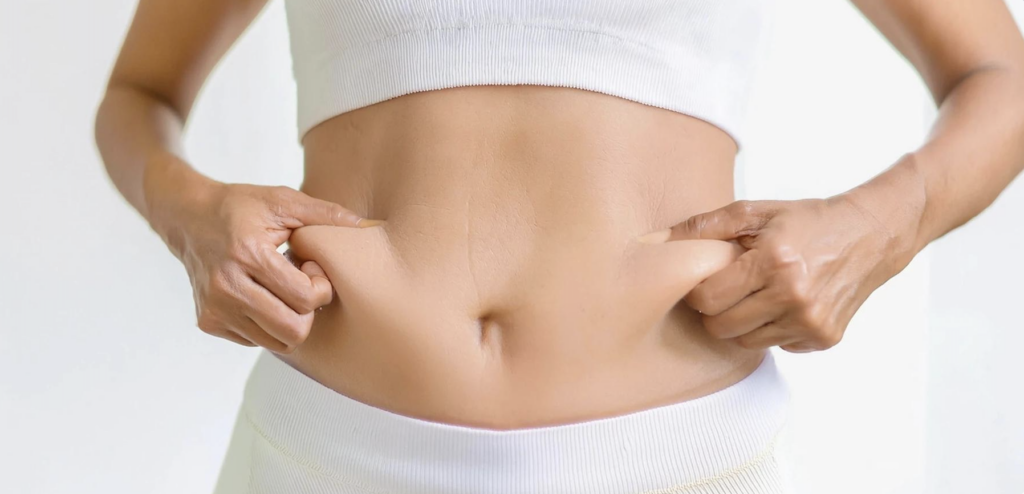
Patients often use one term for several different issues. Sometimes the concern is true excess skin or significant loose skin after the body shrinks. In other cases, the concern is lingering fat, reduced skin firmness, or a mix of contour change and skin laxity. That distinction matters because a treatment that reduces fat does not always tighten skin, and a treatment that improves firmness may not remove loose skin.
This is especially important after a major transformation. The skin may have been stretched for years during weight gain, and then the body changes faster than the tissue can rebound. Age, genetics, how long the skin stretches, and the pace of the weight loss journey all influence how much loose skin remains and whether the issue looks like mild laxity or a more structural surplus of tissue.
Skin Laxity Develops When Elastic Support Does Not Fully Recover
From a tissue standpoint, post-weight-loss laxity is not only a surface issue. Declines in collagen and elastin support affect how well skin retracts after the body becomes smaller, which is why skin after weight loss may look thinner, less resilient, or less able to spring back. BluePoint’s current laser education also emphasizes that collagen is central to texture, resilience, and firmness, and that treatments designed to support remodeling usually work by stimulating deeper repair rather than creating instant change.
That is the context behind skin-tightening care. When patients ask about non-surgical skin, they are usually asking whether a treatment can support skin elasticity, improve visible laxity, and make the tissue look more compact without incisions. In the right patient, that may be possible to a degree, but the improvement depends heavily on whether the starting point is moderate skin laxity or severe skin laxity.
Moderate Skin Laxity Responds More Realistically Than Severe Skin Laxity
This is one of the most important counseling points in post-weight-loss aesthetics. According to the American Board of Cosmetic Surgery, non-surgical tightening tends to work best for mild to moderate looseness on the face, neck, or body. That makes these options more realistic for patients with moderate skin laxity than for those with large folds of excess skin.
When there is significant skin laxity, the conversation often changes. The American Society of Plastic Surgeons and the Cleveland Clinic both note that body contouring surgery is what actually addresses larger amounts of tissue after major weight loss, because surgery physically removes excess skin. In other words, devices may improve firmness, but they do not replace kin removal when the amount of extra tissue is substantial.
Ultrasound Skin Tightening Is Often Discussed for Collagen Support
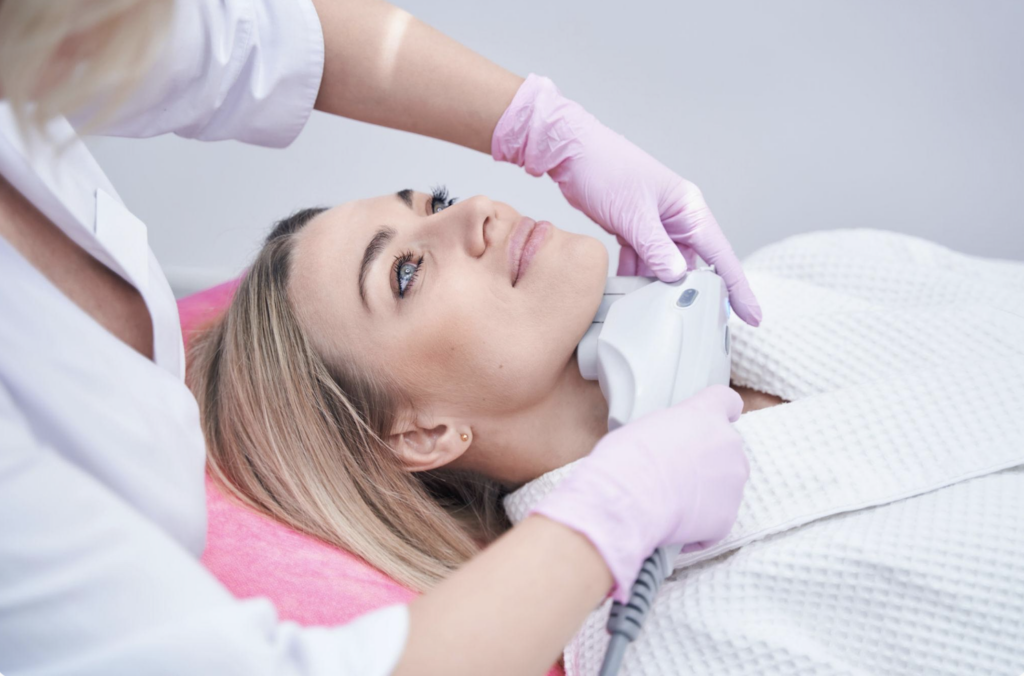
One of BluePoint’s clearest tightening offerings is Ultherapy. The spa’s current service page states that the treatment uses focused ultrasound energy to reach deeper tissue and support natural collagen remodeling over time. It is specifically positioned as a non-surgical option for improving firmness on the face, jawline, neck skin, and décolletage.
This makes ultrasound skin tightening relevant when the goal is gradual lifting rather than tissue excision. Because ultrasound energy works beneath the surface, the value is not in peeling the skin’s surface, but in targeting underlying tissues and encouraging the body to rebuild support gradually. That is why results are generally described as progressive rather than immediate.
RF Skin Tightening Is Commonly Chosen for Low-Downtime Firmness Support
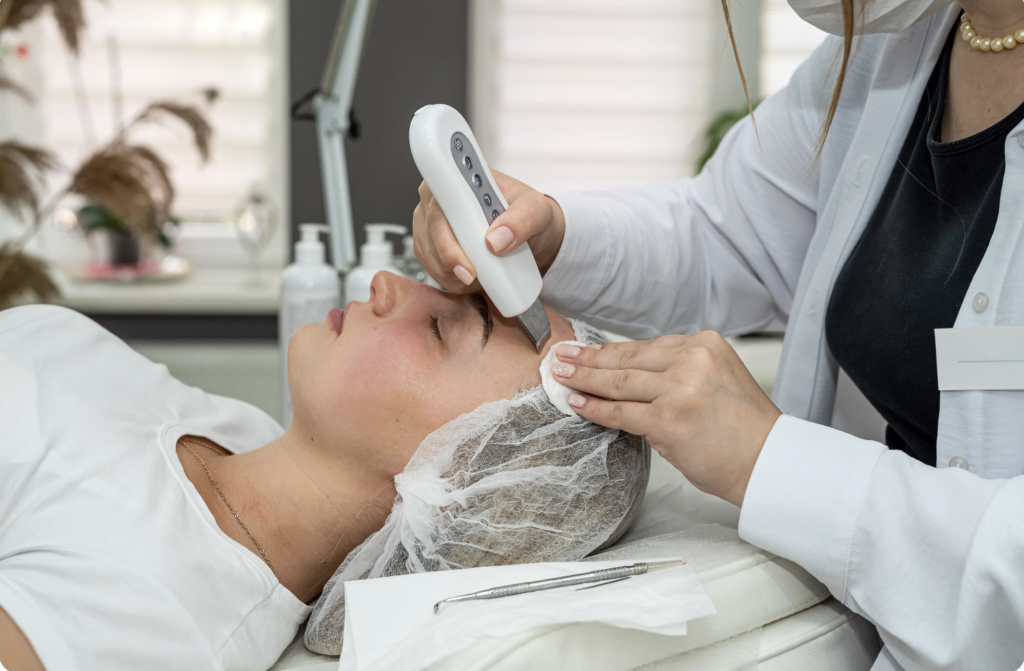
BluePoint also offers RF skin tightening through Venus Freeze for the face, eyes, mouth, neck, and body areas. Radio frequency-based treatments are widely discussed because heat delivered into targeted layers may stimulate collagen, support remodeling, and create a firmer feel over time without surgery. BluePoint’s pricing page confirms RF body and facial tightening as part of its current menu.
Patients are often drawn to RF because it fits the category of non-surgical cosmetic treatments associated with minimal downtime. For post-weight-loss concerns, that can be appealing when the issue is early laxity rather than large tissue overhang. Still, expectations should remain measured because RF is better understood as a firming tool than as a way to correct major folds of loose tissue.
Laser Skin Tightening Is Another Option for Gradual Firming
Laser skin tightening is also part of the broader discussion, especially when a patient is already considering laser treatments for texture or tone. BluePoint’s laser pages state that its treatments are designed to stimulate collagen production and improve firmness and skin quality, while the site’s recent educational content explains that collagen-based changes usually unfold gradually over weeks to months.
For the right patient, laser skin therapies may contribute to improved skin tone, better skin texture, and a firmer look. That said, these are usually best framed as supportive skin-tightening treatments, not as a substitute for surgery in patients with large amounts of saggy skin or tissue that physically drapes.
Collagen Stimulation Matters More Than Quick Surface Change
Whether the device uses radio frequency, ultrasound, or laser heat, the shared concept is collagen stimulation. These treatments aim to trigger collagen production, support the body’s natural collagen production, and sometimes encourage collagen growth deeper in the tissue. Because of that, the most meaningful changes usually involve gradual remodeling rather than instant shrinking.
This biology explains why non-surgical options are often recommended as a process, not a one-day transformation. Patients looking to stimulate collagen production, stimulate collagen, or support the body’s collagen production should understand that the outcome depends on time, tissue quality, and candidacy. It also explains why maintenance and realistic pacing are part of responsible counseling.
Post-Weight Loss Patients Often Need a Candidacy Review Before Treatment
Not every person who loses weight needs the same next step. A proper evaluation should look at the amount of laxity, the quality of the tissue, whether the weight has stabilized, and where the concern is most visible. Post-weight-loss patients may have different needs in the abdomen, upper arms, neck, thighs, or lower face, and treatment choice should reflect location as well as severity.
BluePoint’s consultation-focused content reflects this approach. Its current pages emphasize matching technology to goals, anatomy, and priorities rather than assuming one treatment fits everyone. That is especially useful when someone is deciding between body sculpting, tightening, or referral for a surgical opinion.
Body Contouring Does Not Always Mean Skin Removal
The term body contouring can confuse patients because it is used for both surgical and non-surgical care. The American Society of Plastic Surgeons uses it to describe post-weight-loss surgery that improves contour and removes excess skin, while non-surgical med spa content often uses it for fat reduction or mild tightening treatments. Those are not interchangeable categories.
This matters because a patient who wants a tummy tuck, arm lift, or neck lift is asking a different question than a patient who wants modest firmness support. Surgical contouring can address abdominal muscles, excise extra tissue, and correct larger structural issues. By contrast, non-surgical options are usually more appropriate when the goal is modest tightening without incisions.
Surgical Skin Tightening Enters the Conversation When Skin Removal Is the Main Need
When there is a great deal of overhanging tissue, many patients eventually compare surgical skin tightening and surgical skin procedures against med spa options. Cleveland Clinic notes that excess skin removal can be performed in stages after weight has stabilized, and the American Society of Plastic Surgeons describes surgery as the path that directly addresses skin redundancy after major weight loss.
That is why honest comparison matters. Non-surgical procedures may improve firmness, but they do not perform the same role as surgery, which physically removes excess skin. Patients with major abdominal laxity, apron-like tissue, or larger folds should understand when it is appropriate to speak with a board-certified plastic surgeon rather than expect a device to solve a structural problem.
Best Non-Surgical Treatments Depend on Area, Skin Quality, and Goals
The best non-surgical treatments are not universal. A patient with mild jawline laxity may be a better candidate for ultrasound-based lifting, while someone with generalized body looseness may look at RF-based tightening or body contouring support. BluePoint’s current menu reflects this range, listing Ultherapy, RF Venus Freeze, and body sculpting options as separate services rather than one single solution.
This is also where skin types, age, the speed of weight loss, and baseline overall skin health come into play. A person with better tissue quality may see more visible improvement from a collagen-based plan than a person with thin, heavily stretched skin. That is why individualized planning is more useful than broad promises.
Benefits and Limitations Should Be Explained in the Same Conversation
The main appeal of non-surgical treatments is clear: they are office-based, involve minimal downtime, and may improve firmness without incisions. For some patients, that may mean firmer skin, better contour, and a more refined appearance over time. BluePoint’s current tightening pages also emphasize gradual lifting and long-term collagen support rather than instant dramatic change.
The limitation is equally important. These procedures do not remove loose skin in the way surgery does, and they are not ideal for everyone with loose skin after weight changes. Framing the benefit without the limitation would be misleading, especially for patients with larger folds, pronounced tissue redundancy, or major post-bariatric changes.
A Treatment Plan Should Stay Grounded in Medical Reality
A responsible treatment plan should account for whether the goal is modest tightening, fat reduction, better skin firmness, or evaluation for surgery. It should also separate skin concerns from unrelated services such as hair removal, because a patient comparing tightening options needs clarity about what each technology is actually designed to do. BluePoint’s service structure supports this kind of distinction by separating skin tightening, body sculpting, laser services, and other categories.
These treatments are elective aesthetic services, not medically necessary procedures. Individual results vary, treatments may involve risks or contraindications, and a consultation with a licensed provider is required before deciding whether non-surgical skin tightening, body contouring, or surgical referral is the most appropriate next step after significant weight loss.

FAQ
Can Non-Surgical Treatments Remove Excess Skin After Major Weight Loss?
Usually not. They may improve firmness in mild to moderate laxity, but they do not remove large amounts of extra tissue the way surgery does.
Is Ultherapy the Same as Surgical Skin Tightening?
No. Ultherapy uses focused ultrasound energy to support collagen remodeling over time, while surgery physically removes tissue and reshapes the area more directly.
When Is a Plastic Surgery Referral More Appropriate?
A referral becomes more relevant when there is severe skin laxity, significant overhang, or a clear need for skin removal rather than gradual firming. That is especially common after very large or post-bariatric weight loss.
Do Non-Surgical Skin Tightening Results Happen Right Away?
Usually not. Collagen-based improvements tend to appear gradually over weeks to months because the tissue needs time to remodel.
Conclusion
The most useful takeaway is that non-surgical skin tightening options often discussed after significant weight loss can play a meaningful role when the concern is mild to moderate laxity and the patient understands the scope of what these treatments can realistically do. Options such as ultrasound skin tightening, RF skin tightening, and laser skin tightening are best viewed as gradual collagen-support tools designed to improve firmness, not as substitutes for surgery when there is a large amount of extra tissue.
For patients who want a clearer assessment of skin laxity, skin quality, and the most appropriate path forward, the next step should be individualized rather than assumed. Schedule a consultation with BluePoint Medical Spa to review your goals, your anatomy, and whether non-surgical tightening or another option makes the most sense for your post-weight-loss concerns.