

Patients researching microneedling for acne scars: an in-depth look at the treatment process are usually trying to answer two questions at once. They want to know whether microneedling for acne scars is a meaningful option for visible acne scars, and they want a clearer picture of the actual treatment process before booking a consultation. At BluePoint Medical Spa, microneedling is presented as a collagen-focused treatment that may improve texture, tone, and certain scars over time rather than all at once.
That distinction matters because not all acne scars respond in the same way. The skin may look uneven for several reasons, including atrophic acne scars, rolling scars, boxcar scars, ice pick scars, lingering dark spots, and post-acne changes in skin tone and skin texture. A patient who understands the scar pattern is in a better position to decide whether microneedling belongs in the plan or whether other treatments should be considered.
Acne Scar Type Shapes the Treatment Conversation
Acne scarring develops from an inflammatory process that alters healing beneath the skin. DermNet explains that scarring reflects a fibrous repair response after deeper cutaneous inflammation, which is why scars can remain long after active acne or past breakouts have settled. This is also why skin scars may affect both the surface appearance and the structure below it.
Many of the scars treated with microneedling are atrophic scars—in other words, depressed scars that sit below the level of the surrounding skin. These include rolling scars, which create broad undulations, and boxcar scars, which often appear as round or oval depressions with more defined edges. Shallow boxcar scars may respond differently from deep acne scars, and severe scarring often requires a broader strategy than one procedure alone.
Hypertrophic Scars and Ice Pick Scars Require Extra Nuance
Microneedling is often discussed most favorably for atrophic patterns, not necessarily for hypertrophic scars, which are raised rather than sunken. That does not make treatment impossible, but it does mean that scar classification should come before treatment selection. A surface-level assumption that every scar behaves the same can lead to disappointment and over-treatment
Similarly, ice pick scars tend to extend more narrowly and deeply into the skin, which can make them less responsive to a single modality. Patients with a mix of boxcar, rolling, and ice pick scars often need a customized treatment plan rather than a generic “scar package.” That is one reason acne scar consultations should focus on pattern, depth, and scar severity before discussing price or downtime.
Microneedling Works by Triggering Collagen Induction Therapy
The core idea behind microneedling is straightforward. The treatment uses tiny needles to create controlled tiny punctures in the skin, and that response encourages the body to begin repair. The American Academy of Dermatology describes this as collagen induction therapy, noting that puncturing the skin causes the body to produce new collagen and elastin that may make acne scars less noticeable.
This is important because many acne scars are structural. They are not only discoloration on the skin’s surface. They involve changes in the support under the skin, which is why a treatment that reaches beyond superficial exfoliation may be more useful for improving skin texture in certain patients. Cleveland Clinic notes that microneedling goes deeper than microdermabrasion and may work better for concerns beneath the surface, such as acne scars.
The Skin Responds Through the Body’s Natural Healing Process
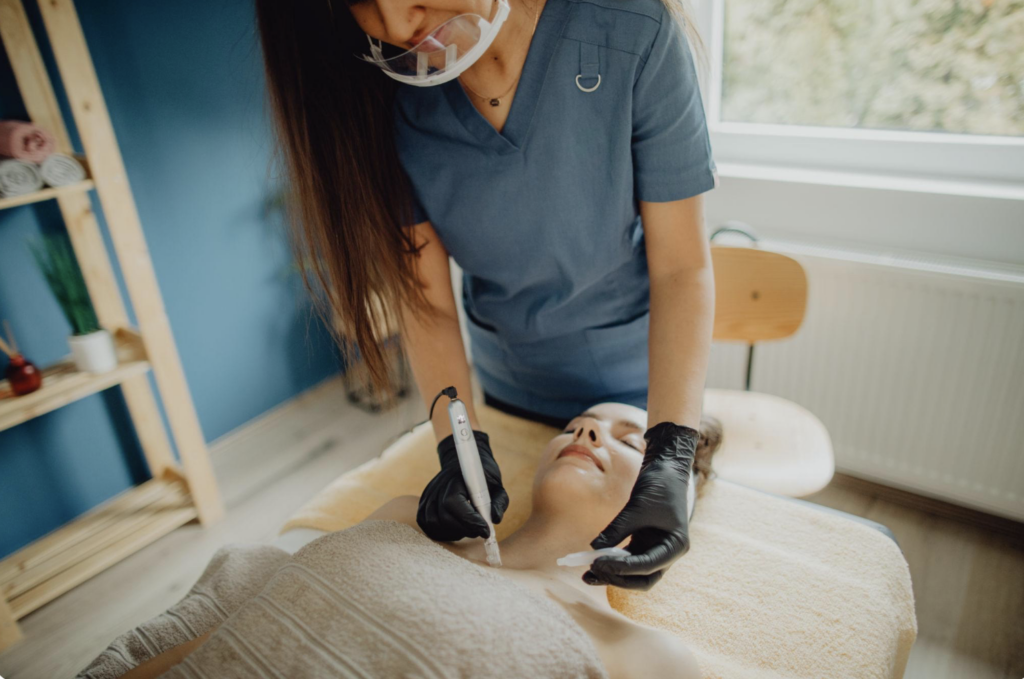
When the needles create those controlled channels, the skin responds by activating the body’s natural healing process. That response includes skin healing, collagen production, elastin production, and gradual scar remodeling over time. The visible change is usually not immediate because the tissue has to rebuild below the surface before the skin looks smoother from above.
For patients, that means microneedling is less about instant correction and more about gradual change. A person may see some early glow, but the more meaningful goal is support for new collagen, better skin quality, and a more even appearance as healing progresses. BluePoint’s recent educational material makes the same point—collagen-focused treatments tend to improve gradually rather than overnight.
The Treatment Process Involves Preparation, Needling, and Recovery
A standard microneedling treatment usually starts with cleansing and topical anesthesia. Cleveland Clinic notes that providers often apply a topical numbing cream first, then use a roller or electric device to puncture the skin. Needle depth can be adjusted, and longer needles may be used when there are deeper scars or pitted areas from acne.
This makes microneedling minimally invasive, but not trivial. The treatment still creates controlled injury in the dermal layer, and that is why aftercare matters. Patients should understand that the session is brief, but the healing process continues after the appointment as the skin moves through repair and remodeling.
Post-Treatment Skin Can Look Like a Mild Sunburn
After a session, it is common for the skin to look pink or flushed. BluePoint’s older microneedling guidance describes post-procedure redness lasting about two to four days and compares it to a mild sunburn. That kind of short-term irritation is different from a complication, but patients still need appropriate guidance on cleansing, hydration, and sun avoidance.
During this phase, it is also important to limit direct sun exposure and avoid irritating topical products or strong active skincare ingredients until the skin barrier settles. A calmer recovery period supports comfort and lowers the chance of unnecessary irritation, especially in patients prone to post-inflammatory hyperpigmentation.
Darker Skin Tones Often Benefit From Conservative Planning
One of the reasons microneedling attracts interest in scar care is that it is considered safer across a wide range of skin tones than some more aggressive resurfacing options. The AAD states that microneedling is safe for all skin tones, and DermNet notes a reduced risk of hyperpigmentation and scarring compared with more invasive procedures, making it a more approachable option for darker skin tones and darker skin when planned carefully.
That does not mean every patient has the same risk profile. A person with reactive pigment, recent irritation, or a history of post-inflammatory hyperpigmentation still needs thoughtful settings and aftercare. This is particularly relevant across different Fitzpatrick skin types, where conservative technique may be more important than aggressive depth.
Skin Thickness and Scar Depth Affect the Plan
Not every area of the face has the same skin thickness. Some zones have thinner skin, while others tolerate more depth. That matters because treatment depth should reflect both the location and the scar pattern rather than a one-depth-fits-all approach. Cleveland Clinic specifically notes that longer needles may be needed when there are deep scars or pockmarks.
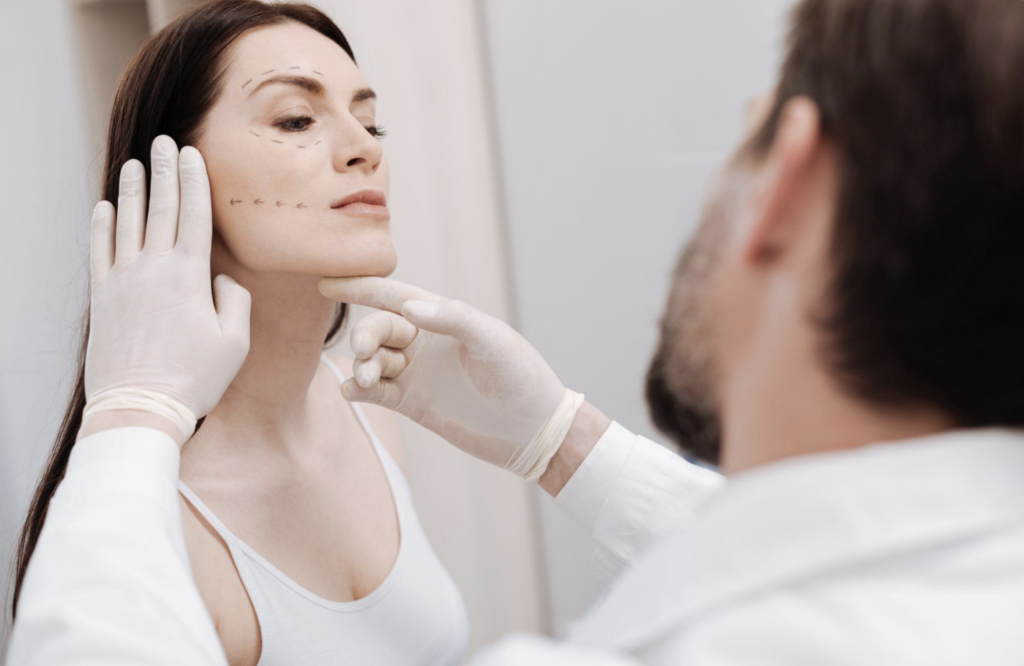
In practical terms, this is part of what separates a meaningful acne scar consultation from a generic facial visit. The provider needs to decide whether the patient needs a more superficial plan, a deeper treatment, or a layered combination therapy approach based on scar depth, tolerance, and overall goals.
Active Acne and Certain Conditions May Delay Treatment
Microneedling is not appropriate for everyone at every moment. Cleveland Clinic advises patients to tell their provider if they have acne or are taking acne medication, and also flags concerns such as cold sores, anticoagulant use, eczema, psoriasis, and other medical factors. This makes screening part of responsible treatment selection.
For acne scar patients, the most relevant point is that active breakouts and active acne may change timing. Treating scar tissue is different from treating inflamed lesions, and a face with ongoing breakouts may need stabilization first. That helps reduce irritation and makes the scar-focused plan easier to interpret afterward.
A Weakened Immune System and Infection Risk Require Caution
Microneedling creates channels in the skin, so infection control and candidacy both matter. The AAD warns that at-home microneedling and poorly controlled non-medical settings can increase the risk of infection, scarring, viral spread, and color change. That makes professional technique and a clean treatment environment essential.
Patients with a weakened immune system, a history of recurrent herpes, or active skin infection may need additional caution or a delayed appointment. This is also why trending add-ons should be discussed carefully rather than assumed to be appropriate just because they are popular online.
Platelet-Rich Plasma and Combination Therapy Are Sometimes Added
Some patients ask about platelet-rich plasma, often referred to as PRP. The AAD notes that microneedling is often used alongside another treatment, such as radiofrequency, chemical peels, or PRP, and that studies show PRP used with another treatment like microneedling may lead to less visible scarring.
That does not mean PRP is automatically necessary. It means combining microneedling with selected add-ons is part of how some clinicians build a broader scar plan. For patients with mixed specific skin concerns such as scars, enlarged pores, roughness, and tone variation, combination therapy may be discussed when monotherapy seems too limited.
Other Treatments May Still Belong in the Plan
Microneedling is one option, not the entire acne scar field. The AAD also lists laser treatments, chemical peels, radiofrequency, scar surgery, and topical medication among acne scar approaches. In some cases, treating acne scars effectively means choosing several tools over time rather than expecting microneedling alone to address every contour change.
This matters especially when a patient has deep acne scars, more obvious tissue tethering, or scar types that do not respond evenly. The most useful question is often not whether microneedling is “good,” but whether it is the right first step in the patient’s broader treatment plan.

FAQ
Is Microneedling Good for All Types of Acne Scars?
Not always. Microneedling is most often discussed for atrophic, depressed acne scars, while other scar patterns may need different or additional treatments. A scar assessment matters because not all acne scars respond the same way.
How Does Microneedling Improve Acne Scar Texture?
Microneedling creates controlled punctures that trigger collagen and elastin production during healing. Over time, that repair process may soften scar edges and improve uneven texture.
Is Microneedling Safe for Darker Skin Tones?
It is often considered a safer resurfacing option across skin tones than more invasive procedures, but planning still matters. Conservative technique and aftercare are especially important in patients prone to pigment change.
Can Microneedling Be Combined With PRP or Other Treatments?
Yes, sometimes. Dermatology guidance notes that microneedling is often paired with treatments such as PRP, radio frequency, or chemical peels when a broader scar strategy is appropriate.
Conclusion
Patients considering microneedling acne scars should expect progress to develop over time rather than immediately after one appointment. Because the treatment works by stimulating collagen and elastin renewal beneath the surface, visible improvement often appears gradually across multiple sessions. As the skin heals, some patients notice smoother overall skin texture, softer scar edges, and a more even, healthier-looking complexion, especially when scarring is mild to moderate rather than severe.
The best outcomes usually come from consistency, realistic timing, and a treatment plan tailored to scar pattern, skin tone, and recovery tolerance. Because these services are elective, individual results vary, and treatment may involve risks or contraindications, a consultation with a licensed provider is required before moving forward. For patients comparing microneedling with other scar-focused options, schedule a consultation with BluePoint Medical Spa to review the most appropriate next step.