

Lip filler is one of the most requested injectable treatments in medical aesthetics, but it is also one of the most misunderstood. Patients considering the procedure for the first time often arrive with curiosity, questions, and some hesitation, especially if their expectations have been shaped by exaggerated results online. Modern lip augmentation is more nuanced than social media may suggest. When performed by a trained provider with knowledge of facial anatomy, proportion, and product selection, lip filler may enhance the lips while still supporting a balanced, natural-looking appearance.
At Blue Point Medical Spa, patients receive a consultation before any injectable treatment. This step helps align anatomy, goals, safety considerations, and realistic expectations before treatment begins. Understanding what lip filler is, how the procedure works, what recovery may look like, and what factors influence the final result can help patients make a more informed decision.
Hyaluronic Acid Fillers and Lip Enhancement
Most lip fillers used in the United States are based on hyaluronic acid, often called HA. Hyaluronic acid is a substance naturally found in the skin, connective tissue, and joint fluid. It binds to water and helps support hydration, volume, and structure in the tissues where it is present. As a dermal filler, HA is formulated into a gel that can be injected into the lips to support volume, shape, symmetry, and definition.
Different HA filler products have different textures, densities, and intended uses. Some are designed for soft volume enhancement, while others are used for more subtle definition around the lip border or vertical lip lines. Common product families used in aesthetic medicine may include Juvederm, Restylane, and Belotero, though the product selected depends on the patient’s anatomy, treatment goals, and the provider’s clinical judgment.
Product selection matters because not every dermal filler behaves the same way in the lips. A patient seeking subtle hydration and definition may need a different formulation than a patient seeking more visible fullness. The provider considers lip anatomy, tissue quality, previous filler history, facial balance, and how the product is expected to move with natural facial expression.
Patients considering lip enhancement alongside other aesthetic services can review Blue Point’s dermal fillers and injectables pages to understand how lip filler may fit within a broader treatment plan.
One reason HA-based fillers are commonly used for lip augmentation is that they can often be dissolved with an enzyme called hyaluronidase if clinically appropriate. This does not mean complications are impossible or that every concern resolves instantly, but it does provide an important safety advantage compared with non-HA products.
Consultation and Facial Proportion
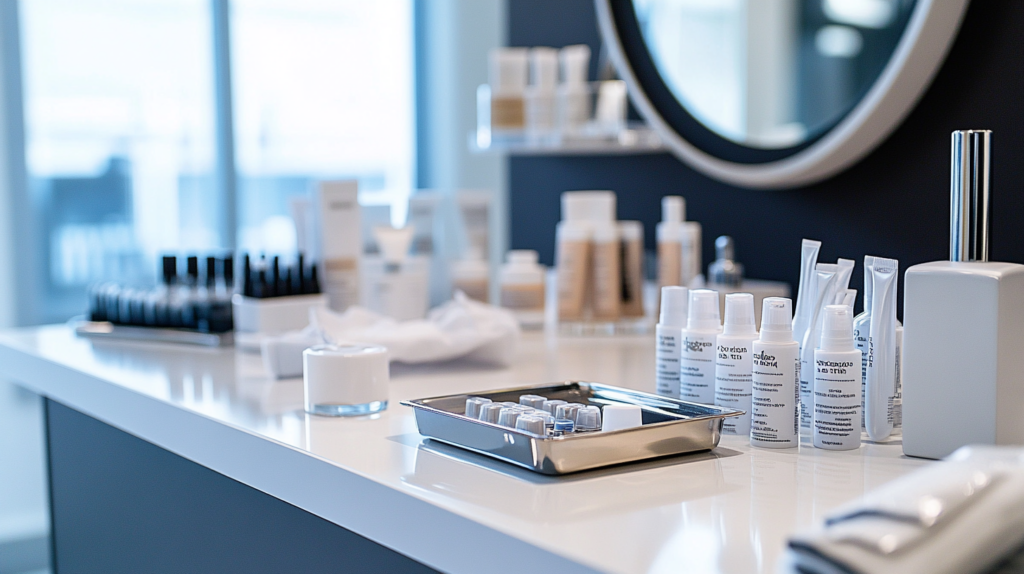
The most important step in lip filler treatment happens before the injection. A thorough consultation gives the provider time to assess facial anatomy, listen to the patient’s goals, review medical history, and explain what may be realistic. This is where a personalized treatment plan begins.
Lip anatomy varies widely from person to person. The ratio between the upper lip and lower lip, the shape of the Cupid’s bow, the definition of the vermillion border, the position of the lip corners, and the amount of natural lip volume all influence how filler should be placed. A careful provider does not treat every patient with the same pattern or volume. Instead, they evaluate how the lips relate to the rest of the face.
During the consultation at Blue Point Medical Spa, the provider also reviews health history. Patients should disclose any history of cold sores, since lip injections may trigger an outbreak in patients who carry the herpes simplex virus. In some cases, a provider may recommend antiviral medication before treatment. Patients should also share allergies, current medications, supplements, recent dental work, pregnancy status, and any previous injectable treatments.
The consultation also clarifies what lip filler can and cannot do. Lip filler may support volume, shape, hydration, and definition, but it does not permanently change anatomy, tighten loose skin, or fully correct structural asymmetry caused by bone, muscle, or dental differences. Setting these boundaries helps patients approach treatment with realistic expectations.
This consultation-based approach is especially important for patients who want natural-looking lip filler. In many cases, a conservative first treatment with the option to reassess later may be more appropriate than trying to achieve a dramatic change in one appointment.
Injection Techniques and Product Placement
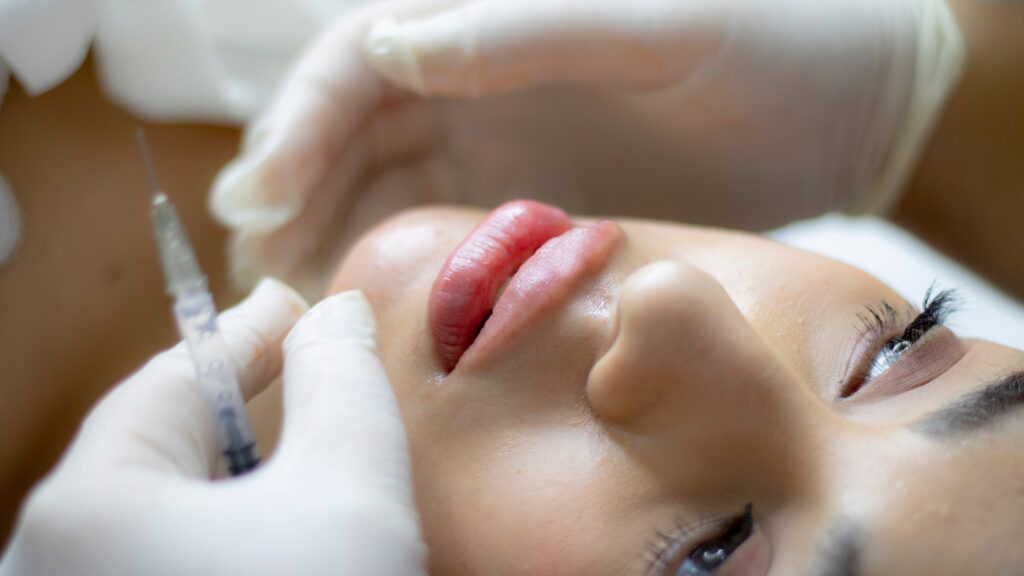
On the day of treatment, the provider typically begins by cleansing the area and applying a topical numbing cream to the lips and surrounding skin. Many HA fillers also contain lidocaine, a local anesthetic that may improve comfort during injection. The numbing period often takes about 15 to 20 minutes, depending on the product and treatment plan.
The provider may use a fine needle or a blunt-tipped cannula to place the filler. Needle-based injection allows precise placement in small areas such as the Cupid’s bow, vermillion border, or specific points of asymmetry. Cannula-based injection uses a flexible tube introduced through a small entry point, which may reduce bruising in some patients because the cannula can move around certain blood vessels rather than piercing directly through them.
Injection techniques have a major influence on the final appearance. Small amounts of filler placed along the lip border may support definition. Products placed in the body of the lip may support fullness and projection. Filler placed near the lip corners may help improve the appearance of downturned edges in selected patients. The provider builds the result carefully, checking proportion and symmetry throughout the session.
Most lip filler sessions use a conservative amount of product, often between 0.5 and 1 mL for first-time patients, though the amount may vary. Some patients may need less, while others may require staged treatment over time. A gradual approach can help reduce the risk of an overfilled appearance and allows the provider to evaluate how the tissue responds.
Treatment is performed in a clinical setting at Blue Point Medical Spa. The full appointment may take longer than the actual injection time because consultation, numbing, preparation, and aftercare instructions are all part of the process.
Recovery and Expected Timeline
Immediately after lip filler, patients should expect swelling. The lips often look fuller than the intended final result during the first 24 to 72 hours. This early swelling is a normal response to the injection and does not represent the settled outcome. Patients should avoid judging the final result too soon, since the lips need time to calm and the filler needs time to integrate with the tissue.
Bruising may also occur because the lips are vascular and sensitive. Some patients bruise minimally, while others may notice visible discoloration for several days. Bruising often improves within a week, although timing varies. Patients may reduce the chance of bruising by following provider instructions and avoiding certain blood-thinning substances, such as alcohol, aspirin, ibuprofen, fish oil, or vitamin E, when medically appropriate and when approved by their physician.
The pre- and post-treatment care guidelines at Blue Point Medical Spa provide instructions that may include avoiding intense exercise, heat exposure, alcohol, pressure on the lips, and certain skincare products for a short period after treatment. Patients should follow the specific aftercare directions given by their provider.
Most patients see a more settled result around the two-week mark. By then, swelling has usually decreased, and the filler has integrated more naturally into the lip tissue. Some tenderness, firmness, or mild unevenness may occur during the first several days. Patients should not massage or manipulate the lips unless their provider specifically instructs them to do so.
Patients should contact the medical spa promptly if they experience symptoms that seem unusual, including severe pain, skin discoloration, worsening swelling, blistering, or symptoms that raise concern. While serious complications are uncommon, lip filler is a medical aesthetic procedure and should be approached with appropriate follow-up and professional oversight.
Duration and Maintenance Planning
HA lip fillers are temporary. The body gradually metabolizes hyaluronic acid, and the added volume decreases over time. For many patients, results may last about six to 12 months, depending on the product used, the amount placed, individual metabolism, lifestyle factors, and how expressive or mobile the treatment area is.
Maintenance varies by patient. Some patients schedule periodic maintenance appointments before the filler has fully dissipated. Others prefer to let their filler fade more completely before deciding whether to treat it again. Neither approach is universally better. The right plan depends on the patient’s goals, budget, anatomy, and comfort level.
A conservative maintenance plan may help preserve balance without adding too much volume over time. This is why provider assessment remains important at each visit. The provider should evaluate the lips as they are now, not simply repeat the same amount used previously. Tissue changes, filler remaining from prior treatment, and evolving patient preferences all influence the next step.
For patients considering lip filler as part of a broader facial rejuvenation plan, the provider may discuss timing with neuromodulators, dermal fillers, or skin rejuvenation treatments. Coordinating treatments thoughtfully may help maintain proportion and avoid addressing one area in isolation.
Provider Training and Safety
The outcome of lip filler depends heavily on the provider’s training, technique, and judgment. The lips are a delicate and highly visible area. They contain important blood vessels, thin tissue, and subtle shape details that require careful treatment. Improper injection may contribute to lumps, asymmetry, excessive volume, bruising, vascular compromise, or an unnatural appearance.
At Blue Point Medical Spa, injectable treatments are performed by licensed providers under the medical direction of Dr. Danka K. Michaels, M.D., a board-certified physician. Clinical training, anatomy knowledge, complication awareness, and aesthetic judgment all matter when choosing an injector. Patients who want to understand the appointment structure may also review the medical spa consultation process.
Choosing a provider based only on price can increase the risk of an outcome that does not match the patient’s goals. Lip augmentation is performed on one of the most expressive areas of the face, so the provider should understand both safety and proportion. A thoughtful injector can explain why a certain amount, technique, or product is recommended and why more filler may not always be the best choice.
Patients should feel comfortable asking about credentials, product type, expected downtime, possible side effects, and what to do if they have a concern after treatment. Transparent communication is part of responsible aesthetic care.
Natural-Looking Lip Filler Goals
Many patients want lip filler that looks refreshed rather than obvious. A natural-looking result often depends on balance, restraint, and respect for the patient’s existing features. The goal is not always to create larger lips. In some cases, the goal may be to restore lost definition, improve symmetry, soften vertical lip lines, or support hydration in the tissue.
A provider may recommend treating gradually, especially for first-time patients. The lips can always be reassessed after swelling resolves, and additional product can be considered if appropriate. This staged approach may be safer and more aesthetically controlled than adding too much filler during the first appointment.
Natural results also depend on the rest of the face. Lips that are enhanced without considering the chin, nose, cheeks, and overall facial proportions may look less balanced. A provider trained in facial anatomy considers the whole face rather than treating the lips as an isolated feature.
Patients should bring reference photos carefully. Inspiration photos may help communicate preferences, but another person’s lips may not be anatomically realistic for every face. A consultation helps translate aesthetic preferences into a plan that fits the patient’s own anatomy.

FAQ
Does lip filler look natural?
Natural-looking lip filler depends on product choice, injection technique, amount of filler, and the provider’s understanding of facial proportion. Conservative treatment that respects the patient’s natural anatomy may create a softer enhancement, while excessive volume or poor placement may look overdone.
Can lip filler be removed if the patient dislikes the result?
Many HA-based lip fillers can be dissolved with hyaluronidase, an enzyme that breaks down hyaluronic acid gel. The process may take effect over hours to days, depending on the situation. A provider should evaluate the lips before recommending dissolution.
How painful is the lip filler procedure?
Most patients describe lip filler injections as mild to moderate discomfort rather than severe pain. Topical numbing cream and filler containing lidocaine can help reduce discomfort. Some pinching, pressure, tenderness, or swelling may still occur because the lips are sensitive.
Conclusion
Lip filler may support volume, shape, hydration, and definition for selected patients, but it should be planned carefully. Product choice, anatomy, provider training, injection technique, and aftercare all influence the experience and the final appearance. Results vary, and the best approach is usually the one that balances patient goals with natural proportion and safety.
At Blue Point Medical Spa, patients receive lip filler treatment within a consultation-based aesthetic setting. If you are considering lip augmentation, book a consultation to discuss your goals, anatomy, product options, recovery expectations, and whether treatment is appropriate for you.
Individual results vary. A consultation with a licensed provider is required to determine whether lip filler is appropriate. Aesthetic treatments are elective and may involve risks, side effects, contraindications, or medication considerations. Recommendations may vary based on anatomy, health history, prior treatments, and personal goals.