
Patients considering laser pigmentation removal often arrive with the same underlying question: how long does pigmentation take to fade once treatment begins? It is a fair concern, because dark spots, age spots, and areas of uneven skin tone rarely disappear overnight. A realistic understanding of the healing process helps patients set informed expectations and approach their treatment plan with calm, grounded confidence. This article outlines a general timeline many patients experience after laser therapy, while acknowledging that results vary depending on skin type, melanin production, the depth of the pigmentation, and adherence to aftercare.
At BluePoint Medical Spa, the goal is always patient-centered clarity. Understanding what happens in the treated area during the first days, weeks, and months after a laser session allows patients to support their overall skin health with intention. A thoughtful approach to sun protection, a consistent skincare routine, and appropriate follow-up visits are all part of how visible improvement tends to unfold over time. The information below is educational; a consultation with a licensed provider is required to determine what is appropriate for your individual skin condition.
Why Uneven Skin Tone and Dark Spots Drive Patients Toward Laser Therapy
For many patients, skin pigmentation issues are the result of cumulative sun damage, hormonal shifts, acne scars, or post inflammatory hyperpigmentation (PIH). These conditions often produce dark spots, sun spots, or patches of uneven skin tone that topical creams alone may not fully address. When someone notices that over-the-counter skin lightening products are not delivering meaningful change, they often begin researching laser procedures and other cosmetic treatments capable of reaching deeper layers of the skin.
The appeal of laser treatment is that it addresses pigmentation at the source by targeting pigment below the skin’s surface rather than only the outermost dead skin cells. Because melanin absorbs specific wavelengths of laser energy, carefully calibrated devices can fragment excess pigment in the treatment area while leaving surrounding skin largely undisturbed. For patients with persistent pigmentation, age spots, or acne scars, this approach is often chosen as part of a broader treatment plan.
It is important to remember, however, that laser therapy is elective and based on personal aesthetic goals. Results vary, and different skin tones respond differently to laser energy. A consultation allows your provider to evaluate your skin type, discuss realistic expectations, and determine whether laser pigmentation removal, intense pulsed light, chemical peels, or a combination of other cosmetic treatments may be more appropriate for your goals.
How Laser Energy Works on Skin Cells and Deeper Pigmentation
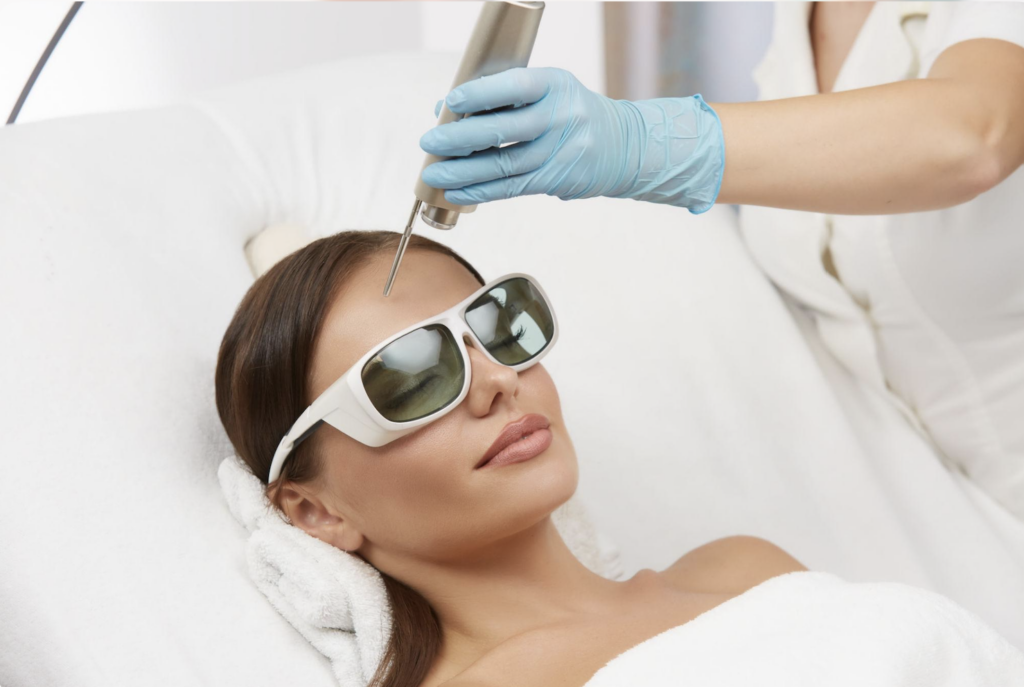
Lasers used for pigmentation work by delivering focused light energy that is preferentially absorbed by melanin. When the pigment absorbs this energy, it breaks into smaller particles that the body gradually clears through its natural processes. This is why the treated pigmentation may initially appear darker before it fades — the fragmented pigment is rising toward the skin’s surface as dead skin cells shed over several days.
The depth of the pigmentation matters. Superficial dark spots and sun spots often respond faster than deeper pigmentation embedded within the lower layers of the dermis. IPL treatment, or intense pulsed light, tends to be well-suited to surface-level discoloration, while certain laser sessions may be selected for deeper layers. Your provider will discuss which modality aligns with your skin condition and skin type during the consultation.
Cell turnover is central to how pigmentation fades after laser. As skin cells naturally cycle, the fragmented pigment is carried upward and ultimately removed through the shedding of dead skin cells. This process also stimulates mild collagen production, which some patients report contributes to smoother skin texture alongside improvements in overall skin tone. Outcomes depend on individual factors and are never guaranteed.
The Realistic Timeline for Pigmentation Fading After Professional Laser Treatment
Understanding the general rhythm of healing helps patients feel prepared. While every skin type responds differently, the timeline below reflects a pattern many patients experience after professional laser pigmentation removal. Your provider will outline what to expect based on the specific device used and your individual treatment area.
The First Week After Laser Sessions
In the first several days after laser treatment, the treated area may look slightly pink or show mild swelling. Dark spots may appear darker or more pronounced — a normal response as pigment rises to the skin’s surface. Gentle cleansers, gentle topical treatments, and strict avoidance of direct sunlight are typically recommended during this window.
Patients are generally advised to apply broad spectrum sunscreen whenever outdoors and to avoid direct sun exposure entirely when possible. UV rays can darken new pigmentation and interfere with the fading process. A simple, calming skincare routine supports the skin as it begins its natural repair cycle.
Avoiding harsh activities such as retinoids or glycolic acid immediately after laser sessions helps protect the skin from irritation. Your provider may introduce specific topical treatments later in the recovery window depending on your skin condition and goals for clearer skin.
Weeks Two Through Four of Dead Skin Cells Shed
Around days seven to fourteen, the skin begins to exfoliate naturally, and dead skin cells shed in fine, often unnoticeable flakes. As removing dead skin cells becomes part of the recovery rhythm, many patients notice that dark spots start to look lighter or more diffuse. This is often the first sign of visible improvement.
By weeks three and four, the treated pigmentation frequently appears softened, and overall skin tone may look more even in the treatment area. It is common for some pigmentation to fade at different speeds across the face, since deeper pigmentation typically requires more time than superficial sun spots or age spots.
During this window, continued sun protection remains essential. UV exposure at this stage is the most common contributor to post laser hyperpigmentation, a temporary darkening that can occur when the healing skin is exposed to direct sun exposure too soon. Broad spectrum sunscreen, hats, and avoiding direct sun exposure support a smoother recovery.
Months Two and Three of Skin Cell Turnover
Skin cell turnover is a gradual process, generally cycling every four to six weeks. Because of this, the most meaningful changes in pigmentation often become apparent one to three months after a laser session. By this point, the skin has completed at least one full cycle of renewal, and many patients report a more even skin tone and subtle improvements in skin texture.
For persistent pigmentation, deeper pigmentation, or more widespread skin pigmentation issues, multiple treatments are commonly recommended. A treatment plan may include a series of laser sessions spaced several weeks apart, sometimes combined with chemical peels or other cosmetic treatments to support overall skin health.
Results continue to refine over time as collagen production and cell turnover progress. Patients with lighter skin tones and darker skin tones alike can experience improvement, though protocols differ. For darker skin types, providers often select specific wavelengths designed to reduce the risk of post-inflammatory hyperpigmentation.

Factors That Influence How Long Pigmentation Takes to Fade
Several variables affect how long does pigmentation take to resolve. Skin type, the depth of the pigment, the original cause — whether sun damage, hormonal, or post inflammatory hyperpigmentation PIH from acne scars — and individual healing patterns all play a role. Two patients with seemingly similar dark spots may experience different timelines based on these factors.
Sun exposure is among the most influential variables. Even brief unprotected UV exposure after laser therapy can stimulate melanin production and contribute to new pigmentation in the treated area. This is why avoiding direct sun exposure and using broad spectrum sunscreen daily are considered non-negotiable parts of aftercare for anyone pursuing laser pigmentation removal.
Lifestyle factors such as a consistent skincare routine, gentle topical treatments, adequate hydration, and avoidance of known irritants also support healthy skin during recovery. Skin lightening cream or other skin lightening products should only be introduced under professional guidance, since some formulations can irritate recently treated skin.
Options That Complement Laser Pigmentation Removal
Laser therapy is one of several approaches to addressing uneven skin tone. Chemical peels, IPL treatment, and medical-grade topical treatments are commonly used alongside or instead of laser sessions depending on the patient’s skin condition. Your provider will discuss which combination may help improve uneven skin tone for your specific goals.
For patients seeking more radiant skin overall, combining gentle topical treatments with periodic professional cosmetic treatments tends to be a sustainable approach. Glycolic acid at appropriate strengths, vitamin C serums, and prescription-grade options may be integrated gradually, once the skin has fully recovered from each laser session.
It is worth noting that no single modality is right for everyone. A tailored treatment plan — developed with a licensed provider — considers your skin type, medical history, lifestyle, and aesthetic priorities. This individualized approach tends to deliver more predictable outcomes than a one-size-fits-all protocol.
Supporting Overall Skin Health Between and After Laser Sessions
Long-term results depend heavily on what happens between laser appointments. A thoughtful skincare routine centered on gentle cleansers, hydration, and daily broad spectrum sunscreen provides the foundation for sustained skin health. The goal is to protect the treated area, support surrounding skin, and minimize the chances of new pigmentation developing.
Sun protection deserves repeated emphasis. Because UV rays are the single most common cause of skin pigmentation issues, daily sunscreen use — even indoors or on overcast days — is among the most effective ways to preserve results. Wide-brim hats and UPF clothing add another layer of defense against UV exposure.
Patience also matters. Pigmentation fades gradually, not instantly, and attempting to accelerate the process with harsh products can disrupt the skin’s natural recovery. Trust the rhythm of cell turnover and communicate any concerns about persistent pigmentation or unexpected changes to your provider promptly.
FAQ
How many laser sessions are typically recommended for visible improvement in pigmentation
The number of laser sessions varies depending on the depth of the pigmentation, skin type, and individual response. Many patients pursue multiple treatments spaced several weeks apart to support gradual fading. Your provider will outline a treatment plan after evaluating your skin during a consultation.
Is laser pigmentation removal suitable for darker skin tones
Certain laser devices are selected specifically for darker skin types to reduce the risk of post inflammatory hyperpigmentation. Lighter skin tones and darker skin tones both have appropriate options, though protocols differ. A consultation with a licensed provider is required to determine what is appropriate for your skin.
What should I avoid after a laser session to protect my results
After laser therapy, avoiding direct sunlight, harsh exfoliants, and unapproved skin lightening products is generally recommended. Daily broad spectrum sunscreen, gentle cleansers, and gentle topical treatments support the recovery of the treated area. Your provider will share specific aftercare guidance for your skin condition.
Conclusion
The path to a more even skin tone is rarely linear, but it is navigable with the right guidance. Understanding that laser pigmentation removal works with your skin’s natural cycles — rather than against them — helps reframe expectations around a realistic timeline. Most patients who complete a full treatment plan and prioritize sun protection experience meaningful improvement in dark spots, age spots, and overall skin tone over several months.
Every patient’s journey is shaped by their skin type, the depth of pigmentation, and lifestyle factors that influence healing. A consultation with a licensed provider at BluePoint Medical Spa allows for a careful evaluation of your skin condition, a discussion of appropriate laser procedures or other cosmetic treatments, and the development of a plan tailored to your goals. Remember that results vary, cosmetic treatments are elective, and informed decision-making is always the best first step.
If you are considering laser therapy for persistent pigmentation or would like to learn more about how laser sessions may fit your aesthetic goals, schedule a consultation with BluePoint Medical Spa to discuss your options with a licensed provider. A personalized evaluation is the most reliable way to understand what a realistic treatment plan looks like for your skin.